

HVAC Variable Refrigerant Flow (VRF) Systems
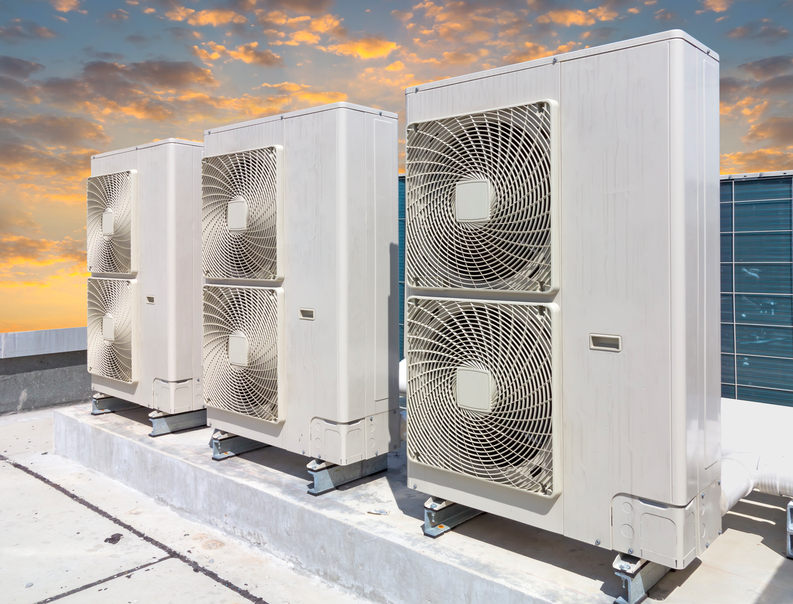
This online engineering PDH course provides an overview of VRF system technology. Emphasis is placed on the control principles, terminology, basic components, advantages and design limitations.
In recent years air conditioning systems have significantly changed. Variable Refrigerant Flow (VRF) also known as variable refrigerant volume (VRV) is a commercial HVAC system that can be configured to utilize a single condensing unit with multiple indoor evaporator units. The arrangement provides an individualized comfort control by varying the flow of refrigerant to each evaporator unit using sophisticated electronic expansion valve and inverter controlled variable speed compressor.
The system delivers excellent part-load performance and simultaneous heating and cooling in different zones. Unfortunately, the design of VRF systems is more complicated and requires additional work compared to designing a conventional air conditioning system.
This 3 PDH online course is aimed at the personnel who have some limited background in the air conditioning field and is suitable for mechanical, electrical, controls and HVAC engineers, architects, building designers, contractors, estimators, energy auditors and facility managers.
This PE continuing education course is intended to provide you with the following specific knowledge and skills:
- Understanding the difference between multi-split air-conditioning systems and VRF systems
- Understanding the operating principle of a direct expansion split and a VRF system
- Understanding the concept of thermal zone
- Understanding how VRF systems with heat recovery are different from ordinary heat pump systems
- Learning about the operation of thermostatic expansion valve (TXV)
- Learning about the operation of electronic expansion valve (EEV)
- Learning about the influence of building characteristics and load profile on the selection of a VRF system
- Understanding the advantages and application of VRF systems
- Learning about the design limitations and challenges in design of VRF systems
In this professional engineering CEU course, you need to review the document titled "HVAC - Variable Refrigerant Flow (VRF) Systems".
Upon successful completion of the quiz, print your Certificate of Completion instantly. (Note: if you are paying by check or money order, you will be able to print it after we receive your payment.) For your convenience, we will also email it to you. Please note that you can log in to your account at any time to access and print your Certificate of Completion.