

Wisconsin Wastewater and Ethics 17 PDH Discount Package 3
Background Use of Onsite Wastewater Treatment Systems (C02-008)
Centralized Wastewater Treatment for Facilities Managing Oil and Gas Extraction Wastes: Wastewater Characterization and Management (C02-077)
Using Combined Heat and Power at Wastewater Treatment Facilities (R04-007)
Earthquake Resilience Guide for Water and Wastewater Utilities (C02-076)
General Principles of Engineering Ethics (LE2-016)
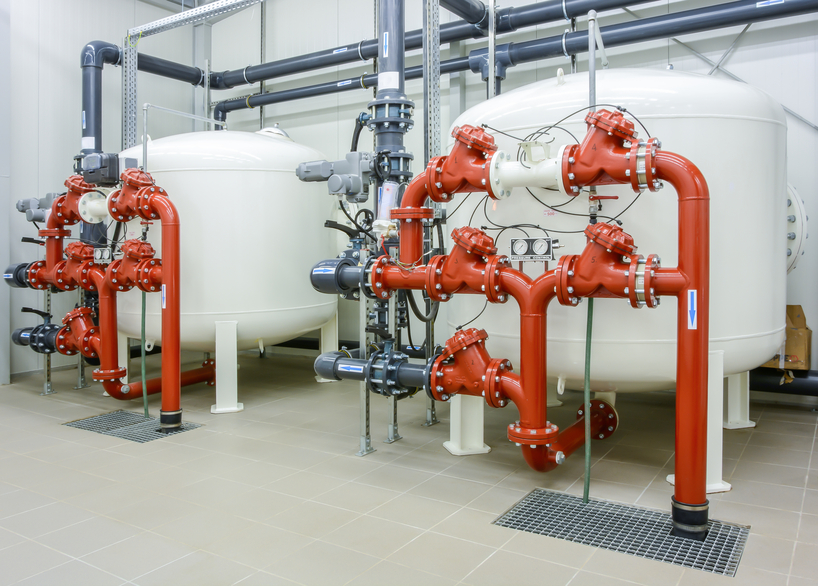
This online engineering PDH course provides an overview of water treatment and purification.
Water is the most important substance on earth. As an engineer, you might be responsible for ensuring that an adequate supply of safe water is available for domestic, fire protection, and other uses. In meeting this responsibility, you must consider several factors, such as water source selection, ways to develop the water source, contaminants you may encounter, and methods you can use to remove them.
In this course, we will discuss the selection of a good water source, how to test it, and how to treat it so that it is safe for consumption. We will also explore ways to detect and treat water that has been contaminated with chemical, biological, or radiological agents. Lastly, we will talk about the different types of water treatment equipment and their processes.
This 5 PDH online course is applicable to chemical, civil, mechanical and environmental engineers and other professionals who are interested in gaining a better understanding of water treatment and purification processes.
This PE continuing education course is intended to provide you with the following specific knowledge and skills:
- Familiarizing with the requirements for water source selection
- Learning about the development criteria for water sources
- Understanding the results and testing procedures for water contamination
- Gaining an overview of the different types of water treatment equipment
Upon successful completion of the quiz, print your Certificate of Completion instantly. (Note: if you are paying by check or money order, you will be able to print it after we receive your payment.) For your convenience, we will also email it to you. Please note that you can log in to your account at any time to access and print your Certificate of Completion.

This online engineering PDH course describes how onsite wastewater treatment systems (OWTS) have evolved throughout the years along with changing regulations. It also discusses current uses and types (performance-based vs. prescriptive requirements) of OWTS as well as the management program problems associated with such systems. Finally, this course presents initiatives taken to improve onsite system treatment and management.
Onsite wastewater treatment systems have evolved from the pit privies used widely throughout history to installations capable of producing a disinfected effluent that is fit for human consumption. Although achieving such a level of effluent quality is seldom necessary, the ability of onsite systems to remove settleable solids, floatable grease and scum, nutrients, and pathogens from wastewater discharges defines their importance in protecting human health and environmental resources. In the modern era, the typical onsite system has consisted primarily of a septic tank and a soil absorption field, also known as a subsurface wastewater infiltration system, or SWIS.
This 2 PDH online course is applicable to civil and environmental engineers, as well as design and construction personnel involved with the design and installation of onsite wastewater treatment systems.
This PE continuing education course is intended to provide you with the following specific knowledge and skills:
- Regulation of onsite wastewater treatment systems
- Onsite wastewater treatment system use, distribution, and failure rate
- Problems with existing onsite wastewater management programs
- Performance-based management of onsite wastewater treatment systems
- Coordinating onsite system management with watershed protection efforts
- USEPA initiatives to improve onsite system treatment and management
In this professional engineering CEU course, you need to review Chapter 1 of the EPA Onsite Wastewater Treatment Systems Manual, EPA/625/R-00/008, "Background Use of Onsite Wastewater Treatment Systems".
Upon successful completion of the quiz, print your Certificate of Completion instantly. (Note: if you are paying by check or money order, you will be able to print it after we receive your payment.) For your convenience, we will also email it to you. Please note that you can log in to your account at any time to access and print your Certificate of Completion.
This online engineering PDH course investigates whether the current Centralized Wastewater Treatment (CWT) Effluent Limitations Guidelines and Standards (ELGs) are adequately managing wastewater discharges from CWT facilities accepting oil and gas extraction wastes.
The EPA collected and evaluated data regarding oil and gas wastewater characteristics, as well as data characterizing discharges from CWT facilities accepting oil and gas extraction wastes, which are presented in this course.
The exploration, development and production of oil and gas reserves vary markedly from region to region. There are a number of solid and liquid waste materials generated during oil and gas exploration, extraction and production, and these waste materials may be managed by CWT facilities. The nature and characteristics and quantity of the wastes generated depend upon a number of factors, such as the type of drilling, the characteristics of the formation, the depth of the well and the type and quantity of chemical additives used during drilling, production and well maintenance activities.
This 2 PDH online course is intended for chemical, petroleum, environmental and industrial engineers as well as other interested in understanding the wastewater characterization and management used at CWT to treat oil and gas extraction wastewaters.
This PE continuing education course is intended to provide you with the following specific knowledge and skills:
- Familiarizing with the basics of the wastes that are discharged from oil and gas extraction activities
- Familiarizing with pollutants that are considered for evaluation in drilling wastewater
- Gaining an overview of the additives used in well development along with their purpose
- Familiarizing with pollutants that are considered for evaluation in produced water
- Familiarizing with characterizing the concentrations of pollutants in process wastewater discharges
Upon successful completion of the quiz, print your Certificate of Completion instantly. (Note: if you are paying by check or money order, you will be able to print it after we receive your payment.) For your convenience, we will also email it to you. Please note that you can log in to your account at any time to access and print your Certificate of Completion.

This online engineering PDH course describes the technical and economic potential for introducing combined heat and power (CHP) systems to wastewater treatment facilities (WWTFs), especially smaller WWTFs with influent flow rates of 1 to 5 MGD. The course also presents operational observations obtained through interviews with WWTF operators who have employed CHP.
Some of the key findings given in the course are that 1) CHP is a reliable, cost-effective option for WWTFs that have, or are planning to install, anaerobic digesters; 2) while many WWTFs have implemented CHP, the potential still exists to use more CHP, based on technical and economic benefits; 3) on a national scale, the technical potential for additional CHP at WWTFs is over 400 MW of biogas-based electricity generating capacity and approximately 38,000 MMBtu/day of thermal energy; and 4) translating CHP potential into actual successes requires an understanding of operational realities.
This 4 PDH online course is intended for engineers working as CHP project developers, WWTF operators and state and local government policy makers.
This PE continuing education course is intended to provide you with the following specific knowledge and skills:
- Overview of CHP and its benefits at WWTFs
- Market for WWTFs with CHP
- Technical potential for CHP at WWTFs
- Economic potential for CHP at WWTFs
- First-hand observations gathered through interviews of WWTF operators regarding the benefits and challenges of CHP
In this professional engineering CEU course, you need to review the course document titled, “Using Combined Heat and Power at Wastewater Treatment Facilities” which is based on the U.S. Environmental Protection Agency document, “Opportunities for Combined Heat & Power at Wastewater Treatment Plants: Market Analysis and Lessons from the Field,” produced by the Environmental Protection Agency Combined Heat and Power Partnership, October, 2011.
Once you complete your course review, you need to take a multiple-choice quiz consisting of twenty five (25) questions to earn 5 PDH credits. The quiz will be based on this EPA publication.
Upon successful completion of the quiz, print your Certificate of Completion instantly. (Note: if you are paying by check or money order, you will be able to print it after we receive your payment.) For your convenience, we will also email it to you. Please note that you can log in to your account at any time to access and print your Certificate of Completion.

This online engineering PDH course describes how water and wastewater utilities can be more resilient to earthquakes. It provides the best practices from utilities that have used mitigation measures to address the earthquake threat.
An earthquake is a sudden and violent shaking of the ground caused by movement within the earth’s crust or by volcanic activity. The water sector is particularly vulnerable to earthquake damage and service disruptions. By understanding the threat of earthquakes and the potential impacts to both the water infrastructure and the community, water utility owners and operators can make more informed decisions on earthquake mitigation options.
This 2 PDH online course is applicable to environmental, civil, and structural engineers as well as others interested in learning more about how wastewater utilities can be more resilient to earthquakes.
This PE continuing education course is intended to provide you with the following specific knowledge and skills:
- Understanding the earthquake threat
- Knowing how to Identify vulnerable assets and determine consequences
- Learning how to pursue mitigation and funding options
- Familiarizing with the available tools to assess specific structures
- Familiarizing with the standards and resources for earthquake resilience
In this professional engineering CEU course, you need to review the document “Earthquake Resilience Guide for Water and Wastewater Utilities” which is based on the U.S. EPA publication number EPA-810-B-18-001 dated March 2018.
Upon successful completion of the quiz, print your Certificate of Completion instantly. (Note: if you are paying by check or money order, you will be able to print it after we receive your payment.) For your convenience, we will also email it to you. Please note that you can log in to your account at any time to access and print your Certificate of Completion.

This online engineering PDH course presents the principles of engineering ethics that every engineer is expected to live by when practicing their profession.
Engineering ethics is (1) the study of moral issues and decisions confronting individuals and organizations involved in engineering and (2) the study of related questions about moral conduct, character, ideals and relationships of peoples and organizations involved in technological development (Martin and Schinzinger, Ethics in Engineering).
This course describes the fundamental legal concepts with which very engineer should be familiar. It also presents unique disciplinary case studies selected from across the nation, as well as hypothetical ethical challenges that demonstrate how difficult it can be to apply the code of ethics for engineers.
This 2 PDH online course is applicable to all professional engineers who are either required to fulfill 2 PDH in engineering ethics or are interested in broadening their understanding of what it means to practice and uphold the honor and integrity of their engineering profession while holding the utmost safety, health, and welfare of the public.
This PE continuing education course is intended to provide you with the following specific knowledge and skills:
- Understanding the common definition of ethics regarding engineering
- Learning about the important principles of the engineer’s professional responsibility
- Learning the do’s and don’ts through several ethical and disciplinary cases
- Understanding what it means to practise and uphold the honor and integrity of the engineering profession
Upon successful completion of the quiz, print your Certificate of Completion instantly. (Note: if you are paying by check or money order, you will be able to print it after we receive your payment.) For your convenience, we will also email it to you. Please note that you can log in to your account at any time to access and print your Certificate of Completion.