

Wisconsin Structural and Ethics 17 PDH Discount Package 3
Design and Construction Guidance for Breakaway Walls (S03-021)
General Principles of Engineering Ethics (LE2-016)
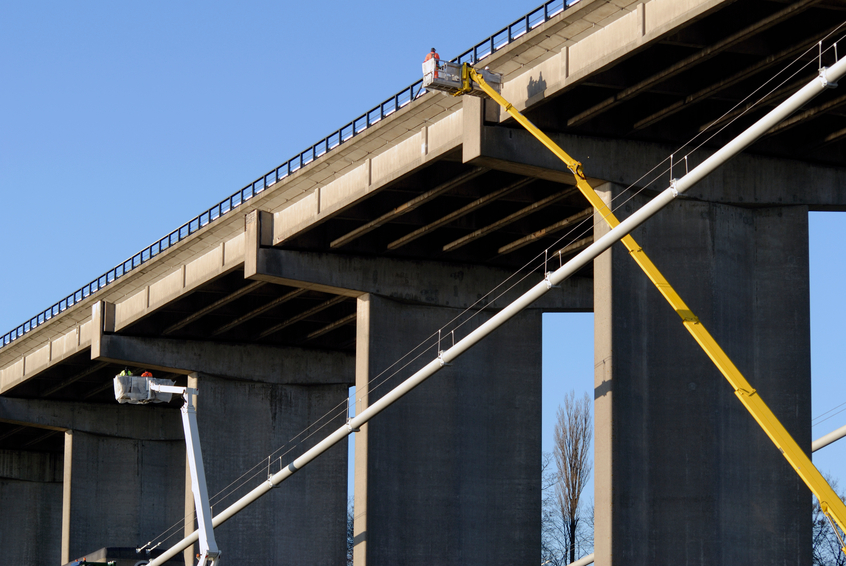
This online engineering PDH course provides basic information on the capabilities of sonar technologies in performing underwater bridge inspections and its benefits in supplementing dive inspectors to improve inspections.
The requirements for underwater bridge inspection procedures using divers are well documented within the U.S. However, some bridge inspectors and owners have increasingly been supplementing dive inspections with acoustic imaging technology to enhance inspection quality, increase safety, increase efficiency, and improve documentation of findings. This trend has accelerated, in part, because of advancements in sonar technology. The trend has also accelerated because site conditions adverse to dive inspections—such as limited underwater visibility, high velocity currents, submerged debris, and extreme water depths—exist at many bridge sites.
Because these adverse conditions can limit a diver’s ability to inspect a bridge below water, many states are investigating the use of sonar technologies for underwater bridge substructure inspection. FHWA provides overall guidance for these inspections and recognized the need for a comprehensive evaluation of the capabilities of sonar technologies for this important activity. In this study, a range of sonar technologies are evaluated in a variety of underwater conditions to determine how these technologies can be effectively used in conjunction with or independently of divers.
This 12 PDH online course is applicable to structural engineers and bridge personnel responsible for inspecting bridge foundations who are interested in applying sonar technologies for underwater bridge inspections.
This PE continuing education course is intended to provide you with the following specific knowledge and skills:
- Familiarizing with sonar technologies including three-dimensional sonar systems and two-dimensional imaging sonar
- Familiarizing with sonar technology reliability by evaluating variations in the speed of sound, transducer head movement, interference and noise, acoustic multipath,transverse and range resolution, acoustic shadows, slant-range distortion and GPS accuracy
- Learning about technology selection and the strengths and weaknesses of sonar technologies including 3D real-time multibeam, 2D multibeam and 3D mechanical multibeam 2D sector-scanning and 3D profiler and Dive equipment
- Understanding underwater bridge inspection environment for concrete, steel and timber bridges
- Understanding phase I and phase II field testing and evaluating their findings
Upon successful completion of the quiz, print your Certificate of Completion instantly. (Note: if you are paying by check or money order, you will be able to print it after we receive your payment.) For your convenience, we will also email it to you. Please note that you can log in to your account at any time to access and print your Certificate of Completion.
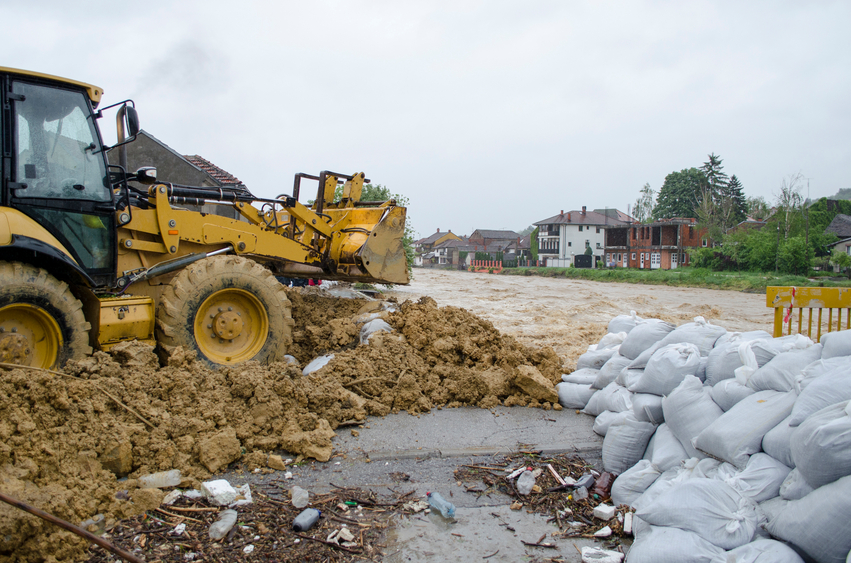
This engineering online PDH course provides guidance on designing and constructing breakaway walls below elevated buildings located in coastal high hazard areas in accordance with the National Flood Insurance Program (NFIP).
Obstructions below an elevated building can significantly increase the potential for flood damage by increasing the surface area subject to wave impact and velocity flow. As such, NFIP regulations require that the area below the lowest floor of elevated buildings either be free of obstructions or have any enclosed areas be constructed of non-supporting breakaway walls, open lattice-work, or insect screening. The walls, lattice, or screening are intended to collapse under wave loads without causing collapse, displacement, or other structural damage to the elevated building or the supporting foundation system.
This 3 PDH online course is intended for structural and geotechnical engineers, as well as design and construction personnel involved in coastal design and construction projects.
This PE continuing education course is intended to provide you with the following specific knowledge and skills:
- Understanding NFIP regulations concerning breakaway walls
- Learning about Flood Insurance Considerations affecting rates and costs of NFIP flood insurance for elevated buildings
- Knowing the Performance of Breakaway Walls
- Understanding the function of breakaway walls as well as their impact on other building elements
- Learning about the three different design methods for breakaway walls
Upon successful completion of the quiz, print your Certificate of Completion instantly. (Note: if you are paying by check or money order, you will be able to print it after we receive your payment.) For your convenience, we will also email it to you. Please note that you can log in to your account at any time to access and print your Certificate of Completion.

This online engineering PDH course presents the principles of engineering ethics that every engineer is expected to live by when practicing their profession.
Engineering ethics is (1) the study of moral issues and decisions confronting individuals and organizations involved in engineering and (2) the study of related questions about moral conduct, character, ideals and relationships of peoples and organizations involved in technological development (Martin and Schinzinger, Ethics in Engineering).
This course describes the fundamental legal concepts with which very engineer should be familiar. It also presents unique disciplinary case studies selected from across the nation, as well as hypothetical ethical challenges that demonstrate how difficult it can be to apply the code of ethics for engineers.
This 2 PDH online course is applicable to all professional engineers who are either required to fulfill 2 PDH in engineering ethics or are interested in broadening their understanding of what it means to practice and uphold the honor and integrity of their engineering profession while holding the utmost safety, health, and welfare of the public.
This PE continuing education course is intended to provide you with the following specific knowledge and skills:
- Understanding the common definition of ethics regarding engineering
- Learning about the important principles of the engineer’s professional responsibility
- Learning the do’s and don’ts through several ethical and disciplinary cases
- Understanding what it means to practise and uphold the honor and integrity of the engineering profession
Upon successful completion of the quiz, print your Certificate of Completion instantly. (Note: if you are paying by check or money order, you will be able to print it after we receive your payment.) For your convenience, we will also email it to you. Please note that you can log in to your account at any time to access and print your Certificate of Completion.