

Interactive & Video Discount Package - Pennsylvania Structural and Ethics 24 PDH
Designing Earthquake Safe Schools (S02-302)
Determining The Cost-Benefit of Routine Maintenance Cleaning on Steel Bridges (S01-306)
Engineering Principles and Practices for Retrofitting Flood-Prone Residential Structures - Part 2 (S04-301)
Guide for In-Place Treatment of Wood in Historic Covered and Modern Bridges (S03-301)
Installing Seismic Restraints for Mechanical and Electrical Equipment (S01-305)
St. Francis Dam Failure (LE2-301)
The Collapse of The World Trade Center Building 7 (LE4-301)
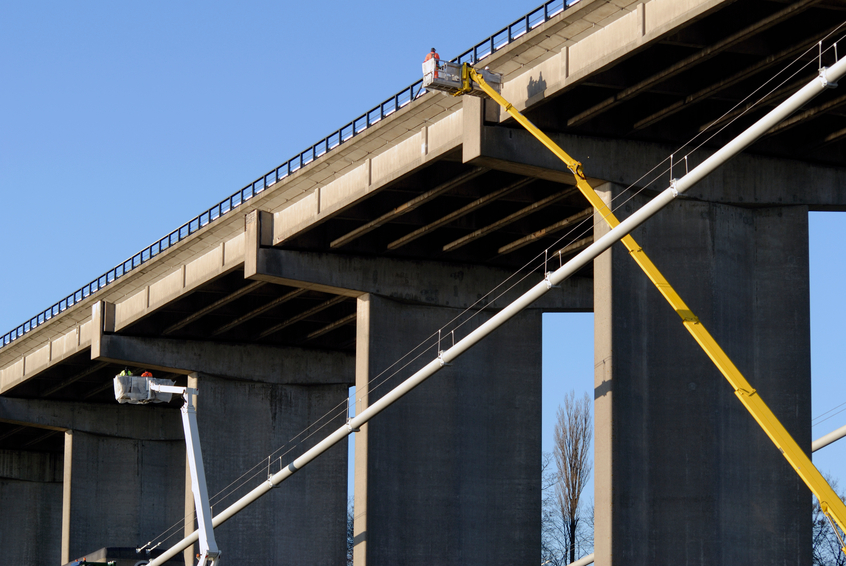
The presentation begins with a discussion of tsunami hazards, historical tsunami events, and the unique effects of tsunamis on buildings and infrastructure. It delves into key considerations for selecting, planning, and designing vertical evacuation structures, including hazard and risk assessment, probabilistic and deterministic modeling, and lessons learned from past events. Participants will gain insights into tsunami hazard mapping, inundation modeling, structural design for tsunami loads, debris impact, scour, uplift forces, and strategies for preventing progressive collapse.
Additionally, the presentation addresses regulatory guidance, decision-making frameworks, and examples of successful vertical evacuation strategies implemented in tsunami-prone regions.
This 2 PDH online interactive presentation is designed for civil and structural engineers, architects, planners, and emergency management professionals who seek to enhance their understanding of tsunami hazard mitigation, improve design standards for refuge structures, and safeguard coastal populations.
This continuing education interactive presentation is intended to provide you with the following specific knowledge and skills:
- Discussing the role of vertical evacuation structures as a mitigation strategy for tsunami risk in vulnerable coastal communities
- Understanding tsunami hazards, historic tsunami events, and the effects of tsunamis on buildings and infrastructure
- Exploring key considerations for selecting, locating, and planning vertical evacuation structures based on hazard assessment and risk analysis
- Familiarizing with current tsunami hazard modeling methods, inundation mapping, and limitations of available tools and data
- Learning about probabilistic and deterministic approaches to tsunami hazard assessment and their application in evacuation planning
- Knowing lessons learned from past tsunami events and implications for improving hazard assessment and planning of vertical evacuation strategies
Upon successful completion of the quiz, print your Certificate of Completion instantly. (Note: if you are paying by check or money order, you will be able to print it after we receive your payment.) For your convenience, we will also email it to you. Please note that you can log in to your account at any time to access and print your Certificate of Completion.
This online engineering PDH interactive presentation provides an overview of the risk of earthquakes to schools and the processes and methods that can be used to reduce it.
Earthquakes have long been feared as one of nature’s most terrifying phenomena. In the aftermath of any damaging earthquake, there is an immediate need of shelter for people who have been displaced from their homes. In earthquake-prone regions, school sites are often used to provide immediate shelter. However, possible use of school buildings as a safe haven for the community involves complex design and construction issues. This presentation outlines the earthquake risk to schools and the processes and methods that can be used to reduce it.
An explanation of the nature and probability of earthquakes is provided, together with procedures for determining the earthquake threat to specific locations and for evaluating the vulnerability of a school building. An assessment of the scope and effectiveness of seismic building codes is followed by a description of current methods of designing for seismic resistance in new buildings and upgrading existing buildings. Lastly, this presentation presents guidance for school districts, facility planners, and designers on determining acceptable risk and the use of performance-based design.
This 2 PDH online course is intended for structural, civil, mechanical and construction engineers, and would also be of particular interest to engineers serving as consultants to school officials involved in the technical and financial decisions of school construction, repair, and renovations.
This continuing education interactive presentation is intended to provide you with the following specific knowledge and skills:
- Understanding the nature and probability of earthquakes
- Understanding the vulnerability of schools
- Understanding earthquake damage to schools
- Learning about seismic codes and schools
- Knowing the effectiveness of seismic codes
- Evaluating existing schools for seismic risk and specific risk reduction methods
- Learning about risk reduction for existing and new schools
- Understanding the role of a school as a post-earthquake shelter
Upon successful completion of the quiz, print your Certificate of Completion instantly. (Note: if you are paying by check or money order, you will be able to print it after we receive your payment.) For your convenience, we will also email it to you. Please note that you can log in to your account at any time to access and print your Certificate of Completion.
This online engineering PDH interactive presentation focuses on determining the cost-benefit of routine maintenance cleaning on steel bridges. This study was conducted in cooperation with the U.S. Department of Transportation, Federal Highway Administration.
This course identifies the key variables necessary in estimating the impact of regular washing of steel bridges on the paint and service life, recommend methods for recording data in order to most effectively estimate the benefits of bridge washing, and to develop a framework for assessing the impact of bridge washing on paint life. A literature review was conducted to learn more about the mechanisms of corrosion. Then a nationwide survey was sent out to state transportation agencies. A follow-up survey was conducted in order to obtain more detailed information about certain washing programs. It was concluded that little information on the effects of bridge washing exist and it is only deemed beneficial based on anecdotal assumptions. An experiment is proposed for WSDOT that will provide hard data to make a decision.
This 1 PDH online interactive presentation is designed for structural engineers, urban planners, transportation engineers, civil engineers, and professional engineers responsible for long-term maintenance planning and cost-benefit analysis.
This continuing education interactive presentation is intended to provide you with the following specific knowledge and skills:
- Exploring the key variables necessary in estimating the impact of regular washing of steel bridges on the paint and service life.
- Reviewing past literature to gather information from previous studies on bridge washing, the effects of washing on corrosion, and gain general knowledge on corrosion of steel.
- Learning methods for recording data in order to most effectively estimate the benefits of bridge washing
- Developing a framework for assessing the impact of bridge washing on paint life.
- Proposing an experiment for WSDOT that will provide hard data to make a decision.
Once you finish watching the PDH interactive presentation, you will be redirected to your account to take a multiple-choice quiz consisting of ten (10) questions to earn 1 PDH credits.
Upon successful completion of the quiz, print your Certificate of Completion instantly. (Note: if you are paying by check or money order, you will be able to print it after we receive your payment.) For your convenience, we will also email it to you. Please note that you can log in to your account at any time to access and print your Certificate of Completion.
This online engineering PDH course provides engineering design and economic guidance to engineers, architects, and local code officials about elements of the design process that are common to many or all retrofitting measures. The two main common design elements are field investigation (which includes surveys, documentation, and homeowner coordination) and the analysis of the existing structure.
The focus of this course is to apply the anticipated loads developed in part 1 to the existing site/structure and design an appropriate retrofitting measure. It presents various retrofitting measures that provide both active and passive efforts and employ both dry and wet floodproofing measures. These include elevation of the structure in place, relocation of the structure, construction of barriers (floodwalls and levees), dry floodproofing, and wet floodproofing.
Also, it delves into the design process which begins with general practices that are basic to all retrofitting projects—field investigation and analysis of the existing structure—and then presents separate sections for each retrofit measure—elevation, relocation, dry floodproofing, wet floodproofing, and floodwalls and levees. These sections guide the designer through the process of developing construction details and specifications, and provide the tools to tailor each retrofitting measure to local requirements and homeowner preferences. The design of these retrofitting measures is a straightforward but technically intensive approach that will result in the generation of construction plans that may receive building permits and mitigate potential flood and other natural hazards.
This 4 PDH online course is applicable to structural engineers, geotechnical engineers, and environmental engineers and professionals who are interested in learning more about the design, analysis, and implementation of measures to mitigate flood risks and improve the resilience of residential structures against natural hazards.
This PE continuing education course is intended to provide you with the following specific knowledge and skills:
- To know how to apply the anticipated loads developed in part 1 to the existing site/structure and design an appropriate retrofitting measure.
- To understand the design process, field investigation and analysis of the existing structure, of elevation retrofit measure.
- To know about the design process, field investigation and analysis of the existing structure, of relocation retrofit measure.
- To explore the design process, field investigation and analysis of the existing structure, of dry floodproofing retrofit measures.
- To learn the design process, field investigation and analysis of the existing structure, of wet floodproofing retrofit measure.
- To understand the design process, field investigation and analysis of the existing structure, of floodwalls and levees retrofit measure.
- To gain an overview about the process of developing construction details and specifications and provide the tools for designers to tailor each retrofitting measure to local requirements and homeowner preferences.
Upon successful completion of the quiz, print your Certificate of Completion instantly. (Note: if you are paying by check or money order, you will be able to print it after we receive your payment.) For your convenience, we will also email it to you. Please note that you can log in to your account at any time to access and print your Certificate of Completion.
This online engineering PDH interactive presentation provides a brief outline on the causes of biodeterioration to bridges and the procedures for preventing or mitigating their effects.
Wooden bridges, whether historic covered bridges or current highway timber bridges, can be vulnerable to damage from biodegradation. Biodeterioration is minimized through design and construction practices, and in the case of modern timber bridges, through pressure treatment of the timbers with wood preservatives. However, the potential for degradation remains, and over time many bridges need maintenance that may include in-place treatment with preservatives.
This presentation describes procedures for selecting and applying in-place treatments to bridges to prevent or arrest degradation. It also focuses on preservative treatments to protect wooden bridges against biodeterioration and discusses approaches for minimizing damage caused by fire.
This 3 PDH online interactive presentation is applicable to architects, engineers, and other environmental design specialists, who are interested in gaining a better understanding of the causes of biodeterioration of wood.
This continuing education interactive presentation is intended to provide you with the following specific knowledge and skills:
- Familiarizing with the causes and problem areas for biodegradation in wooden bridges, the effects of climate and the role of wood structure
- Learning about the different types of supplemental treatments including water-diffusible preservatives, non-diffusible liquid treatments and fumigants
- Gaining a general overview on the application and use of supplemental preservative treatments for covered bridges
- Understanding the use of supplemental fire-retardant treatments for covered bridges
- Exploring supplemental treatment concepts such as liquid surface treatments, paste surface treatments, and internal treatments
Upon successful completion of the quiz, print your Certificate of Completion instantly. (Note: if you are paying by check or money order, you will be able to print it after we receive your payment.) For your convenience, we will also email it to you. Please note that you can log in to your account at any time to access and print your Certificate of Completion.
This online engineering PDH interactive presentation provides information on the installation of different types of seismic restraints for mechanical and electrical equipment.
Seismic restraints are special devices that can be installed to buildings to minimize earthquake damage. These devices can be mechanical or electrical and include isolation systems, roof attachments, cable or strut attachments, and steel shapes.
This course shows equipment installers how to attach mechanical equipment to a building to minimize earthquake damage. Many attachment examples are presented, to include anchoring and the use of special devices such as seismic restraint devices.
This 1 PDH online interactive presentation is applicable to structural engineers and all professionals who are interested in protecting their mechanical and electrical equipment from seismic damage.
This PE continuing education interactive course is intended to provide you with the following specific knowledge and skills:
- Identifying mechanical and electrical equipment and selecting the appropriate method for its installation
- Familiarizing with the different types of attachments
- Familiarizing with the various types of anchors
- Understanding the different methods of supporting control panels and attaching lighting fixtures
- Understanding the various methods of attaching HVAC equipment to residential structures
- Learning how to design housekeeping pads for seismic measures
Upon successful completion of the quiz, print your Certificate of Completion instantly. (Note: if you are paying by check or money order, you will be able to print it after we receive your payment.) For your convenience, we will also email it to you. Please note that you can log in to your account at any time to access and print your Certificate of Completion.

This online engineering 2 PDH interactive presentation provides guidance on the construction of the St. Francis Dam and the reasons behind its failure.
The St. Francis Dam was a concrete gravity dam located in San Francisquito Canyon in Los Angeles County, California, United States. It was built between the years of 1924 and 1926 to serve Los Angeles's growing water needs. It failed catastrophically near midnight of March 12th-13th, 1928 due to a defective soil foundation and design flaws, triggering a flood that claimed the lives of at least 432 people and causing property damage worth more than $7 million.
This 2 PDH online interactive presentation is intended primarily for designers, civil and geotechnical engineers responsible for designing, constructing and maintaining dams.
This continuing education interactive presentation is intended to provide you with the following specific knowledge and skills:
- To know the reason behind building the Saint Francis Dam
- To identify the history and background of choosing the Saint Francis Dam
- To understand the geographic location and timeline of its design and construction
- To know the observations of the eye witnesses after the failure
- To understand the missing engineering concepts that lead to its failure
- To know the effect of the material quality and construction process on the dam
- To identify how the failure occurred and how it could have been prevented
- To know the lessons learned from this accident and its benefits to society
Upon successful completion of the quiz, print your Certificate of Completion instantly. (Note: if you are paying by check or money order, you will be able to print it after we receive your payment.) For your convenience, we will also email it to you. Please note that you can log in to your account at any time to access and print your Certificate of Completion.
This online engineering PDH interactive presentation provides a detailed analysis of the factors and events that caused the collapse of World Trade Center Building 7 on September 11, 2001. It covers structural and fire safety challenges, investigative methods for identifying the collapse's probable cause, and insights for enhancing building codes and emergency response strategies.
This presentation outlines the events leading to the collapse and examines the structural and fire safety challenges encountered. It explains how fire-induced thermal expansion contributed to the building's failure and discusses the implications for fire safety standards and building codes. Additionally, it provides insights into the technical findings from the collapse and their relevance to future building designs, as well as broader lessons for improving emergency response and resilience.
This 4 PDH online interactive presentation is designed for engineers, architects, emergency management professionals, and other stakeholders in building safety and disaster preparedness.
This continuing education interactive presentation is intended to provide you with the following specific knowledge and skills:
- Knowing the sequence of events leading to the collapse of World Trade Center Building 7
- Exploring the structural and fire safety challenges faced during the incident
- Familiarizing participants with the investigative methodologies used to determine the probable cause of the collapse
- Understanding the role of fire-induced thermal expansion in triggering the structural failure of the building
- Learning about the technical and engineering insights derived from the collapse and their application to future building designs
- Gaining insight into the collaboration among agencies during the investigation and response to the collapse
Once you finish watching the PDH interactive presentation, you will be redirected to your account to take a multiple-choice quiz consisting of twenty (20) questions to earn 4 PDH credits.
Upon successful completion of the quiz, print your Certificate of Completion instantly. (Note: if you are paying by check or money order, you will be able to print it after we receive your payment.) For your convenience, we will also email it to you. Please note that you can log in to your account at any time to access and print your Certificate of Completion.
This online engineering PDH video presentation introduces the laws and rules of ethics and professional responsibility governing the practice of engineering in the State of Pennsylvania. It also emphasizes on behavior as a professional member of the workforce.
This video presents the provisions of professional conduct from two viewpoints. First, your conduct as a professional engineer with behavior that is unique to engineers such as stamping drawings, signing official or technical documents, preparing estimates for clients or employers, and submitting engineering reports to official agencies. Second, your behavior as a member of the larger workforce where you communicate with team members, follow company policies and procedures, and your overall behavior as part of a workplace community.
Furthermore, this presentation discusses the disciplinary cases and its outcomes in situations where professional engineers have violated the requirements of professional responsibility and ethical conduct – the decisions we make when no one is watching.
This 2 PDH online video presentation is applicable to Professional Engineers licensed in the State of Pennsylvania and who are required to demonstrate continuing professional competency in engineering ethics as a condition of their license renewal. For each renewal period, every licensee must complete thirty (30) professional development hours, at least two (2) of which must be relative to the law and rules professional responsibility, conduct and ethics.
This PE continuing education video presentation is intended to provide you with the following specific knowledge and skills:
- Understanding the laws and rules regulating the practice of engineering in the State of Pennsylvania and acquainting with the links to their key website resources
- Learning how to identify desirable conduct as a professional engineer and as a member of the greater workforce
- Knowing how to discuss and demonstrate proper methods of dealing with undesirable behavior from others
- Familiarizing with ethical and disciplinary case studies depicting various violations and their corresponding penalties
For this course, you will need to watch the video presentation titled, “Engineering Ethics for Pennsylvania Engineers.” To access the video presentation, you will need to log in or register and purchase the course. Following course purchase, please click on the link provided in your account history to view the video presentation. The duration of the video presentation is approximately 120 minutes.
Once you are finished watching the video presentation, you will need to click on the link provided at the end of the presentation to access your account and take the quiz. You will need to take a multiple-choice quiz consisting of ten questions to earn 2 PDH credits. The quiz will be based on this video presentation. The minimum passing score is 70%. There is no time limit on the quiz, and you can take it multiple times until you pass at no additional cost.
Upon successful completion of the quiz, print your Certificate of Completion instantly. (Note: if you are paying by check or money order, you will be able to print it after we receive your payment.) For your convenience, we will also email it to you. Please note that you can log in to your account at any time to access and print your Certificate of Completion.