

Georgia Structural 15 PDH Discount Package 3
Coastal Construction - Determining Site-Specific Loads (S05-013)
Reducing Flood Risk to Residential Buildings that Cannot Be Elevated (S01-009)
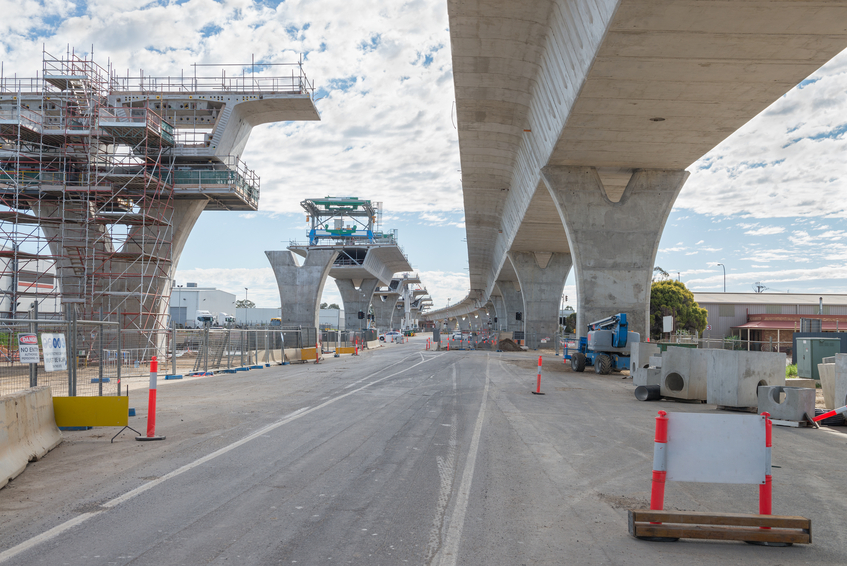
This online engineering PDH course delivers the best practices for repair and retrofit of fatigue cracks in steel bridges.
This course is also a guide for owners and consulting engineers to use for design and detailing of repairs and retrofits for fatigue cracks. It should be used in conjunction with existing specifications, codes, and engineering judgment. In addition to designing and executing the repairs and/or retrofits, there are numerous other steps involved in the inspection and assessment of a cracked bridge member.
When cracks are discovered in bridge elements (members or connections) in service, fatigue is usually the cause. Fatigue is the formation of a crack due to cyclic service loads. Fracture may be defined as rupture in tension or rapid extension of a crack, leading to gross deformation, loss of function or serviceability, or complete separation of the component. Periodic in-service inspection provides an opportunity to assure safety by detecting cracks before they grow to a critical size. The Federal Highway Administration has mandated a twenty-four month inspection interval for all highway bridges located on public roads which is intended to detect problems before they become critical to structural performance.
This 9 PDH online course is applicable to civil and structural engineers as well as consulting engineers who are interested in design and detailing of repairs and retrofits for fatigue cracks.
This PE continuing education course is intended to provide you with the following specific knowledge and skills:
- Familiarizing with the definition of fatigue and fracture in steel bridges
- Developing a fracture control plan and carrying inspections
- Selecting the proper repair and retrofit strategy
- Assessing fatigue effect using several approaches such as nominal stress approach, local stress approach, fracture mechanics approach, etc.
- Understanding the repair and retrofit methods such as surface treatments, impact treatments, etc.
- Identifying out of plane distortion due to secondary stresses
- Learning the repair methods specific to out-of-plane distortion such as: hole drilling, web gap softening, web gap stiffening, etc.
- Knowing the repair methods by loads induced fatigue
Upon successful completion of the quiz, print your Certificate of Completion instantly. (Note: if you are paying by check or money order, you will be able to print it after we receive your payment.) For your convenience, we will also email it to you. Please note that you can log in to your account at any time to access and print your Certificate of Completion.
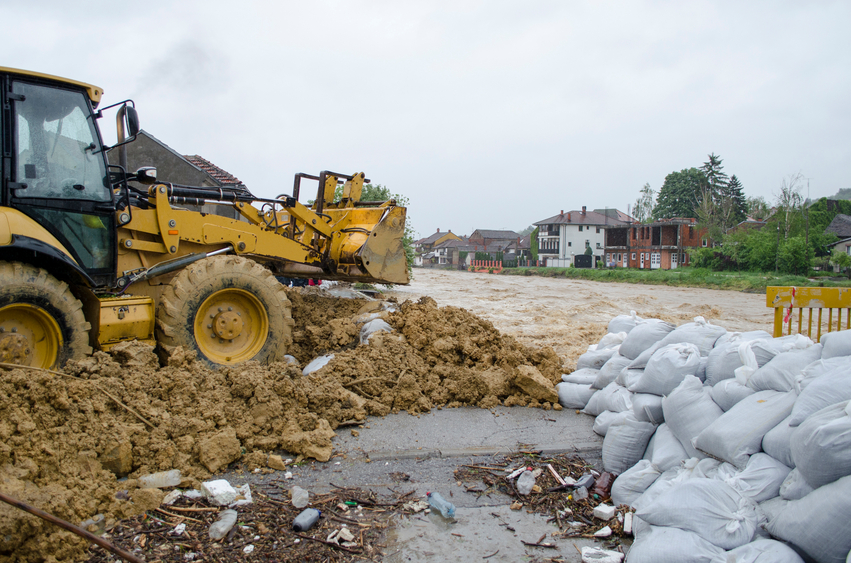
This online engineering PDH course provides the design professional and others with guidance on how to determine, by calculation or graphical interpretation, the magnitude of the loads placed on a building by a particular natural hazard event or a combination of events. The calculation methods presented in this course are intended to serve as the basis of a methodology for applying the calculated loads to the building during the design process.
All coastal residential buildings should be designed and constructed to prevent flotation, collapse, or lateral movement due to the effects of wind and water loads acting simultaneously. Throughout this course, the recommendations of the engineering standards ASCE 7-10, Minimum Design Loads for Buildings and Other Structures (ASCE 2010) will be followed unless otherwise noted. ASCE 7-10 includes procedures for calculating dead and live loads; loads due to soil pressure, fluids, wind, snow, atmospheric ice, and earthquake; and load combinations.
This 5 PDH online course is intended for structural engineers, design and construction personnel, and other technical professionals who are involved in coastal construction projects.
This PE continuing education course is intended to provide you with the following specific knowledge and skills:
- The following site-specific loads for coastal buildings:
- Dead Loads
- Live Loads
- Snow Loads
- Flood Loads
- Tsunami Loads
- Wind Loads
- Tornado Loads
- Seismic Loads
- Determining the combination loads for coastal buildings
Upon successful completion of the quiz, print your Certificate of Completion instantly. (Note: if you are paying by check or money order, you will be able to print it after we receive your payment.) For your convenience, we will also email it to you. Please note that you can log in to your account at any time to access and print your Certificate of Completion.
This online engineering PDH course describes alternative mitigation measures intended for a variety of housing types that cannot feasibly be elevated. The guidance applies to a variety of residential structures, including single family homes, and many mid-rise multi-family residential buildings.
Floods can happen anywhere at any time, which is why it is important to be prepared and to take steps before a flood event to protect your property from costly damage. Taking action to reduce the impact of a disaster is known as mitigation. There are a variety of flood mitigation options for homeowners—both for newly built homes as well as existing homes located in flood prone areas.
This 1 PDH online course is applicable to civil, structural and geotechnical engineers, as well as design and construction personnel involved with the planning and design of flood proofing homes.
This PE continuing education course is intended to provide you with the following specific knowledge and skills:
- Knowing how to select mitigation measures
- Learning about interior modifications and retrofit measures
- Familiarizing with wet and dry floodproofing measures
- Learning about barrier measures
Upon successful completion of the quiz, print your Certificate of Completion instantly. (Note: if you are paying by check or money order, you will be able to print it after we receive your payment.) For your convenience, we will also email it to you. Please note that you can log in to your account at any time to access and print your Certificate of Completion.