

Strategies for Effective Roundabout Approach Speed Reduction
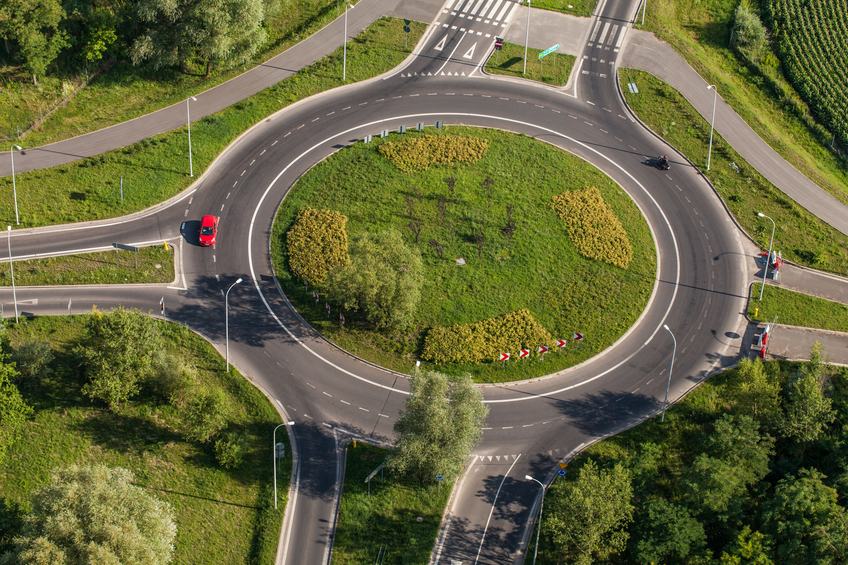
This online engineering PDH interactive presentation provides a detailed examination of strategies used to reduce vehicle approach speeds at roundabouts to improve safety and operational efficiency. It focuses on geometric design principles, signing, pavement marking, and illumination techniques that influence driver behavior and encourage safe entry speeds at both rural and urban intersections.
This presentation begins by introducing the relationship between roundabout geometry and driver speed perception, outlining how entry curvature, splitter islands, and lane narrowing contribute to speed reduction. It reviews current national and state guidance including FHWA, MnDOT, and NCHRP recommendations and presents findings from practitioner surveys and real-world case studies. Participants will gain insights into the design of approach offsets, use of curbing, lighting, and landscaping, and the role of traffic control devices and dynamic signage in high-speed environments. The presentation also discusses evaluation methods for identifying speed-related issues, crash data analysis, and performance of implemented countermeasures.
This 2 PDH online interactive presentation is designed for transportation engineers, roadway designers, planners, and public agency professionals seeking to apply evidence-based design and operational strategies that promote safe and consistent roundabout approach speeds.
This continuing education interactive presentation is intended to provide you with the following specific knowledge and skills:
- To discuss the importance of reducing vehicle approach speeds at roundabouts for improving safety and operational performance.
- To understand the geometric, signage, and pavement marking strategies used to influence driver behavior and lower approach speeds.
- To explore the effectiveness of entry curvature, splitter islands, and lane narrowing as design elements in speed management.
- To familiarize with evaluation methods and case studies demonstrating the performance of speed reduction strategies at existing roundabouts.
- To learn about agency experiences and lessons learned in implementing speed control measures during roundabout planning and retrofitting.
- To gain insights into best practices for selecting, designing, and maintaining features that support safe and consistent roundabout entry speeds.
Upon successful completion of the quiz, print your Certificate of Completion instantly. (Note: if you are paying by check or money order, you will be able to print it after we receive your payment.) For your convenience, we will also email it to you. Please note that you can log in to your account at any time to access and print your Certificate of Completion.