

Wisconsin Construction Safety and Ethics 17 PDH Discount Package 3
Ergonomic Guidelines for Manual Material Handling (Y03-003)
Introduction to Radiation (Y03-004)
Preventing Mold in the Workplace (C01-014)
Protecting Building Environments from Airborne CBR Attacks (F03-003)
Protecting Yourself and Your Family from Radon (C01-022)
Stairways and Ladders (C01-012)
General Principles of Engineering Ethics (LE2-016)
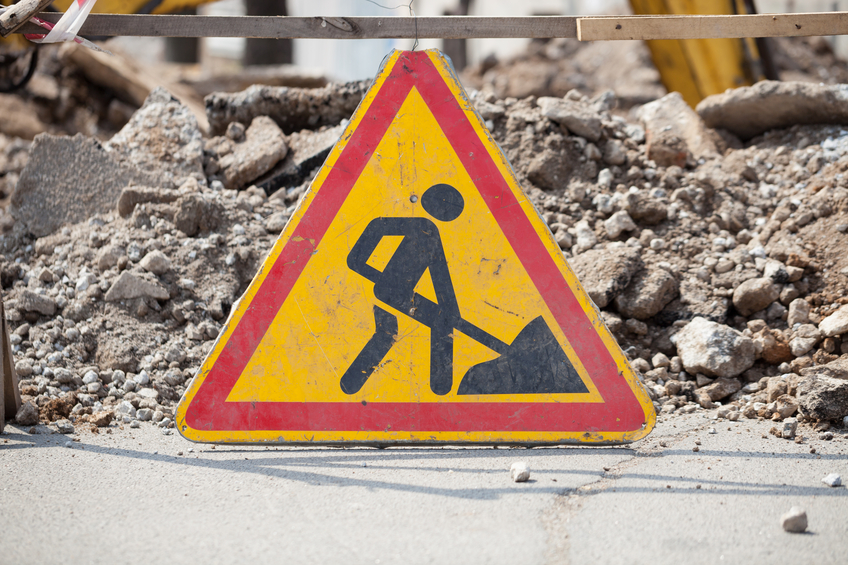
This online engineering PDH course provides guidance on the Confined Spaces standard that applies to construction work performed in confined spaces. It addresses the most common issues that employers face and provides sufficient detail to serve as a useful compliance guide.
A confined space is a space whose configuration and/or contents may present special dangers not found in normal work areas. Confined spaces may be poorly ventilated and, as a result, contain insufficient oxygen or hazardous levels of toxic gases. Working in a tight space can prevent a worker from keeping a safe distance from mechanical and electrical hazards in the space. Fumes from flammable liquids in a poorly ventilated area can reach explosive levels.
Such hazards endanger both the workers in the confined space and others who become exposed to the hazards when they attempt to rescue injured workers. Therefore, employers must evaluate all confined spaces in which their employees work to determine whether hazards exist and whether the work to be done has the potential to create such hazards in the future.
This 3 PDH online course is applicable to engineers, architects, managers and contractors whose duties involve work in confined spaces and are interested in learning about the proper approach to safety while working in compliance with the Confined Spaces standard.
This PE continuing education course is intended to provide you with the following specific knowledge and skills:
- Familiarizing with confined and permit spaces
- Gaining a general overview of the Confined Spaces standard’s requirements
- Learning about employer responsibilities and worker training
- Understanding the content of the permit space program
- Learning about the alternate procedures for certain permit spaces
- Understanding the responsibilities of entrants, attendants and entry supervisors
- Exploring different rescue and emergency services
Upon successful completion of the quiz, print your Certificate of Completion instantly. (Note: if you are paying by check or money order, you will be able to print it after we receive your payment.) For your convenience, we will also email it to you. Please note that you can log in to your account at any time to access and print your Certificate of Completion.
This online engineering PDH course provides information on effective ergonomic interventions that help lower the physical demands of manual material handling (MMH) work.
Manual material handling work contributes to a large percentage of over half a million cases of musculoskeletal disorders reported annually in the United States. Musculoskeletal disorders often involve strains and sprains to the lower back, shoulders, and upper limbs. They can result in protracted pain, disability, medical treatment, and financial stress for those afflicted with them.
Effective ergonomic interventions can lower the physical demands of MMH work tasks, thereby lowering the incidence and severity of the musculoskeletal injuries they can cause. Their potential for reducing injury-related costs alone make ergonomic interventions a useful tool for improving a company’s productivity, product quality, and overall business competitiveness.
This 3 PDH online course is applicable to engineers, managers and supervisors who are interested in learning more about ergonomic interventions that reduce the physical demands of manual material handling work.
This PE continuing education course is intended to provide you with the following specific knowledge and skills:
- Familiarizing with the basics of manual material handling
- Understanding the importance of improving the workplace
- Understanding the conditions associated with the development of injuries in manual material handling tasks
- Learning about the different types of ergonomic improvements
- Knowing easier ways to manually lift, lower, fill, or empty containers
- Exploring alternatives to the manual handling of individual containers
Upon successful completion of the quiz, print your Certificate of Completion instantly. (Note: if you are paying by check or money order, you will be able to print it after we receive your payment.) For your convenience, we will also email it to you. Please note that you can log in to your account at any time to access and print your Certificate of Completion.
This online engineering PDH course provides an overview of the types of radiation, the health effects due to exposure and the way it is regulated.
Radiation has always been present and is all around us. Life has evolved in a world containing significant levels of ionizing radiation. We are also exposed to man-made radiation from sources such as medical treatments and activities involving radioactive material.
The health effects of radiation are well understood. Since the early 20th century, radiation’s effects have been studied in depth, in both the laboratory and among human populations. Because of the known health risks of radiation, it must be carefully used and strictly controlled. A balance must be struck between radiation’s societal benefits and the risks that radiation poses to people, health and the environment.
The Canadian Nuclear Safety Commission (CNSC) regulates the use of nuclear energy and materials to protect the health, safety and security of Canadians and the environment; and to implement Canada's international commitments on the peaceful use of nuclear energy. It also sets dose limits to prevent workers and the public from excessive radiation exposure.
This 3 PDH online course is applicable to safety engineers and professionals who are interested in learning more about nuclear safety.
This PE continuing education course is intended to provide you with the following specific knowledge and skills:
- Understanding the definitions of atoms, isotopes and radioisotopes
- Familiarizing with the types of radiation: non-ionizing and ionizing radiation
- Knowing the natural and man-made sources of ionizing radiation
- Understanding the health effects of radiation exposure and how it causes cancer
- Familiarizing with the epidemiological evidence of the effect of the radiation exposure
- Identifying the radiation dose limits and the typical radiation doses produced by natural and man-made sources
- Learning the types of radiation doses: absorbed, equivalent and effective dose
- Familiarizing with the rules regulating radiation
Upon successful completion of the quiz, print your Certificate of Completion instantly. (Note: if you are paying by check or money order, you will be able to print it after we receive your payment.) For your convenience, we will also email it to you. Please note that you can log in to your account at any time to access and print your Certificate of Completion.

This online engineering PDH course provides basic information about mold, mold sources, and building-related illnesses. Brief discussions are included on building design considerations for healthy indoor air, as well as building evaluation and sampling for mold.
Molds are the most common forms of fungi found on the earth; they reproduce through the formation of spores, tiny microscopic cells that float through the indoor and outdoor air on a continual basis. Therefore left unchecked, they can eventually destroy the surfaces they grow on.
This 1 PDH online course is applicable to engineers, construction personnel, design professionals, building owners and other personnel either dealing with mold or interseted in understanding how to prevent building-related illnesses associated with mold problems in offices and other indoor workplaces.
This PE continuing education course is intended to provide you with the following specific knowledge and skills:
- Understanding the definition of mold
- Knowing what causes mold in buildings
- Learning how to prevent mold in buildings
- Understanding the health effects associated with mold
- Learning about mold sampling
- Knowing what to do about mold in the workplace
In this professional engineering CEU course, you need to review OSHA 3304-04N, "Preventing Mold-Related Problems in the Indoor Workplace".
Upon successful completion of the quiz, print your Certificate of Completion instantly. (Note: if you are paying by check or money order, you will be able to print it after we receive your payment.) For your convenience, we will also email it to you. Please note that you can log in to your account at any time to access and print your Certificate of Completion.
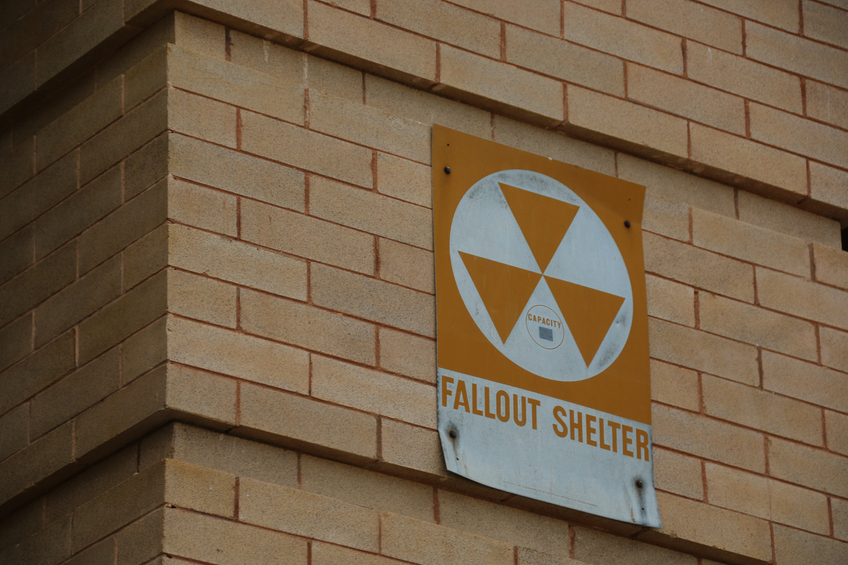
This online engineering PDH course provides guidance on such protective measures that a building owner, manager or engineer can implement without undue delay to enhance occupant protection from an airborne chemical, biological, or radiological (CBR) attack.
The likelihood of a specific building being targeted for terrorist activity is generally difficult to predict. As such, there is no specific formula that will determine a certain building's level of risk. Building owners, managers or engineers must make their own decisions about how to reduce their building's risk to airborne chemical, biological, or radiological (CBR) attack.
These decisions may be aided by a comprehensive building security assessment to identify the appropriate protective measures which will help transform buildings into less attractive targets. These protective measures include, but are not limited to, increasing the difficulty of introducing a CBR agent, increasing the ability to detect terrorists before they carry out an intended release, and incorporating plans and procedures to mitigate the effects of a CBR release.
This 3 PDH online course is applicable to building owners, facility engineers and managers, and maintenance personnel of public, private, and governmental buildings, including offices, laboratories, hospitals, retail facilities, schools, transportation terminals, and public venues (for example, sports arenas, malls, coliseums), who are interested in gaining a better understanding of enhancing the resilience of a building.
This PE continuing education course is intended to provide you with the following specific knowledge and skills:
- Understanding buildings and their systems
- Identifying physical security requirements
- Evaluating HVAC systems and their vulnerability to CBR agents
- Implementing maintenance, administration and training measures
In this professional engineering CEU course, you need to review the course document titled "Protecting Building Environments from Airborne Chemical, Biological or Radiological Attacks" prepared by the National Institute for Occupational Safety and Health (NIOSH), Department of Health and Human Services, May 2002.
Upon successful completion of the quiz, print your Certificate of Completion instantly. (Note: if you are paying by check or money order, you will be able to print it after we receive your payment.) For your convenience, we will also email it to you. Please note that you can log in to your account at any time to access and print your Certificate of Completion.
This online engineering PDH course provides guidelines on how to protect yourself and your family from Radon.
Radon is estimated to cause many thousands of deaths each year. That’s because when you breathe air containing radon, you can get lung cancer. Radon is a gas that cannot be seen, smelled, or tasted. Testing kits are required in order to determine whether radon exposure is a problem in your home.
This 1 PDH online course is applicable to environmental, civil, and mechanical engineers as well as other personnel who are interested in gaining a better understanding of radon.
This PE continuing education course is intended to provide you with the following specific knowledge and skills:
- Understanding how radon gets into your home
- Familiarizing with the risks of elevated radon levels in your home
- Learning how to test for radon
- Learning how to reduce radon levels in the home
- Dispelling myths about radon exposure and reduction
Upon successful completion of the quiz, print your Certificate of Completion instantly. (Note: if you are paying by check or money order, you will be able to print it after we receive your payment.) For your convenience, we will also email it to you. Please note that you can log in to your account at any time to access and print your Certificate of Completion.

This online engineering PDH course provides guidance on OSHA construction safety and health standards that apply to all stairways and ladders used in construction, alteration, repair, painting, decorating and demolition of worksites.
Stairways and ladders are major sources of injuries and fatalities among construction workers, and many of the injuries are serious enough to require time off the job. OSHA recognizes that carelessness/misuse in using stairways and ladders presents serious danger to all workers involved. Therefore, OSHA developed the "Stairways and Ladders" guidance document to minimize hazards and protect employees from construction related accidents.
This 1 PDH online course is applicable to all engineers, employers, building owners, facility managers, and all personnel working on construction projects.
This PE continuing education course is intended to provide you with the following specific knowledge and skills:
- Understanding the general requirements for stairways and ladders
- Learning about the specific rules and safety precautions for all types of ladders
- Learning about the specific rules and safety precautions that govern stairways
In this professional engineering CEU course, you need to review OSHA 3124-12R, "Stairways and Ladders".
Upon successful completion of the quiz, print your Certificate of Completion instantly. (Note: if you are paying by check or money order, you will be able to print it after we receive your payment.) For your convenience, we will also email it to you. Please note that you can log in to your account at any time to access and print your Certificate of Completion.

This online engineering PDH course presents the principles of engineering ethics that every engineer is expected to live by when practicing their profession.
Engineering ethics is (1) the study of moral issues and decisions confronting individuals and organizations involved in engineering and (2) the study of related questions about moral conduct, character, ideals and relationships of peoples and organizations involved in technological development (Martin and Schinzinger, Ethics in Engineering).
This course describes the fundamental legal concepts with which very engineer should be familiar. It also presents unique disciplinary case studies selected from across the nation, as well as hypothetical ethical challenges that demonstrate how difficult it can be to apply the code of ethics for engineers.
This 2 PDH online course is applicable to all professional engineers who are either required to fulfill 2 PDH in engineering ethics or are interested in broadening their understanding of what it means to practice and uphold the honor and integrity of their engineering profession while holding the utmost safety, health, and welfare of the public.
This PE continuing education course is intended to provide you with the following specific knowledge and skills:
- Understanding the common definition of ethics regarding engineering
- Learning about the important principles of the engineer’s professional responsibility
- Learning the do’s and don’ts through several ethical and disciplinary cases
- Understanding what it means to practise and uphold the honor and integrity of the engineering profession
Upon successful completion of the quiz, print your Certificate of Completion instantly. (Note: if you are paying by check or money order, you will be able to print it after we receive your payment.) For your convenience, we will also email it to you. Please note that you can log in to your account at any time to access and print your Certificate of Completion.