

West Virginia Chemical 30 PDH Discount Package 2
Reactor Water Chemistry (H03-001)
Ozone Treatment for Cooling Towers (M02-002)
Rapid Chemical Exposure and Dose Research (H03-010)
Exposure Assessment During a Chemical Attack (H08-001)
Chemigation - Backflow Prevention (M01-005)
Chemical Transformation Simulator (H02-013)
Calculation of Gas Density and Viscosity (H02-011)
Building Field Capabilities to Respond to Drinking Water Contamination (H03-009)
An Introduction to Chemical Cleaning of Industrial Water Systems (H03-003)
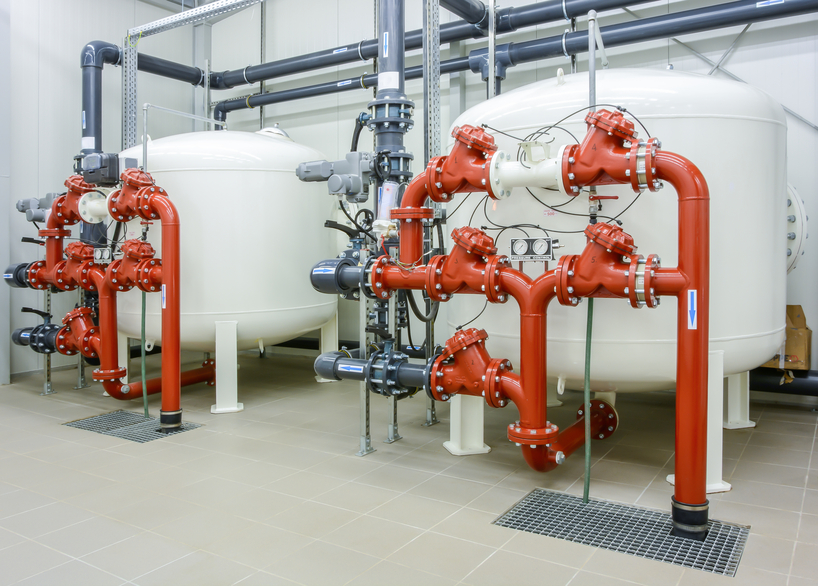
This online engineering PDH course addresses the principles of ion exchange in the context of water purity. It also discusses typical water treatment methods and the basis for these methods.
Water treatment is necessary to remove the impurities that are contained in water as found in nature. Control or elimination of these impurities is necessary to combat corrosion, scale formation, and fouling of heat transfer surfaces throughout facility support systems.
This 3 PDH online course is applicable to chemical and environmental engineers, design and construction personnel, technical staff and facility operators who are interested in gaining a better understanding of the principles of water treatment.
This PE continuing education course is intended to provide you with the following specific knowledge and skills:
- Water treatment processes
- Dissolved gases
- Suspended solids
- pH control
- Water purity
In this professional engineering CEU course, you need to review Module 4, "Principles of Water Treatment" of the Department of Energy Publication DOE-HDBK-1015/1-93, "Chemistry".
Upon successful completion of the quiz, print your Certificate of Completion instantly. (Note: if you are paying by check or money order, you will be able to print it after we receive your payment.) For your convenience, we will also email it to you. Please note that you can log in to your account at any time to access and print your Certificate of Completion.

This online engineering PDH course describes the chemical measures taken to retard the corrosion often found in water systems. It also addresses the consequences of radioactivity on facility cooling water systems.
Radiation synthesis is a process that takes place in the reactor coolant system. This phenomenon is limited to the reactor coolant system because of the high flux (radiation) levels that exist in the core region and further complicate chemistry control of the reactor plant.
This 3 PDH online course is applicable to chemical engineers, design and construction personnel, technical staff and facility operators who are interested in gaining a better understanding of the reactor water chemistry.
This PE continuing education course is intended to provide you with the following specific knowledge and skills:
- Understanding water chemistry parameters
- Understanding the effects of radiation on water chemistry
In this professional engineering CEU course, you need to review Module 3, "Reactor Water Chemistry" of the Department of Energy Publication DOE-HDBK-1015/1-93, "Chemistry".
Upon successful completion of the quiz, print your Certificate of Completion instantly. (Note: if you are paying by check or money order, you will be able to print it after we receive your payment.) For your convenience, we will also email it to you. Please note that you can log in to your account at any time to access and print your Certificate of Completion.
This online engineering PDH course describes the basics about ozone treatment of cooling towers as a "new technology". Cost benefits of using ozone in treatment of cooling tower water, application considerations, maintenance issues, utility initiatives, performance of cooling tower and laboratory versus case study perspectives are discussed.
The form of oxygen known as ozone has been recognized for nearly a century for its powerful ability to disinfect water. Cooling tower water must be treated to limit the growth of mineral and microbial deposits that can reduce the heat transfer efficiency of the cooling tower. The use of ozone to treat water in cooling towers is a relatively new practice that is increasing in popularity, and it has good potential for use in commercial building systems.
This 2 PDH online course is applicable to mechanical engineers, design and construction personnel, technical staff and facility personnel who are interested in gaining a better understanding of ozone treatment for cooling towers.
This PE continuing education course is intended to provide you with the following specific knowledge and skills:
- Ozone treatment of cooling tower waters
- Cost benefits of using ozone water treatment
- Performance of cooling towers with ozone water treatment
- Maintenance considerations when using ozone water treatment
- Manufacturers and suppliers of ozone generating equipment
- Ozone equipment selections considerations
In this professional engineering CEU course, you need to review the material contained in Ozone Treatment for cooling Tower, DOE/DOD/SERDP.
Upon successful completion of the quiz, print your Certificate of Completion instantly. (Note: if you are paying by check or money order, you will be able to print it after we receive your payment.) For your convenience, we will also email it to you. Please note that you can log in to your account at any time to access and print your Certificate of Completion.
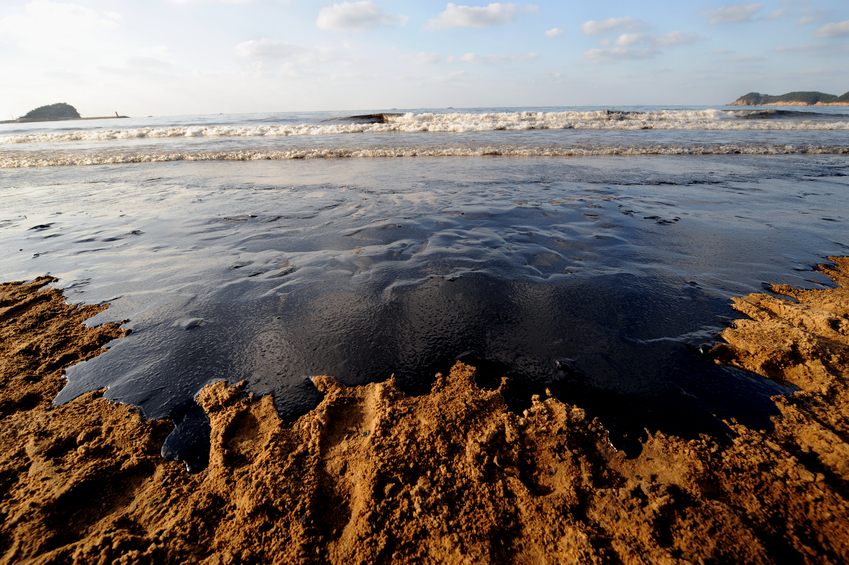
This online engineering PDH course covers the topic of chemical risk assessment and the different factors that affect it.
A tapestry of laws covers the chemicals people are exposed to in the United States. Most other chemicals, ranging from industrial waste to dyes to packing materials, are covered by the recently updated Toxic Substances Control Act (TSCA) and administered by the United States Environmental Protection Agency (EPA). New approach methodologies (NAMs) are being developed to prioritize these existing and new chemicals for testing
This 3 PDH online course is applicable to chemical engineers and professionals who are interested in learning more about the chemical risk assessment.
This PE continuing education course is intended to provide you with the following specific knowledge and skills:
- Understanding how chemical risk can be identified
- Familiarizing with the New Approach Methodologies (NAMs)
- Learning about High Throughput Toxicokinetics (HTTK)
- Understanding New Exposure Data and Models
Upon successful completion of the quiz, print your Certificate of Completion instantly. (Note: if you are paying by check or money order, you will be able to print it after we receive your payment.) For your convenience, we will also email it to you. Please note that you can log in to your account at any time to access and print your Certificate of Completion.
This online engineering PDH course provides a comprehensive overview of exposure assessment during a chemical attack, specifically focusing on livestock carcass management.
This course explores various management options available for handling livestock carcasses in the wake of potential chemical contamination events. It covers essential topics such as the estimation of releases, fate and exposure estimation methods, and the evaluation of different carcass management techniques within the context of regulatory compliance. This course aims to equip engineers and environmental professionals with the knowledge required to make informed decisions regarding livestock carcass management following chemical emergencies. It delves into the complexities of chemical hazards, including dioxins and diazinon, and their impacts on air, soil, and water resources. Additionally, the course features real-world case studies and examples to illustrate best practices in managing livestock carcasses to minimize risks to human health and the environment.
This 8 PDH online course is applicable to chemical and environmental engineers, as well as other technical professionals involved in exposure assessment during a chemical attack.
This PE continuing education course is intended to provide you with the following specific knowledge and skills:
- Understanding the various livestock carcass management options available during a chemical attack and their respective advantages and disadvantages
- Learning about the chemical hazards associated with livestock, including dioxins and diazinon, and their environmental impacts
- Knowing the estimation methods for releases and exposure pathways related to carcass management strategies
- Familiarizing with regulatory frameworks governing the disposal of contaminated livestock carcasses and ensuring compliance with environmental laws
- Understanding the fate and transport of chemicals in air, soil, and water following livestock management practices
- Learning to assess the potential risks to human health and the environment from different carcass management approaches
- Familiarizing with case studies that illustrate successful carcass management strategies in the context of chemical emergencies
- Understanding the importance of decision-making and prioritization in selecting mitigation measures during chemical incidents affecting livestock
Upon successful completion of the quiz, print your Certificate of Completion instantly. (Note: if you are paying by check or money order, you will be able to print it after we receive your payment.) For your convenience, we will also email it to you. Please note that you can log in to your account at any time to access and print your Certificate of Completion.
This online engineering PDH course describes pesticide label requirements for Chemigation, Chemigation system operation and calibration and Chemigation system safety.
Chemigation, or the addition of chemicals to irrigation water, has probably been around for as long as both irrigation and chemicals have been used in agriculture. Chemigation became more widely used in the 1970's with the adoption of center pivot irrigation systems in the Midwest. Backflow prevention is necessary to prevent pesticide contamination of surface water supplies as well as ground water.
This 1 PDH online course is applicable to mechanical engineers, civil engineers, chemical engineers and environmental engineers who are interested in learning more about chemigation in irrigation water.
This PE continuing education course is intended to provide you with the following specific knowledge and skills:
- Pesticide labeling requirements for chemigation
- Alternative devices that also comply with labeling
- Maintenance, calibration and safety of chemigation
In this professional engineering CEU course, you will need to review the material contained in Grower Training Manual for Backflow Prevention in Chemigation of Pesticides, Revised 3/3/04.
Upon successful completion of the quiz, print your Certificate of Completion instantly. (Note: if you are paying by check or money order, you will be able to print it after we receive your payment.) For your convenience, we will also email it to you. Please note that you can log in to your account at any time to access and print your Certificate of Completion.
This online engineering PDH course provides a guide for users on how to utilize the Chemical Transformation Simulator (CTS) tool.
The Chemical Transformation Simulator (CTS) provides the calculated physicochemical properties of a target chemical and its transformation products, which are predicted as a function of the reaction system of interest. This is accomplished through the integration of cheminformatics applications for the encoding of process science underlying transformation pathways and computational chemistry tools for the calculation of physicochemical properties.
This 2 PDH online course is applicable to chemical and environmental engineers, as well as other professionals interested in knowing how to use the CTS tool.
This PE continuing education course is intended to provide you with the following specific knowledge and skills:
- Familiarizing with the CTS tool and its restrictions
- Understanding the different CTS modules
- Learning how to execute the different CTS workflows
- Knowing how to generate reports
Upon successful completion of the quiz, print your Certificate of Completion instantly. (Note: if you are paying by check or money order, you will be able to print it after we receive your payment.) For your convenience, we will also email it to you. Please note that you can log in to your account at any time to access and print your Certificate of Completion.
This engineering online PDH course contains a discussion of, and an example calculation of, the density and viscosity of a specified gas at a given temperature and pressure. In this course, the Redlich Kwong equation will be used for calculation of the compressibility factor of a gas. The Sutherland formula will be discussed and used in example calculations. Another method for calculating the viscosity of air at a specified temperature and pressure will also be presented and discussed.
The density and/or viscosity of a gas is often needed for some other calculation, such as pipe flow or heat exchanger calculations. If the gas temperature is high relative to its critical temperature and the gas pressure is low relative to its critical pressure, then it can be treated as an ideal gas and its density can be calculated at a specified temperature and pressure using the ideal gas law. If the density of a gas is needed at a temperature and pressure at which it cannot be treated as an ideal gas law, however, then the compressibility factor of the gas must be calculated and used in calculating its density. The Sutherland formula can be used to calculate the viscosity of a gas at a specified temperature and pressure if the Sutherland constants are available for the gas.
This 2 PDH online course is intended for chemical, mechanical and environmental engineers. After completing this course, you will have knowledge about methods for calculating the density and viscosity of a gas at specified temperature and pressure.
This PE continuing education course is intended to provide you with the following specific knowledge and skills:
- Ability to calculate the density of a gas of known molecular weight at a specified temperature and pressure at which the gas can be treated as an ideal gas
- Ability to calculate the compressibility factor for a gas at a specified temperature and pressure, using the Redlich-Kwong equation, if the molecular weight, critical temperature and critical pressure of the gas are known.
- Ability to calculate the density of a gas at a specified temperature and pressure for which the gas cannot be treated as an ideal gas, if the molecular weight, critical temperature and critical pressure of the gas are known.
- Ability to calculate the viscosity of a gas at a specified temperature if the Sutherland constant for the gas is known and the viscosity of the gas at a suitable reference temperature is known.
- Ability to calculate the viscosity of air at specified air temperature and pressure.
- Ability to make all of the calculations described in these learning objectives using either U.S. or S.I. units.
In this professional engineering CEU course, you need to review the course document titled, “Calculation of Gas Density and Viscosity”. In addition, you need to review the Excel spreadsheet titled, "Real Gas Density Calculators_US or SI units".
Real Gas Density Calculators_US or SI units (43 KB)
Once you complete your course review, you need to take a multiple-choice quiz consisting of fifteen (15) questions to earn 2 PDH credits. The quiz will be based on both documents.
Upon successful completion of the quiz, print your Certificate of Completion instantly. (Note: if you are paying by check or money order, you will be able to print it after we receive your payment.) For your convenience, we will also email it to you. Please note that you can log in to your account at any time to access and print your Certificate of Completion.
This online engineering PDH course provides guidance on building field capabilities in order to respond to the contamination of drinking water. The course also provides planning and implementation guidance, templates, customizable report forms, and other documentation for Sampling and Analysis (S&A) activities.
When performed in response to possible or credible drinking water contamination, the goal of Sampling and Analysis (S&A) is to confirm or rule out contamination through field and laboratory testing. It is one of the earliest utility-led activities initiated when the utility has activated its drinking water contamination response plan and continues throughout remediation and recovery if contamination is confirmed.
This 3 PDH online course is intended for chemical and environmental engineers as well as others who are interested in learning more about building field capabilities in order to respond to the contamination of drinking water.
This PE continuing education course is intended to provide you with the following specific knowledge and skills:
- Familiarizing with planning and documentation for visual site hazard assessment, sample collection, and sample packaging and shipping
- Familiarizing with planning and documentation for site safety screening, rapid field testing, and hazardous materials packaging and shipping
- Understanding the staffing requirements to perform basic and advanced field activities
- Taking into consideration field response health and safety
- Familiarizing with quality assurance and quality control
- Understanding emergency response procedures
- Familiarizing with the considerations for preparation, placement, and contents of emergency response sampling and analysis kits
Upon successful completion of the quiz, print your Certificate of Completion instantly. (Note: if you are paying by check or money order, you will be able to print it after we receive your payment.) For your convenience, we will also email it to you. Please note that you can log in to your account at any time to access and print your Certificate of Completion.
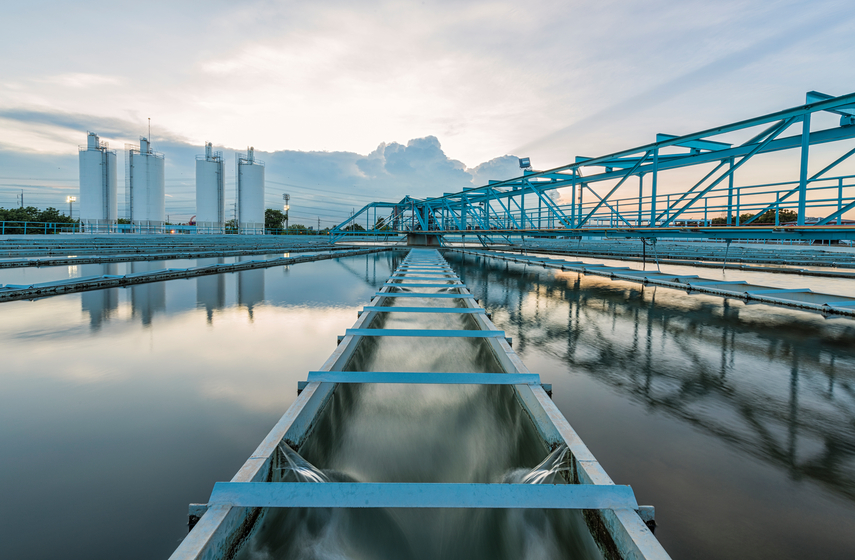
This online engineering PDH course will introduce you to methods for cleaning industrial water systems with chemicals. You will learn about pre-operational cleaning which is performed to prepare water-contacted metal surfaces to receive chemical treatment to provide protection from scale, corrosion and microbiological growth. You will also learn about remedial cleaning to restore water systems that have been fouled with scale, corrosion products and microbiological growth due to inadequate or ineffective water treatment. Examples of industrial water systems for which chemical cleaning are applicable are boilers, heat exchangers, cooling towers, and chillers.
Maintenance of an effective water treatment program is essential to minimize scale and corrosion problems in industrial water systems; however, scale and deposits will often form and require remedial cleaning. If not removed, these scale and water-caused deposits may impact the safety of operations personnel, interfere with heat transfer, and cause excessive damage to, or destruction of, the water-using equipment.
This 3 PDH online course is intended for industrial, chemical and mechanical engineers, as well as, maintenance personnel and construction professionals interested in learning about the use of chemicals for cleaning industrial water systems and equipment such as boilers, heat exchangers, cooling towers and chillers.
This PE continuing education course is intended to provide you with the following specific knowledge and skills:
- Learning about pre-operational cleaning of new industrial water-using systems and equipment
- Learning about remedial cleaning of industrial water systems and equipment to restore them to optimal operating condition
- Learning about chemical cleaning methods that have largely superseded mechanical cleaning methods
- Learning about chemicals used for chemical treatment of industrial water systems
- Learning about the use of hydrochloric acid to remove carbonates scale with lesser amounts of phosphates, sulfates and silicates
- Learning about hydrochloric acid's limitations where stainless or galvanized steel is part of the system
- Learning about the use of sulfamic acid to remove scale from metal surfaces
- Learning about the importance of isolating equipment to be cleaned from other parts of the system using valves, rubber blankets, wooden bulkheads with seals, inflatable nylon or rubber bags, rubber sponge-covered plugs, or blind flanges and steel plates with rubber seals
- Learning about the recirculating cleaning process for boilers
- Learning about a circulating method for descaling smaller equipment that does not require heating
- Learning about the fill and soak method of chemical cleaning
In this professional engineering CEU course, you need to review the course document titled, "An Introduction to Chemical Cleaning of Industrial Water Systems".
Upon successful completion of the quiz, print your Certificate of Completion instantly. (Note: if you are paying by check or money order, you will be able to print it after we receive your payment.) For your convenience, we will also email it to you. Please note that you can log in to your account at any time to access and print your Certificate of Completion.