

Utah Structural 30 PDH Discount Package 4
Protocols for the Assessment and Repair of Bridge Foundations (S08-006)
Making Schools Safe from Earthquakes (S05-012)
Installing Seismic Restraints for Electrical Equipment (S05-009)
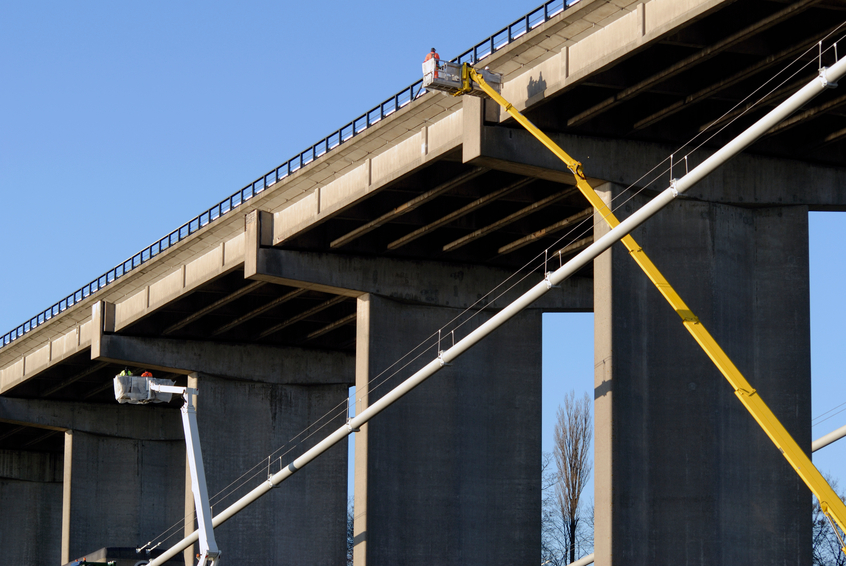
This online engineering PDH course provides basic information on the capabilities of sonar technologies in performing underwater bridge inspections and its benefits in supplementing dive inspectors to improve inspections.
The requirements for underwater bridge inspection procedures using divers are well documented within the U.S. However, some bridge inspectors and owners have increasingly been supplementing dive inspections with acoustic imaging technology to enhance inspection quality, increase safety, increase efficiency, and improve documentation of findings. This trend has accelerated, in part, because of advancements in sonar technology. The trend has also accelerated because site conditions adverse to dive inspections—such as limited underwater visibility, high velocity currents, submerged debris, and extreme water depths—exist at many bridge sites.
Because these adverse conditions can limit a diver’s ability to inspect a bridge below water, many states are investigating the use of sonar technologies for underwater bridge substructure inspection. FHWA provides overall guidance for these inspections and recognized the need for a comprehensive evaluation of the capabilities of sonar technologies for this important activity. In this study, a range of sonar technologies are evaluated in a variety of underwater conditions to determine how these technologies can be effectively used in conjunction with or independently of divers.
This 12 PDH online course is applicable to structural engineers and bridge personnel responsible for inspecting bridge foundations who are interested in applying sonar technologies for underwater bridge inspections.
This PE continuing education course is intended to provide you with the following specific knowledge and skills:
- Familiarizing with sonar technologies including three-dimensional sonar systems and two-dimensional imaging sonar
- Familiarizing with sonar technology reliability by evaluating variations in the speed of sound, transducer head movement, interference and noise, acoustic multipath,transverse and range resolution, acoustic shadows, slant-range distortion and GPS accuracy
- Learning about technology selection and the strengths and weaknesses of sonar technologies including 3D real-time multibeam, 2D multibeam and 3D mechanical multibeam 2D sector-scanning and 3D profiler and Dive equipment
- Understanding underwater bridge inspection environment for concrete, steel and timber bridges
- Understanding phase I and phase II field testing and evaluating their findings
Upon successful completion of the quiz, print your Certificate of Completion instantly. (Note: if you are paying by check or money order, you will be able to print it after we receive your payment.) For your convenience, we will also email it to you. Please note that you can log in to your account at any time to access and print your Certificate of Completion.
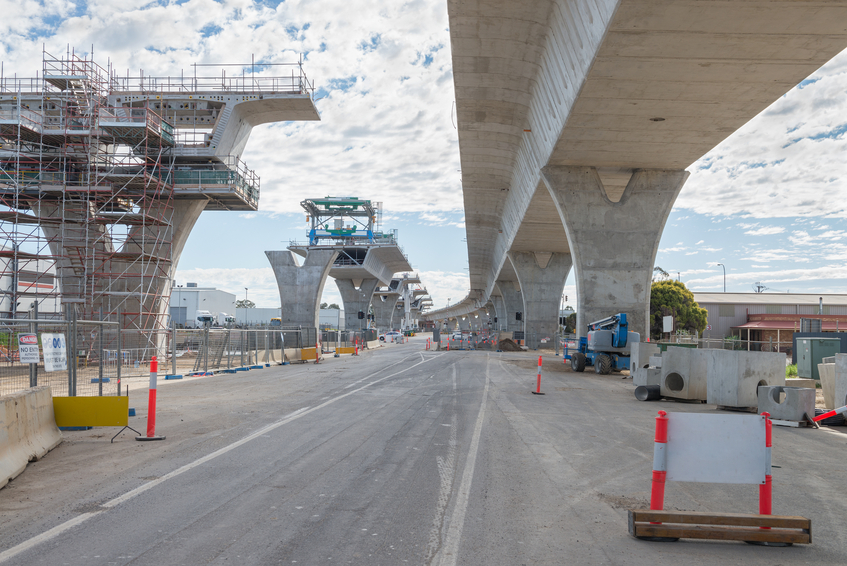
This online engineering PDH course provides information on protocols for the assessment and repair of bridge foundations.
This course is intended to provide guidance to bridge owners for preparing for and responding to bridge foundation failures. The word “failure” as used herein includes foundation movements and/or corrosion beyond the design norms for the structure that result in the need to close a bridge or portion thereof for any period of time. The movements and/or corrosion may or may not cause the bridge to be unsafe but are considered significant enough to close the bridge.
This course describes case histories of recent bridge foundation failures. It also provides guidance on preparing for foundation events by collecting records, establishing response teams and developing notification and communication protocols. Once an event has occurred, the course provides guidance for response including closing the bridge to traffic, notifying government and private parties, stabilizing the bridge site, investigative and monitoring techniques, repair and retrofit techniques. The course includes a check list intended to assist bridge in preparing for an incident and for developing a response once an incident has occurred.
This 8 PDH online course is applicable to structural engineers and other professionals who are interested in learning more about the assessment and repair of bridge foundations.
This PE continuing education course is intended to provide you with the following specific knowledge and skills:
- Familiarizing with repair and retrofit techniques utilized in the restoration of bridge foundations, ensuring the successful rehabilitation of the structure
- Learning about effective response procedures following a bridge foundation failure, such as closing the bridge to traffic, notifying relevant government and private parties, stabilizing the bridge site, and implementing investigative and monitoring techniques
- Understanding the definition and scope of bridge foundation failures, encompassing movements and/or corrosion that exceed design norms and necessitate bridge closures
- Learning about practical guidance for preparing for foundation events, including the collection of relevant records, establishment of response teams, and development of notification and communication protocols
- Knowing strategies and techniques to restore the load carrying capacity of failed bridge foundations, enabling the bridge to be put back into service
Upon successful completion of the quiz, print your Certificate of Completion instantly. (Note: if you are paying by check or money order, you will be able to print it after we receive your payment.) For your convenience, we will also email it to you. Please note that you can log in to your account at any time to access and print your Certificate of Completion.

This online engineering PDH course outlines the earthquake risk to schools and the processes and methods that can be used to reduce it. An explanation of the nature and probability of earthquakes is provided, together with procedures for determining the earthquake threat to specific locations and for evaluating the vulnerability of a school building. An assessment of the scope and effectiveness of seismic building codes is followed by a description of current methods of designing for seismic resistance in new buildings and upgrading existing buildings. Lastly, the course presents guidance for school districts, facility planners, and designers on determining acceptable risk and the use of performance- based design.
Although earthquakes cannot be prevented, modern science and engineering provide tools that can be used to reduce their effects. Science can now identify, with considerable accuracy, where earthquakes are likely to occur and what forces they will generate. This information is readily available and can be obtained for local geographic regions.
This 5 PDH online course is intended primarily for structural, civil, mechanical and construction engineers, and would also be of particular interest to engineers serving as consultants to school officials involved in the technical and financial decisions of school construction, repair, and renovations.
This PE continuing education course is intended to provide you with the following specific knowledge and skills:
- Understanding the nature and probability of earthquakes
- Understanding the vulnerability of schools
- Understanding earthquake damage to schools
- Learning about seismic codes and schools
- Knowing the effectiveness of seismic codes
- Evaluating existing schools for seismic risk and specific risk reduction methods
- Learning about risk reduction for existing and new schools
- Understanding the role of a school as a post-earthquake shelter
In this professional engineering CEU course, you need to review the course document titled, “Making Schools Safe from Earthquakes” which is based on Chapter 4, of the “Design Guide for Improving School Safety in Earthquakes, Floods, and High Winds.” FEMA P-424, December, 2010.
Once you complete your course review, you need to take a multiple-choice quiz consisting of thirty (30) questions to earn 5 PDH credits. The quiz will be based on this FEMA publication.
Upon successful completion of the quiz, print your Certificate of Completion instantly. (Note: if you are paying by check or money order, you will be able to print it after we receive your payment.) For your convenience, we will also email it to you. Please note that you can log in to your account at any time to access and print your Certificate of Completion.
This online engineering PDH course provides guidelines on how to attach Electrical equipment to a building to minimize earthquake damage. It presents examples of anchoring and using special devices called seismic restraint devices. These devices include vibration isolation systems, cable or strut suspension systems, roof attachment systems and steel shapes.
This 5 PDH online course is applicable to structural and electrical engineers, architects, contractors, building professionals, and other technical personnel dealing with the planning, design and installation of electrical equipment.
This PE continuing education course is intended to provide you with the following specific knowledge and skills:
- Identifying electrical equipment and selecting the appropriate method for its installation
- Familiarizing with the different types of attachments
- Familiarizing with the various types of anchors
- Learning the different methods of supporting control panels and attaching lighting fixtures
- Learning how to design housekeeping pads for seismic measures
In this professional engineering CEU course, you need to review the publication "Installing Seismic Restraints for Electrical Equipment" (FEMA 413), published by the Federal Emergency Management Agency.
Upon successful completion of the quiz, print your Certificate of Completion instantly. (Note: if you are paying by check or money order, you will be able to print it after we receive your payment.) For your convenience, we will also email it to you. Please note that you can log in to your account at any time to access and print your Certificate of Completion.