

North Dakota Wastewater and Ethics 30 PDH Discount Package 1
Biological Wastewater Treatment II - MBBR Processes (C04-045)
Centralized Wastewater Treatment for Facilities Managing Oil and Gas Extraction Wastes: Wastewater Characterization and Management (C02-077)
Centralized Wastewater Treatment for Facilities Managing Oil and Gas Extraction Wastes: Wastewater Management Practices (C04-058)
Pressure and Gravity Sewers (C02-068)
Wastewater Treatment System Performance Requirements (C08-003)
Water Treatment and Purification (H05-004)
An Introduction to Domestic Wastewater Treatment (C02-029)
Ethics, Professionalism and Disciplinary Actions: Case Studies (LE1-003)
This online engineering PDH course describes how onsite wastewater treatment systems (OWTS) have evolved throughout the years along with changing regulations. It also discusses current uses and types (performance-based vs. prescriptive requirements) of OWTS as well as the management program problems associated with such systems. Finally, this course presents initiatives taken to improve onsite system treatment and management.
Onsite wastewater treatment systems have evolved from the pit privies used widely throughout history to installations capable of producing a disinfected effluent that is fit for human consumption. Although achieving such a level of effluent quality is seldom necessary, the ability of onsite systems to remove settleable solids, floatable grease and scum, nutrients, and pathogens from wastewater discharges defines their importance in protecting human health and environmental resources. In the modern era, the typical onsite system has consisted primarily of a septic tank and a soil absorption field, also known as a subsurface wastewater infiltration system, or SWIS.
This 2 PDH online course is applicable to civil and environmental engineers, as well as design and construction personnel involved with the design and installation of onsite wastewater treatment systems.
This PE continuing education course is intended to provide you with the following specific knowledge and skills:
- Regulation of onsite wastewater treatment systems
- Onsite wastewater treatment system use, distribution, and failure rate
- Problems with existing onsite wastewater management programs
- Performance-based management of onsite wastewater treatment systems
- Coordinating onsite system management with watershed protection efforts
- USEPA initiatives to improve onsite system treatment and management
In this professional engineering CEU course, you need to review Chapter 1 of the EPA Onsite Wastewater Treatment Systems Manual, EPA/625/R-00/008, "Background Use of Onsite Wastewater Treatment Systems".
Upon successful completion of the quiz, print your Certificate of Completion instantly. (Note: if you are paying by check or money order, you will be able to print it after we receive your payment.) For your convenience, we will also email it to you. Please note that you can log in to your account at any time to access and print your Certificate of Completion.
This online engineering PDH course provides a discussion and detailed examples of process design calculations for a single stage BOD removal MBBR (moving bed biofilm reactor) system, a two-stage BOD removal MBBR system, a single stage tertiary nitrification MBBR system, a two-stage BOD removal/Nitrification MBBR system a post-anoxic denitrification MBBR system and a pre-anoxic denitrification MBBR system.
This course is Part II of a three-part series. The other two courses in this Biological Wastewater Treatment series are about activated sludge processes (Part I) and Membrane Biofilm Reactor (MBR) processes (Part III).
The MBBR process is an attached growth process that uses plastic carriers to provide a surface on which biofilm grows. The MBBR process doesn’t require sludge recycle, because the biomass remains in the system attached to the plastic carriers. The required reactor size for an MBBR process is typically significantly smaller than that for an activated sludge process treating the same wastewater flow, or for other common attached growth processes like the RBC or trickling filter. It can be used for BOD removal, biological nitrification, biological denitrification, and biological phosphorus removal.
This 4 PDH online course is intended primarily for civil engineers, environmental engineers, and chemical engineers. After completing this course you will be familiar with the general components and configuration of an MBBR wastewater treatment process and be able to make typical process design calculations for an MBBR process.
This PE continuing education course is intended to provide you with the following specific knowledge and skills:
- Understanding the differences between attached growth and suspended growth biological wastewater treatment processes
- Familiarizing with the components of and the general configuration of an MBBR wastewater treatment process
- Calculating the loading rate of a wastewater constituent to an MBBR process (in lb/day and g/day) for a specified wastewater flow rate and constituent concentration
- Calculating the required carrier surface area for an MBBR wastewater treatment process for a specified SALR and loading rate.
- Calculating the required MBBR tank volume for specified carrier surface area, carrier specific surface area and carrier fill %
- Calculating the liquid volume in an MBBR tank for known tank volume, carrier volume and carrier % void space
- Calculating the BOD, NH3-N, or NO3-N removal rate for known values of the surface area removal rate (SARR) and design carrier surface area
- Calculating an estimated effluent BOD, NH3-N or NO3-N concentration based on known values of the appropriate loading rate, estimated removal rate, and design wastewater flow rate
- Learning how to make process design calculations for a post-Anoxic denitrification MBBR process, including required tank sizes, estimated effluent concentrations, alkalinity requirement and carbon source requirement
- Learning how to make process design calculations for a pre-Anoxic denitrification MBBR process, including required tank sizes, estimated effluent concentrations, alkalinity requirements
MBBR BOD Removal Nitrification_US units (395 KB)
MBBR Nitrification-Denitrification-U.S (213 KB)
Upon successful completion of the quiz, print your Certificate of Completion instantly. (Note: if you are paying by check or money order, you will be able to print it after we receive your payment.) For your convenience, we will also email it to you. Please note that you can log in to your account at any time to access and print your Certificate of Completion.
This online engineering PDH course investigates whether the current Centralized Wastewater Treatment (CWT) Effluent Limitations Guidelines and Standards (ELGs) are adequately managing wastewater discharges from CWT facilities accepting oil and gas extraction wastes.
The EPA collected and evaluated data regarding oil and gas wastewater characteristics, as well as data characterizing discharges from CWT facilities accepting oil and gas extraction wastes, which are presented in this course.
The exploration, development and production of oil and gas reserves vary markedly from region to region. There are a number of solid and liquid waste materials generated during oil and gas exploration, extraction and production, and these waste materials may be managed by CWT facilities. The nature and characteristics and quantity of the wastes generated depend upon a number of factors, such as the type of drilling, the characteristics of the formation, the depth of the well and the type and quantity of chemical additives used during drilling, production and well maintenance activities.
This 2 PDH online course is intended for chemical, petroleum, environmental and industrial engineers as well as other interested in understanding the wastewater characterization and management used at CWT to treat oil and gas extraction wastewaters.
This PE continuing education course is intended to provide you with the following specific knowledge and skills:
- Familiarizing with the basics of the wastes that are discharged from oil and gas extraction activities
- Familiarizing with pollutants that are considered for evaluation in drilling wastewater
- Gaining an overview of the additives used in well development along with their purpose
- Familiarizing with pollutants that are considered for evaluation in produced water
- Familiarizing with characterizing the concentrations of pollutants in process wastewater discharges
Upon successful completion of the quiz, print your Certificate of Completion instantly. (Note: if you are paying by check or money order, you will be able to print it after we receive your payment.) For your convenience, we will also email it to you. Please note that you can log in to your account at any time to access and print your Certificate of Completion.
This online engineering PDH course provides an overview of wastewater treatment technologies that are applicable to the treatment of oil and gas extraction wastes used at centralized wastewater treatment (CWT) facilities managing these wastes.
The exploration, development and production of oil and gas reserves vary markedly from region to region. There are a number of solid and liquid waste materials generated during oil and gas exploration, extraction and production, and these waste materials may be managed by CWT facilities. The nature and characteristics and quantity of the wastes generated depend upon a number of factors, such as the type of drilling, the characteristics of the formation, the depth of the well and the type and quantity of chemical additives used during drilling, production and well maintenance activities.
CWT facilities that manage oil and gas extraction wastewaters use a variety of treatment technologies, depending on characteristics of the wastewater received and the treatment objectives.
This 4 PDH online course is intended for chemical, petroleum, environmental and industrial engineers as well as other interested in learning about the wastewater treatment technologies that are used at CWT to treat oil and gas extraction wastewaters.
This PE continuing education course is intended to provide you with the following specific knowledge and skills:
- Familiarizing with the following waste treatment technologies: chemical precipitation, filtration/flotation/ sedimentation and crystallization
- Understanding the following technologies: evaporation/condensation, reverse osmosis, and biological treatment
- Learning about the cost considerations of the listed technologies
- Understanding the capabilities and limitations of the listed technologies
Upon successful completion of the quiz, print your Certificate of Completion instantly. (Note: if you are paying by check or money order, you will be able to print it after we receive your payment.) For your convenience, we will also email it to you. Please note that you can log in to your account at any time to access and print your Certificate of Completion.
This online engineering courses is divided in to two parts: The first part discusses sewer systems that use pressure to deliver sewage to a treatment system. The second part discusses small diameter gravity sewers (SDGS) which convey effluent by gravity from a tank to a treatment location. Each part presents an overall description of the relevant topic along with the advantages and disadvantages of each system, design criteria, performance data, operation and maintenance and insights about cost related data.
Alternative wastewater collection systems can be cost effective for homes in areas where traditional collection systems are too expensive to install and operate. Pressure and gravity sewers are used in sparsely populated or suburban areas in which conventional collection systems would be expensive. These systems generally use smaller diameter pipes with a slight slope or follow the surface contour of the land; thereby, reducing excavation and construction costs. These systems convey effluent by gravity from an interceptor tank (or septic tank) to a centralized treatment location or pump station for transfer to another collection system or treatment facility.
This 2 PDH online course is applicable to civil, mechanical and environmental engineers, as well as design and construction personnel involved with the planning, design and installation of low pressure and small diameter gravity sewer systems.
This PE continuing education course is intended to provide you with the following specific knowledge and skills:
- Learning about the common types of alternative wastewater collection systems
- Understanding the advantages and disadvantages of each type of system
- Understanding the applicability of each system
- Familiarizing with the design criteria, performance data and operation and maintenance processes of each system
- Ability to compare conventional wastewater collection systems to alternative wastewater systems
Upon successful completion of the quiz, print your Certificate of Completion instantly. (Note: if you are paying by check or money order, you will be able to print it after we receive your payment.) For your convenience, we will also email it to you. Please note that you can log in to your account at any time to access and print your Certificate of Completion.
This online engineering PDH course outlines essential steps for characterizing wastewater flow and composition and provides a framework for establishing and measuring performance requirements. It also describes methods for establishing and ensuring compliance with wastewater treatment performance requirements that protect human health, surface waters, and ground water resources. Furthermore, it describes the characteristics of typical domestic and commercial wastewaters and discusses approaches for estimating wastewater quantity and quality for residential dwellings and commercial establishments.
In addition, this course identifies the pollutants of concern in wastewaters and discusses the fate and transport of these pollutants in the receiving environment. It also presents the various technical approaches for establishing performance requirements for onsite systems, based on risk and environmental sensitivity assessments. Finally, it discusses performance monitoring to ensure sustained protection of public health and water resources.
This 8 PDH online course is applicable to civil, and environmental engineers, as well as design and construction personnel involved with the planning, selection and design of subsurface wastewater infiltration systems.
This PE continuing education course is intended to provide you with the following specific knowledge and skills:
- Estimating wastewater characteristics
- Estimating wastewater flow
- Understanding wastewater quality
- Minimizing wastewater flows and pollutants
- Integrating wastewater characterization and other design information
- Determining the transport and fate of wastewater pollutants in the receiving environment
- Establishing performance requirements
In this professional engineering CEU course, you need to review Chapter 3 of the USEPA Onsite Wastewater Treatment Systems Manual, EPA/625/R-00/008, "Establishing Treatment System Performance Requirements".
Upon successful completion of the quiz, print your Certificate of Completion instantly. (Note: if you are paying by check or money order, you will be able to print it after we receive your payment.) For your convenience, we will also email it to you. Please note that you can log in to your account at any time to access and print your Certificate of Completion.
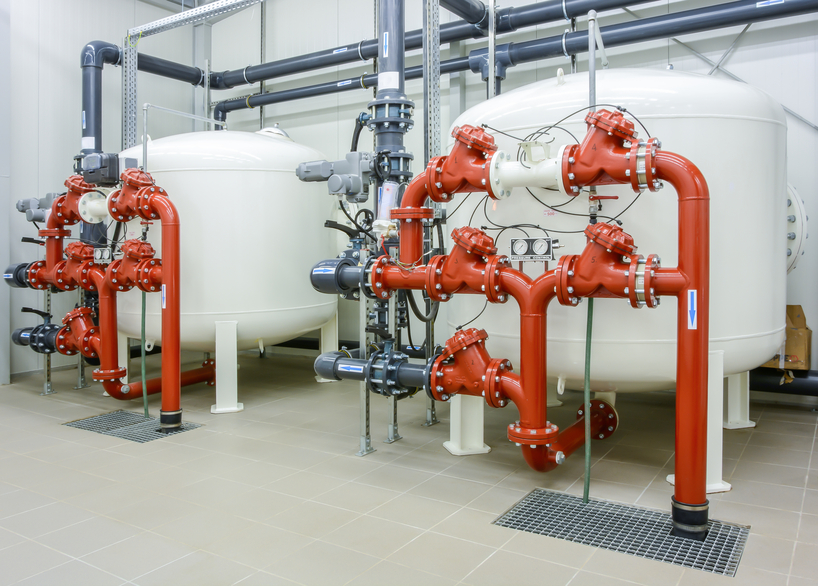
This online engineering PDH course provides an overview of water treatment and purification.
Water is the most important substance on earth. As an engineer, you might be responsible for ensuring that an adequate supply of safe water is available for domestic, fire protection, and other uses. In meeting this responsibility, you must consider several factors, such as water source selection, ways to develop the water source, contaminants you may encounter, and methods you can use to remove them.
In this course, we will discuss the selection of a good water source, how to test it, and how to treat it so that it is safe for consumption. We will also explore ways to detect and treat water that has been contaminated with chemical, biological, or radiological agents. Lastly, we will talk about the different types of water treatment equipment and their processes.
This 5 PDH online course is applicable to chemical, civil, mechanical and environmental engineers and other professionals who are interested in gaining a better understanding of water treatment and purification processes.
This PE continuing education course is intended to provide you with the following specific knowledge and skills:
- Familiarizing with the requirements for water source selection
- Learning about the development criteria for water sources
- Understanding the results and testing procedures for water contamination
- Gaining an overview of the different types of water treatment equipment
Upon successful completion of the quiz, print your Certificate of Completion instantly. (Note: if you are paying by check or money order, you will be able to print it after we receive your payment.) For your convenience, we will also email it to you. Please note that you can log in to your account at any time to access and print your Certificate of Completion.
This online engineering PDH course will introduce you to the basics of domestic wastewater treatment. You will learn about preliminary measures, pretreatment, primary, secondary and advanced treatment processes, and sludge treatment and disposal. Approximate performance data for different treatment processes will be included, as well as comments on operational characteristics of processes. Basic design considerations for selecting treatment processes and sizing plants will be discussed. Normal domestic, non-domestic and industrial wastewater characteristics will be considered, as will the impact of stormwater on domestic wastewater treatment plants. Factors to be considered in site selection will be addressed.
This 2 PDH online course is intended for engineers and other design and construction professionals interested in gaining an understanding of the process technologies, equipment and design practices needed to treat domestic wastewater and treat and dispose of the resultant sludge.
This PE continuing education course is intended to provide you with the following specific knowledge and skills:
- Learning the design and operational objectives of domestic wastewater treatment plants
- Learning about the major factors to consider in siting domestic wastewater treatment plants, including topography, availability of a suitable discharge point, working and public areas, and community master plan considerations
- Learning about typical compounds that inhibit biological wastewater treatment processes and how they can be mitigated
- Learning the definitions and characteristics of preliminary, primary, secondary and advanced domestic wastewater treatment processes
- Learning about preliminary treatment processes including equalization, neutralization, temperature adjustment, nutrient addition, screening and grit removal
- Learning about primary treatment processes including sedimentation and dissolved air flotation
- Learning about secondary treatment processes including activated sludge, aerated ponds, aerobic-anaerobic ponds, trickling filters, chemical oxidation, chemical mixing flocculation and clarification, gravity filtration, pressure filtration, dissolved air flotation with chemicals, and anaerobic contact
- Learning about advanced treatment processes including advanced carbon adsorption, micro straining filtration, land treatment, subsurface disposal, and groundwater recharge
- Learning about sludge treatment processes including anaerobic digestion, aerobic digestion, autoclaving, elutriation, vacuum filtration, centrifugation, sand beds and presses
- Learning about sludge disposal including incineration, wet oxidation, land disposal and sanitary landfills
In this professional engineering CEU course, you need to review the course document titled, "An Introduction to Domestic Wastewater Treatment".
Upon successful completion of the quiz, print your Certificate of Completion instantly. (Note: if you are paying by check or money order, you will be able to print it after we receive your payment.) For your convenience, we will also email it to you. Please note that you can log in to your account at any time to access and print your Certificate of Completion.

In this online engineering PDH course, ten case studies of actual enforcement actions taken by a state licensing board are presented. The cases have been selected to be representative of situations likely to exist in many states. Board procedures and the types of enforcement actions available are shown by a variety of cases ranging from a geotechnical engineer who produced (within one hour and without visiting the site) a soils report, to an engineer who was unable to document his PDH's during a board audit. The importance of being very careful about when to put "P.E." after one's name on a document also will become apparent.
Codes of ethics for engineers typically describe standards for professional behavior. The enforcement of those ethical standards that are inscribed into law lies with the licensing boards of state governments.
This 1 PDH online course is intended primarily for all engineers seeking to deepen their understanding of what constitutes ethical and professional engineering behavior and how such behavior is enforced by the licensing board.
This PE continuing education course is intended to provide you with the following specific knowledge and skills:
-
Familiarizing with the format of enforcement decrees issued by a state licensing board
-
Knowing the ten different types of licensing violations
-
Understanding the investigative process of the board, as it attempts to determine the validity of complaints brought before it
-
Learning about the types of enforcement actions available to the board
In this professional engineering CEU course, you need to review the course document titled, "Ethics, Professionalism and Disciplinary Actions: Case Studies".
Upon successful completion of the quiz, print your Certificate of Completion instantly. (Note: if you are paying by check or money order, you will be able to print it after we receive your payment.) For your convenience, we will also email it to you. Please note that you can log in to your account at any time to access and print your Certificate of Completion.