

North Carolina Environmental and Ethics 15 PDH Discount Package 4
Prevention and Control of Termites in Buildings (C02-084)
Natural Attenuation of the Lead Scavengers EDB and 1,2-DCA (C04-047)
Protecting Yourself and Your Family from Radon (C01-022)
General Principles of Engineering Ethics (LE2-016)
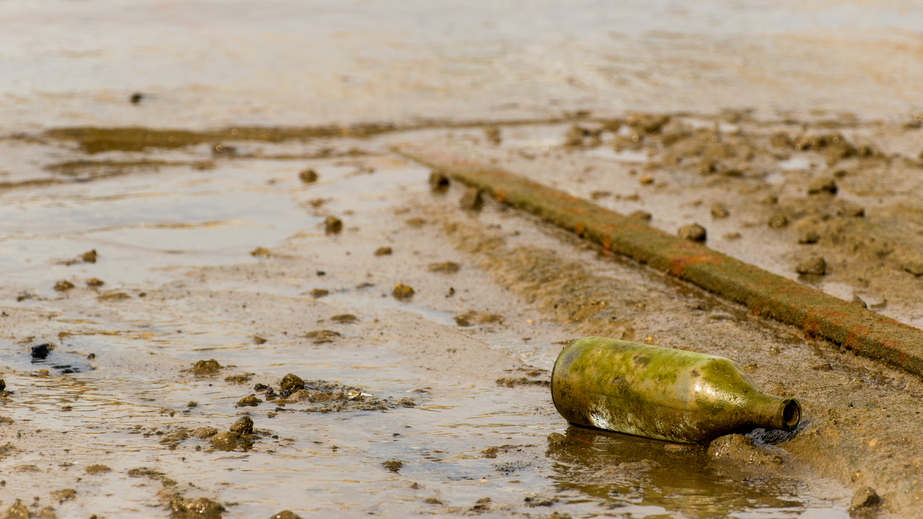
This online engineering PDH course provides a general description of the steps in the investigation and cleanup of brownfields sites, and introduces Brownfields stakeholders to the range of technologies and resources available to them. The Road Map provides valuable information for stakeholders typically involved in or affected by redevelopment of Brownfields sites, whether through public projects, private development or public-private partnerships.
Brownfields sites are defined as “real property, the expansion, redevelopment or reuse of which may be complicated by the presence or potential presence of a hazardous substance, pollutant or contaminant” (Comprehensive Environmental Response, Compensation, and Liability Act of 1980, as amended by the Small Business Liability Relief and Brownfields Revitalization Act of 2002, §101(39)). The cleanup of Brownfields sites improves and protects the environment and may result in many benefits for the local community.
Revitalizing Brownfields sites has the potential to create benefits throughout the community, including community involvement in the project, job creation, and an increase in residential property values once a nearby Brownfields site is assessed or cleaned up.
This 6 PDH online course is intended for environmental, civil, and sustainability engineers as well as others seeking an outline on dealing with Brownfields in the United States and familiarizing with the EPA Brownfields Program.
This PE continuing education course is intended to provide you with the following specific knowledge and skills:
- Learning about the Brownfields road map
- Familiarizing with the factors and considerations that affect cleanup at a Brownfields site
- Learning about the Site Assessment phase
- Learning about the Site Investigation phase
- Familiarizing with the phase relating to assessment and selection of cleanup options as well as designing and implementing the cleanup
- Exploring various spotlights such as technologies, best practices, institutional controls
Upon successful completion of the quiz, print your Certificate of Completion instantly. (Note: if you are paying by check or money order, you will be able to print it after we receive your payment.) For your convenience, we will also email it to you. Please note that you can log in to your account at any time to access and print your Certificate of Completion.

This online engineering PDH course provides basic information on termites and the control measures taken to prevent damages in buildings.
Subterranean termites are the most important insect pest of wood in the United States. Living in large underground colonies, termites may attack any wood in contact with the soil and may even construct protective shelter tubes over nonwood materials to attack wood above ground.
Termite prevention begins with good building practices, which vary depending on the type of structure and how the structure is to be landscaped and decorated. Control of termites in existing structures involves periodic inspections for termite activity, remedial insecticide treatments, or use of insecticidal bait technology.
This 2 PDH online course is applicable to environmental, structural, geotechnical, and civil engineers as well as other technical personnel interested in learning more about how to prevent and control termites in buildings.
This PE continuing education course is intended to provide you with the following specific knowledge and skills:
- Familiarizing with biological considerations of Termites
- Familiarizing with good building practices to prevent attack by Subterranean Termites
- Learning about the control of Subterranean Termites in existing buildings through inspection, sanitation, chemical control and termiticidal baits
- Understanding chemical treatment of the soil around and under the foundation
- Exploring other insects that damage wood in buildings
Upon successful completion of the quiz, print your Certificate of Completion instantly. (Note: if you are paying by check or money order, you will be able to print it after we receive your payment.) For your convenience, we will also email it to you. Please note that you can log in to your account at any time to access and print your Certificate of Completion.
This online engineering PDH course reviews the current knowledge of the transport and fate of EDB and 1,2-DCA in ground water. It also provides information on the distribution of EDB and 1,2-DCA at motor fuel release sites that was collected during a survey of sites coordinated by the U. S. EPA Office of Underground Storage Tanks and the Association of State and Territorial Solid Waste Management Officials (ASTSWMO) and evaluates the associated chance of contaminating ground water.
Lead was effectively banned in gasoline in the USA before the underground storage tank program was fully implemented. As a result, only a portion of the state agencies that implement the federal UST program routinely monitor for EDB and 1,2-DCA at gasoline spill sites. In many states, little is known of the risk from EDB and 1,2-DCA at old leaded gasoline spill sites. Monitored Natural Attenuation (MNA) is widely used by State Agencies to manage the risk from other fuel components, such as benzene, in ground water. The appropriate application of MNA requires a solid understanding of the behavior of the contaminants in ground water.
This 4 PDH online course is applicable to all civil, environmental or chemical engineers, as well technical personnel who conduct risk evaluations for EDB or 1,2-DCA at specific motor fuel release sites, and for the technical staff of regulatory agencies that review the risk evaluations and make decisions concerning risk management and cleanup of the contamination. It is also useful for those who must apportion resources for monitoring and risk management of the hazard associated with EDB, benzene, and 1,2 DCA in ground water used for drinking water.
This PE continuing education course is intended to provide you with the following specific knowledge and skills:
- Understanding the use of EDB and 1,2-DCA in leaded motor fuel
- Familiarizing with the regulation of motor fuel storage to protect ground water and drinking water
- Learning about investigations of EDB and 1,2-DCA at motor fuel release sites
- Familiarizing with the conceptual model of a motor fuel release in the subsurface
- Learning about attenuation caused by physical processes
- Learning about attenuation caused by abiotic transformation or biodegradation
- Applications of Compound Specific Isotope Analysis (CSIA) to document biodegradation and/or abiotic transformation of EDB and 1,2-DCA
- Understanding the distribution of EDB and 1,2-DCA at motor fuel release sites, and the associated chance of contaminating ground water
Upon successful completion of the quiz, print your Certificate of Completion instantly. (Note: if you are paying by check or money order, you will be able to print it after we receive your payment.) For your convenience, we will also email it to you. Please note that you can log in to your account at any time to access and print your Certificate of Completion.

This online engineering PDH course provides guidelines on how to protect yourself and your family from Radon.
Radon is estimated to cause many thousands of deaths each year. That’s because when you breathe air containing radon, you can get lung cancer. Radon is a gas that cannot be seen, smelled, or tasted. Testing kits are required in order to determine whether radon exposure is a problem in your home.
This 1 PDH online course is applicable to environmental, civil, and mechanical engineers as well as other personnel who are interested in gaining a better understanding of radon.
This PE continuing education course is intended to provide you with the following specific knowledge and skills:
- Understanding how radon gets into your home
- Familiarizing with the risks of elevated radon levels in your home
- Learning how to test for radon
- Learning how to reduce radon levels in the home
- Dispelling myths about radon exposure and reduction
Upon successful completion of the quiz, print your Certificate of Completion instantly. (Note: if you are paying by check or money order, you will be able to print it after we receive your payment.) For your convenience, we will also email it to you. Please note that you can log in to your account at any time to access and print your Certificate of Completion.

This online engineering PDH course presents the principles of engineering ethics that every engineer is expected to live by when practicing their profession.
Engineering ethics is (1) the study of moral issues and decisions confronting individuals and organizations involved in engineering and (2) the study of related questions about moral conduct, character, ideals and relationships of peoples and organizations involved in technological development (Martin and Schinzinger, Ethics in Engineering).
This course describes the fundamental legal concepts with which very engineer should be familiar. It also presents unique disciplinary case studies selected from across the nation, as well as hypothetical ethical challenges that demonstrate how difficult it can be to apply the code of ethics for engineers.
This 2 PDH online course is applicable to all professional engineers who are either required to fulfill 2 PDH in engineering ethics or are interested in broadening their understanding of what it means to practice and uphold the honor and integrity of their engineering profession while holding the utmost safety, health, and welfare of the public.
This PE continuing education course is intended to provide you with the following specific knowledge and skills:
- Understanding the common definition of ethics regarding engineering
- Learning about the important principles of the engineer’s professional responsibility
- Learning the do’s and don’ts through several ethical and disciplinary cases
- Understanding what it means to practise and uphold the honor and integrity of the engineering profession
Upon successful completion of the quiz, print your Certificate of Completion instantly. (Note: if you are paying by check or money order, you will be able to print it after we receive your payment.) For your convenience, we will also email it to you. Please note that you can log in to your account at any time to access and print your Certificate of Completion.