

Mississippi Structural and Ethics 30 PDH Discount Package 1
Earthquake Design of Buildings and Structures: Beyond Design Codes (S01-003 )
Protocols for the Assessment and Repair of Bridge Foundations (S08-006)
Guide for In-Place Treatment of Wood in Historic Covered and Modern Bridges (S04-020)
Determining the Cost/Benefit of Routine Maintenance Cleaning on Steel Bridges (S03-024)
Strength Design For Reinforced Concrete Hydraulic Structures (S03-022)
Structural Design of Concrete Lined Flood Control Channels (S03-001)
Building a Safe Room for Your Home or Small Business (S04-025)
General Principles of Engineering Ethics (LE2-016)

This online engineering PDH course provides a practical explanation of redundancy and how it affects the design, fabrication, inspection, and management of steel girder bridges.
Redundancy is “the quality of a bridge that enables it to perform its design function in a damaged state” and it is considered a desirable characteristic of good design. The consideration of redundancy affects the design, fabrication and in-service inspection of steel bridge members, especially when they are classified as a "fracture critical member" (a steel tension member whose failure would potentially cause collapse).
This 2 PDH online course is applicable to civil and structural engineers and professionals who are interested in learning more about redundancy in steel bridge applications.
This PE continuing education course is intended to provide you with the following specific knowledge and skills:
- Familiarizing with the basics of redundancy
- Understanding the redundancy classifications: load-path, structural, and internal redundancy
- Understanding the basics of fracture control for steel bridge members
- Learning about quantitative factors relating to the redundancy of a structural system
- Understanding the analysis requirements and the concept of enhancing redundancy
- Gaining an overview of current and future work within the steel-bridge industry to better define redundancy criteria and critical member requirements.
Upon successful completion of the quiz, print your Certificate of Completion instantly. (Note: if you are paying by check or money order, you will be able to print it after we receive your payment.) For your convenience, we will also email it to you. Please note that you can log in to your account at any time to access and print your Certificate of Completion.

This online engineering PDH course discusses the selection of structural systems, selection of the architectural/structural configurations and performance of nonstructural components during earthquakes.
Design codes provide no guidance on the selection of materials and systems used in buildings; they provide only criteria for their design once selected. For example, whether shear wall buildings or moment frame buildings are better suited for a particular soil condition is not specified in codes; it is up to the designer to make the selection and then design according to code requirements. The choice could affect building performance and cost, although both designs would be safe.
This 1 PDH online course is intended for civil and structural engineers interested in the earthquake design of buildings and structures.
This PE continuing education course is intended to provide you with the following specific knowledge and skills:
- Selection of structural systems for better seismic performance
- Selection of architectural/structural configurations
- Understanding the effect of nonstructural components such as masonry partitions and stairs on the earthquake response of buildings and structures
In this professional engineering CEU course, you need to review Sections 5.1 to 5.4 (Pages 5-1 to 5-11) of the Federal Emergency Management Agency Report titled "Primer for Design Professionals: Communicating with Owners and Managers of New Buildings on Earthquake Risk (FEMA-389)".
Upon successful completion of the quiz, print your Certificate of Completion instantly. (Note: if you are paying by check or money order, you will be able to print it after we receive your payment.) For your convenience, we will also email it to you. Please note that you can log in to your account at any time to access and print your Certificate of Completion.

This online engineering PDH course provides information on protocols for the assessment and repair of bridge foundations.
This course is intended to provide guidance to bridge owners for preparing for and responding to bridge foundation failures. The word “failure” as used herein includes foundation movements and/or corrosion beyond the design norms for the structure that result in the need to close a bridge or portion thereof for any period of time. The movements and/or corrosion may or may not cause the bridge to be unsafe but are considered significant enough to close the bridge.
This course describes case histories of recent bridge foundation failures. It also provides guidance on preparing for foundation events by collecting records, establishing response teams and developing notification and communication protocols. Once an event has occurred, the course provides guidance for response including closing the bridge to traffic, notifying government and private parties, stabilizing the bridge site, investigative and monitoring techniques, repair and retrofit techniques. The course includes a check list intended to assist bridge in preparing for an incident and for developing a response once an incident has occurred.
This 8 PDH online course is applicable to structural engineers and other professionals who are interested in learning more about the assessment and repair of bridge foundations.
This PE continuing education course is intended to provide you with the following specific knowledge and skills:
- Familiarizing with repair and retrofit techniques utilized in the restoration of bridge foundations, ensuring the successful rehabilitation of the structure
- Learning about effective response procedures following a bridge foundation failure, such as closing the bridge to traffic, notifying relevant government and private parties, stabilizing the bridge site, and implementing investigative and monitoring techniques
- Understanding the definition and scope of bridge foundation failures, encompassing movements and/or corrosion that exceed design norms and necessitate bridge closures
- Learning about practical guidance for preparing for foundation events, including the collection of relevant records, establishment of response teams, and development of notification and communication protocols
- Knowing strategies and techniques to restore the load carrying capacity of failed bridge foundations, enabling the bridge to be put back into service
Upon successful completion of the quiz, print your Certificate of Completion instantly. (Note: if you are paying by check or money order, you will be able to print it after we receive your payment.) For your convenience, we will also email it to you. Please note that you can log in to your account at any time to access and print your Certificate of Completion.

This online engineering PDH course provides basic information on procedures for selecting and applying in-place treatments to bridges to prevent or arrest degradation, and discusses different approaches for minimizing damage caused by fire.
Wooden bridges have a long history of use throughout the world, and like bridges made of other materials, the service life of wooden bridges can be enhanced through proper construction, inspection, and maintenance. Wooden bridges, whether historic covered bridges or current highway timber bridges, can be vulnerable to damage from biodeterioration, fire or biodegradation. Biodeterioration is minimized through design and construction practices, and in the case of modern timber bridges, through pressure treatment of the timbers with wood preservatives. However, over time, many bridges need maintenance in order to prevent degradation and to minimize any damage caused by fire.
In order to maintain wood bridges, different methods, procedures and treatments are used. These include; in-place treatments, surface-applied liquid treatments, paste surface treatments, internal treatments, and fire retardants, all of which are discussed in this course.
This 4 PDH online course is mainly intended for structural engineers and others who are interested in learning more about the different methods of applying treatments to bridges and understanding the approaches for minimizing damage caused by fire.
This PE continuing education course is intended to provide you with the following specific knowledge and skills:
- Familiarizing with the causes and problem areas for biodegradation in wooden bridges, the effects of climate and the role of wood structure
- Learning about the different types of supplemental treatments including water-diffusible preservatives, non-diffusible liquid treatments and fumigants
- Gaining a general overview on the application and use of supplemental preservative treatments for covered bridges
- Understanding the use of supplemental fire-retardant treatments for covered bridges
- Exploring supplemental treatment concepts such as liquid surface treatments, paste surface treatments, and internal treatments
Upon successful completion of the quiz, print your Certificate of Completion instantly. (Note: if you are paying by check or money order, you will be able to print it after we receive your payment.) For your convenience, we will also email it to you. Please note that you can log in to your account at any time to access and print your Certificate of Completion.
This online engineering PDH course aims at identifying the key variables necessary in estimating the impact of regular washing of steel bridges on the paint and service life, recommending methods for recording data in order to most effectively estimate the benefits of bridge washing, and developing a framework to assess the impact of bridge washing on paint life.
Thirty years ago, when the environmental rules changed, the WSDOT stopped annual cleaning of steel truss bridges. Some cleaning was done after this time only to assist inspection crews or to determine what the cost would be to hand clean a steel truss bridge. WSDOT is investigating the feasibility of an annual steel truss bridge washing program. A pilot study was implemented in 2011 that will help to determine the benefits and environmental impacts of such a program.
This work builds on the pilot study to identify current bridge washing practices around the country and to select the measurements necessary to determine whether more regular washing has positive cost benefits. The research summarized in this course is a first step towards understanding and quantifying the benefits of a more regular bridge washing program on paint life and corrosion.
This 3 PDH online course is applicable to civil and structural engineers who are interested in assessing the impact of bridge washing on paint and service life, estimating the benefits of bridge washing, and improving the maintenance of steel bridges.
This PE continuing education course is intended to provide you with the following specific knowledge and skills:
- Familiarizing with the pilot bridge washing program, the conducted studies and the yielded results
- Gaining a general overview on the research and literature review concerning bridge maintenance
- Learning about the nationwide survey on bridge washing programs, and the responses in different States
- Exploring the bridge washing programs in different States including Iowa, Alaska, Kentucky, New York, New Hampshire, Missouri, Indiana
- Identifying the impact of regular bridge washing programs on paint life and corrosion
Upon successful completion of the quiz, print your Certificate of Completion instantly. (Note: if you are paying by check or money order, you will be able to print it after we receive your payment.) For your convenience, we will also email it to you. Please note that you can log in to your account at any time to access and print your Certificate of Completion.

This online engineering PDH course describes typical loads for the design of reinforced concrete hydraulic structures (RCHS) and provides detailed information on design procedures along with examples of their application.
Reinforced concrete hydraulic structures have very long service lives and are subject to different types of loads, severe climatic conditions and sometimes to chemically contaminated atmosphere. To ensure a satisfactory long term service and to provide a safe, reliable and cost effective hydraulic structures, industry design and construction standards should be adopted.
Satisfactory long-term service requires that the saturated concrete be highly resistant to deterioration due to daily or seasonal weather cycles and tidal fluctuations at coastal sites. The often relatively massive members of RCHS must have adequate density and impermeability, and must sustain minimal cracking for control of leakage and for control of corrosion of the reinforcement. Most RCHS are lightly reinforced structures (reinforcement ratios less than 1%) composed of thick walls and slabs that have limited ductility compared to the fully ductile behavior of reinforced concrete buildings (in which reinforcement ratios are typically 1% or greater).
This 3 PDH online course is applicable to civil and structural engineers who are interested in learning more about reinforced concrete hydraulic structures, its detailed design considerations and applications.
This PE continuing education course is intended to provide you with the following specific knowledge and skills:
- Familiarizing with the details of reinforcement in various members of hydraulic structures
- Familiarizing with the different designs of RCHS and examples of their applications
- Learning about members that are subjected to shear load effects
- Understanding the effect of combined flexural and axials loads on design parameters
- Knowing the strength and serviceability requirements of different structures
Upon successful completion of the quiz, print your Certificate of Completion instantly. (Note: if you are paying by check or money order, you will be able to print it after we receive your payment.) For your convenience, we will also email it to you. Please note that you can log in to your account at any time to access and print your Certificate of Completion.
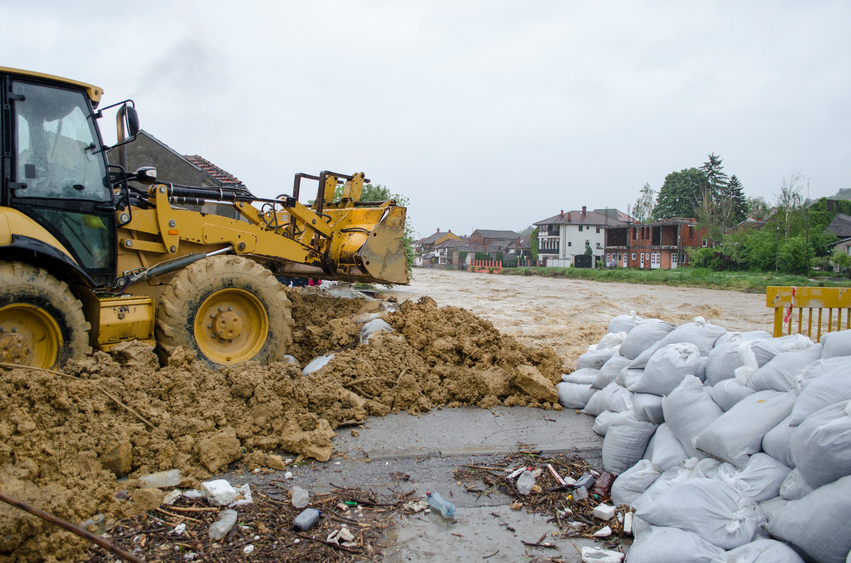
This online engineering PDH course provides guidance for the design of reinforced, concrete lined flood control trapezoidal and rectangular channels which convey rapid and tranquil storm water flows to prevent flooding. This course also presents provisions for coordinating the disciplines involved in the design of channels, selecting channel type, and identifying the critical aspects of designs which require quality assurance inspection during construction.
Channel design involves determining the overall channel configuration including appurtenant structures, designing reinforced concrete structures and pavement or concrete lining, determining type and location of joints, designing sub-drainage systems, and designing appropriate safety features.
This 3 PDH online course is applicable to civil, structural and geotechnical engineers, as well as design and construction personnel involved with the planning and design of concrete lined flood control channels.
This PE continuing education course is intended to provide you with the following specific knowledge and skills:
- Learning the different types of trapezoidal and rectangular channels
- Selecting the appropriate channel type
- Learning the different types of retaining wall structures
- Learning the different types of structural joints and anchorages
- Understanding the constructability of paving slabs on sloped sides of channels
- Understanding the constructability of the drainage layer
- Maintaining and protecting channel structures
In this professional engineering CEU course, you need to review the US Corps of Engineers Publication EM 1110-2-2007, "Structural Design of Concrete Lined Flood Control Channels".
Upon successful completion of the quiz, print your Certificate of Completion instantly. (Note: if you are paying by check or money order, you will be able to print it after we receive your payment.) For your convenience, we will also email it to you. Please note that you can log in to your account at any time to access and print your Certificate of Completion.

This online engineering PDH course provides an overview of the importance of safe rooms, as well as their design and construction process.
Every year, tornadoes, hurricanes, and other extreme windstorms cause injury, death, and property damage worth billions of dollars in the United States. Even so, more and more people build homes in tornado- and hurricane-prone areas, possibly putting themselves into the path of such storms. Having a safe room for your home or small business can help provide near-absolute protection for you and your family or employees from injury or death caused by the dangerous forces of extreme winds.
This 4 PDH online course is applicable to structural engineers, design professionals, homeowners and other technical personnel who are interested in learning more about designing and building safe rooms.
This PE continuing education course is intended to provide you with the following specific knowledge and skills:
- Understanding the various natural hazards faced in the United States
- Learning how to determine whether a safe room is needed or not
- Knowing the different design options for safe rooms
- Familiarizing with the construction of safe rooms
- Learning about the various testimonies of people who have benefited from safe rooms
Upon successful completion of the quiz, print your Certificate of Completion instantly. (Note: if you are paying by check or money order, you will be able to print it after we receive your payment.) For your convenience, we will also email it to you. Please note that you can log in to your account at any time to access and print your Certificate of Completion.

This online engineering PDH course presents the principles of engineering ethics that every engineer is expected to live by when practicing their profession.
Engineering ethics is (1) the study of moral issues and decisions confronting individuals and organizations involved in engineering and (2) the study of related questions about moral conduct, character, ideals and relationships of peoples and organizations involved in technological development (Martin and Schinzinger, Ethics in Engineering).
This course describes the fundamental legal concepts with which very engineer should be familiar. It also presents unique disciplinary case studies selected from across the nation, as well as hypothetical ethical challenges that demonstrate how difficult it can be to apply the code of ethics for engineers.
This 2 PDH online course is applicable to all professional engineers who are either required to fulfill 2 PDH in engineering ethics or are interested in broadening their understanding of what it means to practice and uphold the honor and integrity of their engineering profession while holding the utmost safety, health, and welfare of the public.
This PE continuing education course is intended to provide you with the following specific knowledge and skills:
- Understanding the common definition of ethics regarding engineering
- Learning about the important principles of the engineer’s professional responsibility
- Learning the do’s and don’ts through several ethical and disciplinary cases
- Understanding what it means to practise and uphold the honor and integrity of the engineering profession
Upon successful completion of the quiz, print your Certificate of Completion instantly. (Note: if you are paying by check or money order, you will be able to print it after we receive your payment.) For your convenience, we will also email it to you. Please note that you can log in to your account at any time to access and print your Certificate of Completion.