

Mississippi Environmental and Ethics 30 PDH Discount Package 1
Solid Waste Disposal Facility - Design Criteria (C08-001)
Impacts of Chemical Toxicity of Plastics Pollution to Aquatic Life (C02-085)
Indoor Air Vapor Intrusion Mitigation Approaches (C05-015)
Brownfields Road Map to Understanding Options for Site Investigation and Cleanup (C06-019)
Environmental Quality and Border Security: A 10-Year Retrospective (C04-060)
General Principles of Engineering Ethics (LE2-016)
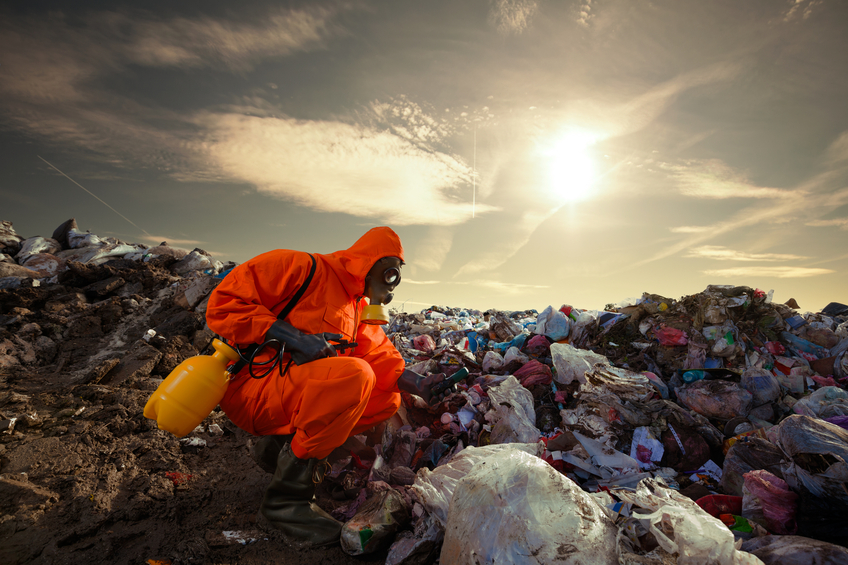
This online engineering PDH course provides information on hazardous waste and presents the criteria and rules that can help identify if waste is hazardous or not.
"Is my waste a hazardous waste regulated under the Resource Conservation and Recovery Act (RCRA)?" This is one of the most common and basic RCRA questions and is the key to the RCRA hazardous waste program. If something is not hazardous waste, it is not regulated under RCRA. Proper identification of hazardous waste can be a difficult and confusing task, as the RCRA regulations establish a complex definition of the term "hazardous waste."
This 3 PDH online course is applicable to environmental and chemical engineers, as well as other technical professionals interested in identifying hazardous waste.
This PE continuing education course is intended to provide you with the following specific knowledge and skills:
- Learning about the hazardous waste identification process
- Familiarizing with the definition of hazardous waste
- Understanding the different listings and characteristics of hazardous waste
- Learning about the policies and regulations that surround hazardous waste
- Familiarizing with the developments to hazardous waste identification
Upon successful completion of the quiz, print your Certificate of Completion instantly. (Note: if you are paying by check or money order, you will be able to print it after we receive your payment.) For your convenience, we will also email it to you. Please note that you can log in to your account at any time to access and print your Certificate of Completion.
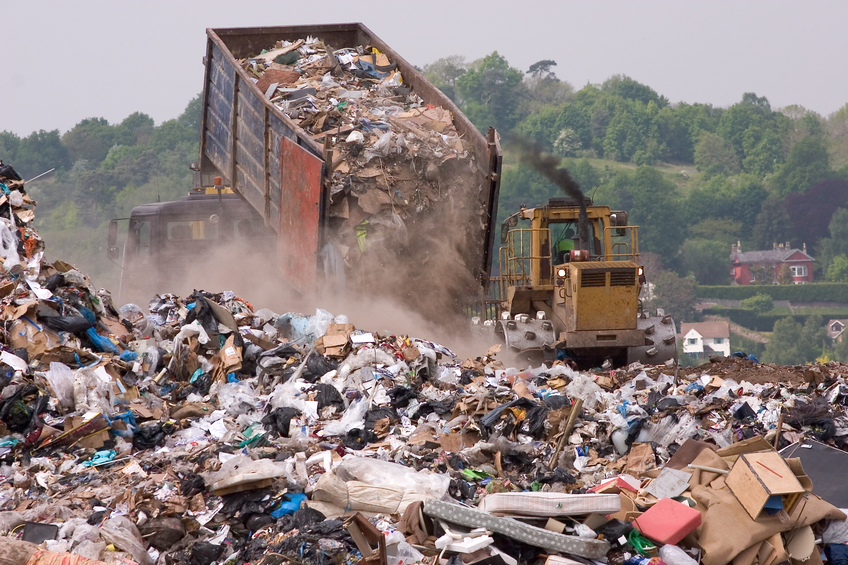
This online engineering PDH course explains how to identify key design features and system components for the composite liner and leachate collection system. The technical considerations include:
- Design Concepts
- Design Calculations
- Physical Properties
- Construction Methods
New municipal solid waste landfill (MSWLF) facilities and lateral expansions of existing landfill units must comply with either a design standard or a performance standard for landfill design. The EPA has developed minimum regulatory requirements that should be considered during the design, construction, and operation of MSWLF units to ensure that they perform in a manner protective of human health and environment. These requirements apply to owners and/or operators of MSWLF units operating on or after
This 8 PDH online course is applicable to owners and/or operators of MSWLF units, as well as engineers, designers, managers, construction workers and any other personnel involved with the planning and design of municipal solid waste landfills.
This PE continuing education course is intended to provide you with the following specific knowledge and skills:
Designs Based on The Performance Standard:
- Leachate characterization and leakage assessment
- Leachate migration in the subsurface
- Leachate migration models
- Relevant point of compliance assessment
Composite Liners and Leachate Collection Systems:
- Soil liner component (soil properties, lab testing, design, construction, and testing)
- Flexible membrane liners (fml properties, design, installation and testing)
- Leachate collection systems (strength, compatibility, grading, drainage and filtration)
- Leachate removal systems (pumps, sumps, and standpipes)
- Inspections (field observations and laboratory testing)
In this professional engineering CEU professional engineering CEU course, you need to review Chapter 4, “Design Criteria” of the EPA “Solid Waste Disposal Facility” Technical Manual.
Upon successful completion of the quiz, print your Certificate of Completion instantly. (Note: if you are paying by check or money order, you will be able to print it after we receive your payment.) For your convenience, we will also email it to you. Please note that you can log in to your account at any time to access and print your Certificate of Completion.
This online engineering PDH course synthesizes the state of the science on the potential chemical toxicity of ingested plastic and associated chemicals on aquatic organisms and aquatic-dependent wildlife.
Since mass-production of plastics began in the 1940s and 1950s, the amount of plastic debris entering marine and freshwater ecosystems has increased by several orders of magnitude. However, recently the accumulation and potential impacts of plastic pollution has been recognized as an emerging environmental. Recent estimates suggest that 4.8 to 12.7 million metric tons of plastic waste entered the global marine environment in 2010.
Plastic particles are generally the most abundant type of debris encountered in the marine environment with estimates suggesting that plastics comprise between 60% and 80% of total marine debris. The focus of this course is primarily on marine systems, with data provided on the Great Lakes and other freshwater systems, where available.
This 2 PDH online course is applicable to environmental engineers as well as other technical personnel interested in gaining knowledge about the impacts of chemical toxicity of plastics pollution to aquatic life.
This PE continuing education course is intended to provide you with the following specific knowledge and skills:
- Familiarizing with common plasticizers and polymer additives and their main properties
- Familiarizing with sources and transport of plastics to the aquatic environment
- Gaining a general overview on the sorption of chemicals to plastics in the aquatic environment
- Understanding the different types, quantities, and abundance of plastics in the aquatic environment
- Learning about toxicological impacts of chemicals associated with plastics on aquatic organisms and aquatic-dependent wildlife
Upon successful completion of the quiz, print your Certificate of Completion instantly. (Note: if you are paying by check or money order, you will be able to print it after we receive your payment.) For your convenience, we will also email it to you. Please note that you can log in to your account at any time to access and print your Certificate of Completion.

This online engineering PDH course focuses on the mitigation of vapor intrusion of volatile contaminants to prevent human exposure to anthropogenic soil and groundwater contaminants. In addition, it provides information on understanding the range of mitigation controls and technologies available, as well as selecting appropriate technologies.
Typically volatile contaminants from buried wastes and/or contaminated groundwater or soil can migrate through subsurface soils and into indoor air spaces of overlying buildings, which have significant negative impacts on indoor air quality and potentially the health of building occupants.
This 5 PDH online course is applicable to civil and environmental engineers, design and construction professionals, as well as health and safety/industrial hygiene specialists interested in gaining an understanding of the various methods of mitigating indoor air vapors.
This PE continuing education course is intended to provide you with the following specific knowledge and skills:
- Understanding how contaminants enter into structures
- Learning about quality assurance considerations
- Understating the available engineered control measures
- Selecting a mitigation technology
- Verifying mitigation performance
In this professional engineering CEU course, you need to review the EPA Engineering Issue, "Indoor Air Vapor Intrusion Mitigation Approaches".
Upon successful completion of the quiz, print your Certificate of Completion instantly. (Note: if you are paying by check or money order, you will be able to print it after we receive your payment.) For your convenience, we will also email it to you. Please note that you can log in to your account at any time to access and print your Certificate of Completion.
This online engineering PDH course provides a general description of the steps in the investigation and cleanup of brownfields sites, and introduces Brownfields stakeholders to the range of technologies and resources available to them. The Road Map provides valuable information for stakeholders typically involved in or affected by redevelopment of Brownfields sites, whether through public projects, private development or public-private partnerships.
Brownfields sites are defined as “real property, the expansion, redevelopment or reuse of which may be complicated by the presence or potential presence of a hazardous substance, pollutant or contaminant” (Comprehensive Environmental Response, Compensation, and Liability Act of 1980, as amended by the Small Business Liability Relief and Brownfields Revitalization Act of 2002, §101(39)). The cleanup of Brownfields sites improves and protects the environment and may result in many benefits for the local community.
Revitalizing Brownfields sites has the potential to create benefits throughout the community, including community involvement in the project, job creation, and an increase in residential property values once a nearby Brownfields site is assessed or cleaned up.
This 6 PDH online course is intended for environmental, civil, and sustainability engineers as well as others seeking an outline on dealing with Brownfields in the United States and familiarizing with the EPA Brownfields Program.
This PE continuing education course is intended to provide you with the following specific knowledge and skills:
- Learning about the Brownfields road map
- Familiarizing with the factors and considerations that affect cleanup at a Brownfields site
- Learning about the Site Assessment phase
- Learning about the Site Investigation phase
- Familiarizing with the phase relating to assessment and selection of cleanup options as well as designing and implementing the cleanup
- Exploring various spotlights such as technologies, best practices, institutional controls
Upon successful completion of the quiz, print your Certificate of Completion instantly. (Note: if you are paying by check or money order, you will be able to print it after we receive your payment.) For your convenience, we will also email it to you. Please note that you can log in to your account at any time to access and print your Certificate of Completion.
This online engineering PDH course provides basic information on environmental quality and protection in the context of existing and proposed border security infrastructure and measures.
Border security is an important national priority, and environmental protection in the border region is of critical importance, given the rich natural resource endowments of the region. The shape and form of security infrastructure installed along the border is a critical factor affecting these areas of special concern. Additional installation of security infrastructure along the border will have a large impact on the region, presenting both challenges and opportunities to enhance security while preserving or even improving environmental sustainability.
There are mainly five key overlapping challenges in which environmental protection intersects with border security. These include, tourism and recreation economy; habitat integrity and wildlife corridors; water management; flooding, trash and sediment control; Hazmat and emergency response; and air quality.
This 4 PDH online course is applicable to environmental engineers who are interested in learning more about improving border security infrastructure while preserving environmental sustainability in the region.
This PE continuing education course is intended to provide you with the following specific knowledge and skills:
- Familiarizing with the overlapping challenges between border security and environmental protection
- Gaining a general overview on the demographic and economic context in the border region
- Understanding the environmental protection and border security context
- Learning about the challenges and opportunities presented in the region
- Understanding the emergency response management and agreements at the federal, state and local levels
- Exploring several case studies in different areas along the border region
Upon successful completion of the quiz, print your Certificate of Completion instantly. (Note: if you are paying by check or money order, you will be able to print it after we receive your payment.) For your convenience, we will also email it to you. Please note that you can log in to your account at any time to access and print your Certificate of Completion.
This online engineering PDH course presents the principles of engineering ethics that every engineer is expected to live by when practicing their profession.
Engineering ethics is (1) the study of moral issues and decisions confronting individuals and organizations involved in engineering and (2) the study of related questions about moral conduct, character, ideals and relationships of peoples and organizations involved in technological development (Martin and Schinzinger, Ethics in Engineering).
This course describes the fundamental legal concepts with which very engineer should be familiar. It also presents unique disciplinary case studies selected from across the nation, as well as hypothetical ethical challenges that demonstrate how difficult it can be to apply the code of ethics for engineers.
This 2 PDH online course is applicable to all professional engineers who are either required to fulfill 2 PDH in engineering ethics or are interested in broadening their understanding of what it means to practice and uphold the honor and integrity of their engineering profession while holding the utmost safety, health, and welfare of the public.
This PE continuing education course is intended to provide you with the following specific knowledge and skills:
- Understanding the common definition of ethics regarding engineering
- Learning about the important principles of the engineer’s professional responsibility
- Learning the do’s and don’ts through several ethical and disciplinary cases
- Understanding what it means to practise and uphold the honor and integrity of the engineering profession
Upon successful completion of the quiz, print your Certificate of Completion instantly. (Note: if you are paying by check or money order, you will be able to print it after we receive your payment.) For your convenience, we will also email it to you. Please note that you can log in to your account at any time to access and print your Certificate of Completion.