

Mississippi Energy Efficiency and Ethics 30 PDH Discount Package 1
Improving Process Heating Systems Performance (M05-026)
The Perfect Wall - An Affordable Solid Panel System (A07-001)
Green Roofs for Stormwater Runoff Control (C05-026)
Plug-and-Play Ducting System (M07-007)
A Guide to Leak Detection and Repair (M02-062)
General Principles of Engineering Ethics (LE2-016)

This online engineering PDH course presents an overview of cool roofs, which can help many building owners save money while protecting the environment. It illustrates how cool roofs work, what kinds of cool roof options are available, and how to determine if cool roofing is an appropriate energy efficiency option for your building.
Just as wearing light-colored clothing can help keep a person cool on a sunny day, cool roofs use solar-reflective surfaces to maintain lower roof temperatures. Traditional dark roofs can reach temperatures of 150ºF (66ºC) or more in the summer sun. A cool roof under the same conditions could stay more than 50°F (28ºC) cooler.
This 2 PDH online course is applicable to engineers, architects, designers, contractors, building owners, and all personnel interested in gaining a better understating of cool roofs.
This PE continuing education course is intended to provide you with the following specific knowledge and skills:
- Understanding what is a cool roof
- Learning about the different types of cool roofs
- Knowing if you should use a cool roof
- Learning about cool roof selection and application
- Knowing the precautions and considerations behind cool roofs
In this professional engineering CEU course, you need to review the Department of Energy (DOE) Publication “Guidelines for Selecting Cool Roofs”, Building Technologies Program, published on July 2010.
Upon successful completion of the quiz, print your Certificate of Completion instantly. (Note: if you are paying by check or money order, you will be able to print it after we receive your payment.) For your convenience, we will also email it to you. Please note that you can log in to your account at any time to access and print your Certificate of Completion.
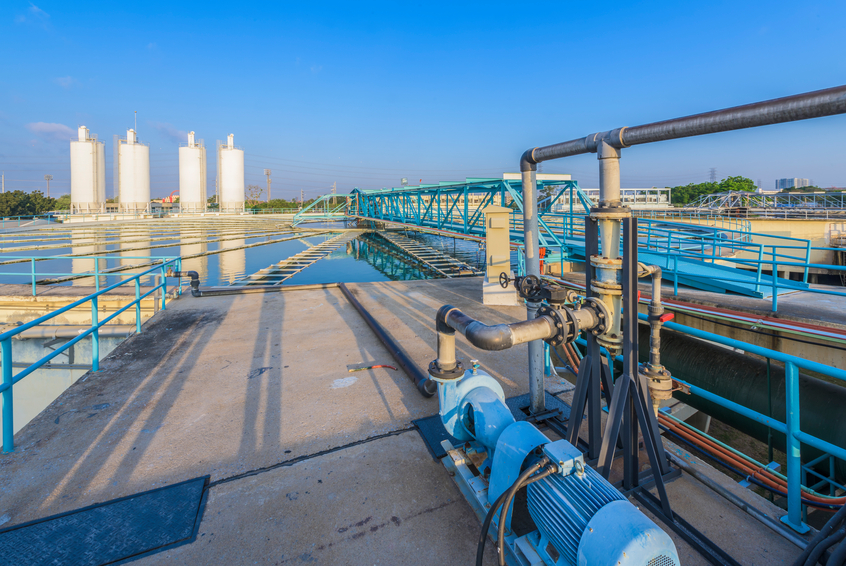
This online engineering PDH course describes basic process heating applications and equipment, and outlines opportunities for energy and performance improvements. It also discusses the merits of using a systems approach in identifying and implementing these improvement opportunities for Fuel-Based and Electric-Based heating systems. Furthermore, it provides recommendations to financially justify process heating improvement projects (System Economics).
Process heating is essential in the manufacture of most consumer and industrial products, including those made out of metal, plastic, rubber, carbon fiber, concrete, glass, and ceramics. Process heating systems are broken into three basic categories: Fuel-Based Process Heating, Electric-Based Process Heating, and Steam-Based Process Heating all of which are discussed in details.
This 5 PDH online course is applicable to mechanical, industrial and process engineers, designers, manufacturers and all personnel involved in the planning, design and installation of process heating systems.
This PE continuing education course is intended to provide you with the following specific knowledge and skills:
- Understanding the basics behind process heating operations
- Familiarizing with the common types of process heating systems and equipment
- Recognizing efficiency opportunities for fuel-based and electric-based heating systems
- Learning how to financially justify process heating improvement projects
Upon successful completion of the quiz, print your Certificate of Completion instantly. (Note: if you are paying by check or money order, you will be able to print it after we receive your payment.) For your convenience, we will also email it to you. Please note that you can log in to your account at any time to access and print your Certificate of Completion.

This online engineering PDH course presents a novel building assembly called the Solid Panel Structure (SPS), which utilizes large format (8’x24’), oriented strand board (OSB) panels to create a wall structure that comprises of high-performance moisture and thermal control layers.
The SPS is an innovative interpretation of the “perfect wall” concept, in which environmental control layers are located on the exterior side of the structural components, as opposed to traditional cavity insulated, stud-framed walls. The primary objective of this course is to validate the SPS technology in terms of its constructability, cost, and performance.
This 7 PDH online course is applicable to mechanical, structural, civil, sustainability engineers, and architects; as well as contractors and others interested in learning more about the “perfect wall” system.
This PE continuing education course is intended to provide you with the following specific knowledge and skills:
- Familiarizing with SPS Building Technology
- Understanding the cost analysis and results of this technology
- Learning how to construct SPS Building Technology
- Understanding the moisture, energy and structural performance of this building technology
Upon successful completion of the quiz, print your Certificate of Completion instantly. (Note: if you are paying by check or money order, you will be able to print it after we receive your payment.) For your convenience, we will also email it to you. Please note that you can log in to your account at any time to access and print your Certificate of Completion.

This online engineering PDH course will investigate green roofs as an approach to control stormwater discharge and pollutant content. This course provides the data and background municipalities and private entities need to move forward with decisions to implement green roofs as a stormwater control technology, or best management practice (BMP).
Urban development has led to large areas of impervious surfaces such as parking lots and building roofs. Runoff from these areas is causing problems for many urban and suburban communities. Not only is total volume of wet weather flow (WWF) increased, but peak flow rates are also increased. Implementation of traditional stormwater BMPs in urban areas may not be practical in all circumstances due to limited available surface area and other concerns. Green roofs have been suggested as a means to reduce the stormwater impacts of development because they have been shown to both detain and retain stormwater. The purpose of this study is to quantify runoff reductions resulting from the use of extensive green roof systems.
This 5 PDH online course is applicable to municipality owners and/or operators, construction contractors/workers, site developers, engineers, managers, and all other personnel involved in the stormwater runoff control field.
This PE continuing education course is intended to provide you with the following specific knowledge and skills:
- Learning about the green roof effects on runoff quantity
- Learning about the green roof effects on runoff quality
- Learning about the different types of plants commonly used in green roofs
- Understanding the green roof plant and media management considerations
- Familiarizing with the cost and implementation associated with green roofs for stormwater runoff control
Upon successful completion of the quiz, print your Certificate of Completion instantly. (Note: if you are paying by check or money order, you will be able to print it after we receive your payment.) For your convenience, we will also email it to you. Please note that you can log in to your account at any time to access and print your Certificate of Completion.
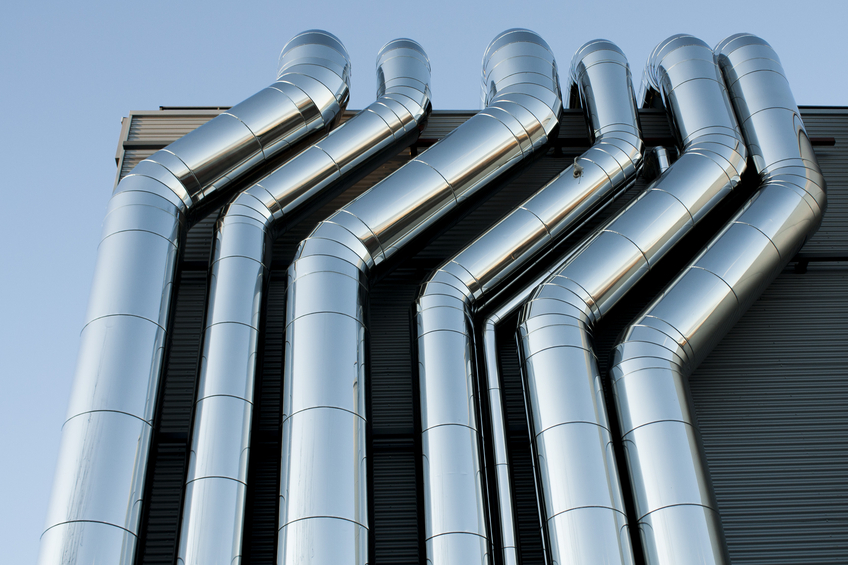
This online engineering PDH course provides a comprehensive evaluation of the Plug-and-Play (PnP) duct system for residential HVAC applications.
This course explores the challenges of traditional ductwork and the growing demand for streamlined efficient air distribution systems in today’s energy-efficient homes. It introduces a simplified, home-run style air delivery system that uses uniformly sized, small-diameter ducts connected to a central manifold which significantly improve ease of design and installation over conventional trunk-and-branch systems. This course provides a newly developed design methodology for PnP air delivery system supported by practical guidance documents for straightforward field implementation. It also covers comprehensive material and cost comparisons, results from laboratory and field testing, and performance modeling using EnergyPlus. Additionally, it addresses building code compliance challenges and includes valuable industry feedback from builders, manufacturers, and code officials.
This 7 PDH online course is applicable to mechanical engineers, HVAC professionals, and building designers interested in innovative PnP air delivery systems for energy-efficient homes.
This PE continuing education course is intended to provide you with the following specific knowledge and skills:
- Understanding the challenges in traditional duct systems and the need for simplified, efficient air distribution in modern energy-efficient homes
- Developing a straightforward design methodology and companion guidance documents to produce plug-and-play (PnP) air delivery system
- Learning a new approach for designing home-run style duct systems using standardized, small-diameter ducts from a central manifold
- Demonstrating the advantages of the simplified air delivery system compared to traditional trunk-and-branch residential duct systems
- Analyzing the impact of different parameters such as duct size, layout and internal gains on system optimization
- Identifying current building code challenges and exploring strategies for advancing the PnP system toward market readiness
Upon successful completion of the quiz, print your Certificate of Completion instantly. (Note: if you are paying by check or money order, you will be able to print it after we receive your payment.) For your convenience, we will also email it to you. Please note that you can log in to your account at any time to access and print your Certificate of Completion.

This online engineering PDH course provides basic information on detecting and regulating equipment leaks and providing repair solutions.
EPA has determined that leaking equipment, such as valves, pumps, and connectors, are the largest source of emissions of volatile organic compounds (VOCs) and volatile hazardous air pollutants (VHAPs) from petroleum refineries and chemical manufacturing facilities. The Agency has estimated that approximately 70,367 tons per year of VOCs and 9,357 tons per year of HAPs have been emitted from equipment leaks. Emissions from equipment leaks exceed emissions from storage vessels, wastewater, transfer operations, or process vent.
This course identifies some of the problems identified with LDAR (Leak Detection And Repair) programs focusing on Method 21 requirements and will describe the practices that can be used to increase the effectiveness of an LDAR program. Some of the elements of a model LDAR program are required by current Federal regulations and other model LDAR program elements help ensure continuous compliance although they may not be mandated from a regulatory standpoint. Prior to developing a written LDAR program plan, all applicable regulations should be reviewed to determine and ensure compliance with the most stringent requirements.
This 2 PDH online course is applicable to environmental engineers, as well as other technical professionals who are interested in learning about leak detection and repair.
This PE continuing education course is intended to provide you with the following specific knowledge and skills:
- Familiarizing with the importance of regulating equipment leaks
- Familiarizing with the major elements of an LDAR program and its importance
- Understanding typical mistakes made when monitoring to detect leaks
- Learning about problems that occur from improper management of an LDAR program
- Exploring a set of best practices that can be used to implement effective an LDAR program
Upon successful completion of the quiz, print your Certificate of Completion instantly. (Note: if you are paying by check or money order, you will be able to print it after we receive your payment.) For your convenience, we will also email it to you. Please note that you can log in to your account at any time to access and print your Certificate of Completion.

This online engineering PDH course presents the principles of engineering ethics that every engineer is expected to live by when practicing their profession.
Engineering ethics is (1) the study of moral issues and decisions confronting individuals and organizations involved in engineering and (2) the study of related questions about moral conduct, character, ideals and relationships of peoples and organizations involved in technological development (Martin and Schinzinger, Ethics in Engineering).
This course describes the fundamental legal concepts with which very engineer should be familiar. It also presents unique disciplinary case studies selected from across the nation, as well as hypothetical ethical challenges that demonstrate how difficult it can be to apply the code of ethics for engineers.
This 2 PDH online course is applicable to all professional engineers who are either required to fulfill 2 PDH in engineering ethics or are interested in broadening their understanding of what it means to practice and uphold the honor and integrity of their engineering profession while holding the utmost safety, health, and welfare of the public.
This PE continuing education course is intended to provide you with the following specific knowledge and skills:
- Understanding the common definition of ethics regarding engineering
- Learning about the important principles of the engineer’s professional responsibility
- Learning the do’s and don’ts through several ethical and disciplinary cases
- Understanding what it means to practise and uphold the honor and integrity of the engineering profession
Upon successful completion of the quiz, print your Certificate of Completion instantly. (Note: if you are paying by check or money order, you will be able to print it after we receive your payment.) For your convenience, we will also email it to you. Please note that you can log in to your account at any time to access and print your Certificate of Completion.