

Minnesota Wastewater and Ethics 24 PDH Discount Package 1
Water Treatment and Purification (H05-004)
Pressure and Gravity Sewers (C02-068)
Package Plants for Wastewater Treatment (C01-008)
Background Use of Onsite Wastewater Treatment Systems (C02-008)
Centralized Wastewater Treatment for Facilities Managing Oil and Gas Extraction Wastes: Wastewater Management Practices (C04-058)
Engineering Ethics for Minnesota Professional Engineers (MN2-002)
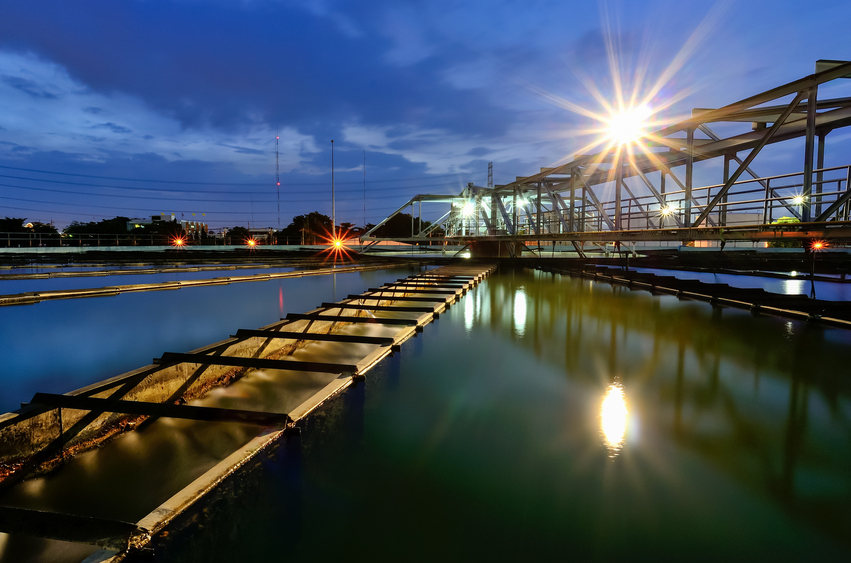
This online engineering PDH course outlines essential steps for characterizing wastewater flow and composition and provides a framework for establishing and measuring performance requirements. It also describes methods for establishing and ensuring compliance with wastewater treatment performance requirements that protect human health, surface waters, and ground water resources. Furthermore, it describes the characteristics of typical domestic and commercial wastewaters and discusses approaches for estimating wastewater quantity and quality for residential dwellings and commercial establishments.
In addition, this course identifies the pollutants of concern in wastewaters and discusses the fate and transport of these pollutants in the receiving environment. It also presents the various technical approaches for establishing performance requirements for onsite systems, based on risk and environmental sensitivity assessments. Finally, it discusses performance monitoring to ensure sustained protection of public health and water resources.
This 8 PDH online course is applicable to civil, and environmental engineers, as well as design and construction personnel involved with the planning, selection and design of subsurface wastewater infiltration systems.
This PE continuing education course is intended to provide you with the following specific knowledge and skills:
- Estimating wastewater characteristics
- Estimating wastewater flow
- Understanding wastewater quality
- Minimizing wastewater flows and pollutants
- Integrating wastewater characterization and other design information
- Determining the transport and fate of wastewater pollutants in the receiving environment
- Establishing performance requirements
In this professional engineering CEU course, you need to review Chapter 3 of the USEPA Onsite Wastewater Treatment Systems Manual, EPA/625/R-00/008, "Establishing Treatment System Performance Requirements".
Upon successful completion of the quiz, print your Certificate of Completion instantly. (Note: if you are paying by check or money order, you will be able to print it after we receive your payment.) For your convenience, we will also email it to you. Please note that you can log in to your account at any time to access and print your Certificate of Completion.
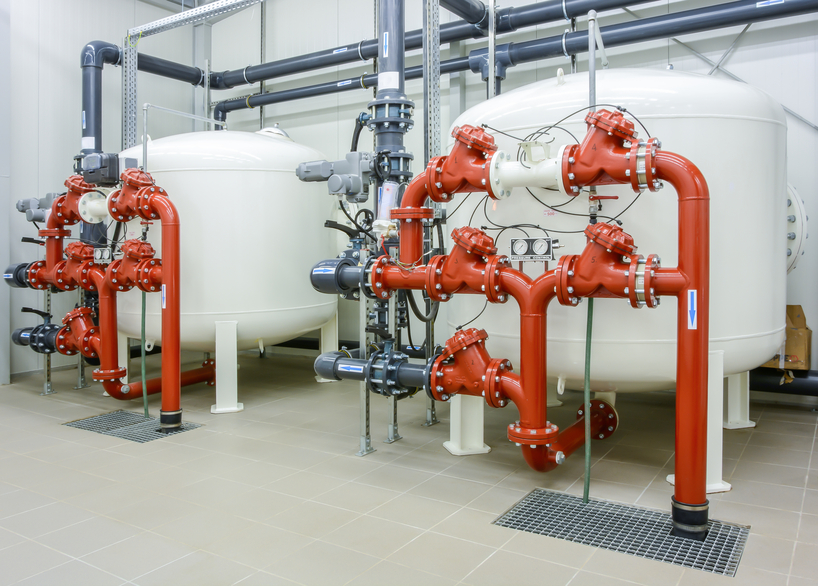
This online engineering PDH course provides an overview of water treatment and purification.
Water is the most important substance on earth. As an engineer, you might be responsible for ensuring that an adequate supply of safe water is available for domestic, fire protection, and other uses. In meeting this responsibility, you must consider several factors, such as water source selection, ways to develop the water source, contaminants you may encounter, and methods you can use to remove them.
In this course, we will discuss the selection of a good water source, how to test it, and how to treat it so that it is safe for consumption. We will also explore ways to detect and treat water that has been contaminated with chemical, biological, or radiological agents. Lastly, we will talk about the different types of water treatment equipment and their processes.
This 5 PDH online course is applicable to chemical, civil, mechanical and environmental engineers and other professionals who are interested in gaining a better understanding of water treatment and purification processes.
This PE continuing education course is intended to provide you with the following specific knowledge and skills:
- Familiarizing with the requirements for water source selection
- Learning about the development criteria for water sources
- Understanding the results and testing procedures for water contamination
- Gaining an overview of the different types of water treatment equipment
Upon successful completion of the quiz, print your Certificate of Completion instantly. (Note: if you are paying by check or money order, you will be able to print it after we receive your payment.) For your convenience, we will also email it to you. Please note that you can log in to your account at any time to access and print your Certificate of Completion.
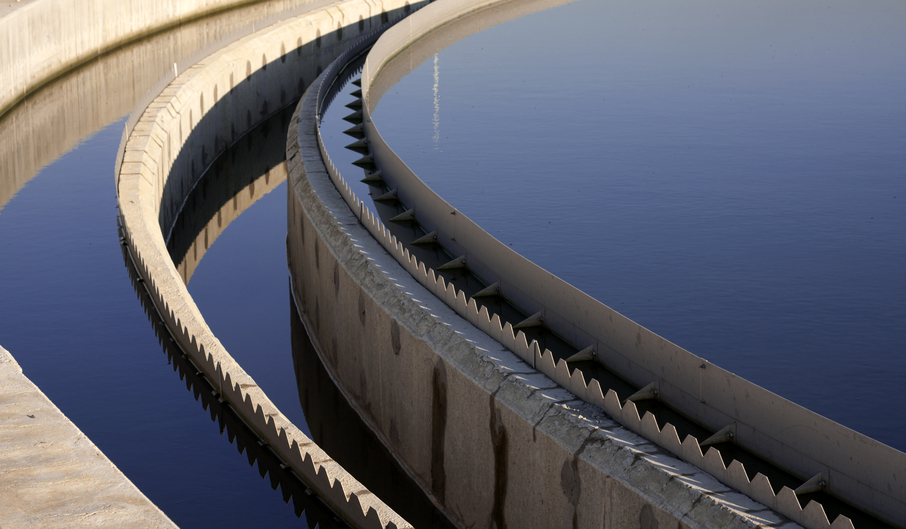
This online engineering courses is divided in to two parts: The first part discusses sewer systems that use pressure to deliver sewage to a treatment system. The second part discusses small diameter gravity sewers (SDGS) which convey effluent by gravity from a tank to a treatment location. Each part presents an overall description of the relevant topic along with the advantages and disadvantages of each system, design criteria, performance data, operation and maintenance and insights about cost related data.
Alternative wastewater collection systems can be cost effective for homes in areas where traditional collection systems are too expensive to install and operate. Pressure and gravity sewers are used in sparsely populated or suburban areas in which conventional collection systems would be expensive. These systems generally use smaller diameter pipes with a slight slope or follow the surface contour of the land; thereby, reducing excavation and construction costs. These systems convey effluent by gravity from an interceptor tank (or septic tank) to a centralized treatment location or pump station for transfer to another collection system or treatment facility.
This 2 PDH online course is applicable to civil, mechanical and environmental engineers, as well as design and construction personnel involved with the planning, design and installation of low pressure and small diameter gravity sewer systems.
This PE continuing education course is intended to provide you with the following specific knowledge and skills:
- Learning about the common types of alternative wastewater collection systems
- Understanding the advantages and disadvantages of each type of system
- Understanding the applicability of each system
- Familiarizing with the design criteria, performance data and operation and maintenance processes of each system
- Ability to compare conventional wastewater collection systems to alternative wastewater systems
Upon successful completion of the quiz, print your Certificate of Completion instantly. (Note: if you are paying by check or money order, you will be able to print it after we receive your payment.) For your convenience, we will also email it to you. Please note that you can log in to your account at any time to access and print your Certificate of Completion.
This online engineering PDH course provides information about three types of package plants: extended aeration, sequencing batch reactor and oxidation ditch systems. It discusses the general configuration, typical applications, advantages and disadvantages, typical performance, and cost for each.
Package plants are pre-manufactured wastewater treatment facilities typically used to treat flows between 0.01 and 0.25 MGD.
This 1 PDH online course is intended for civil, municipal, and environmental engineers, as well as anyone interested in or involved with wastewater treatment.
This PE continuing education course is intended to provide you with the following specific knowledge and skills:
- General configuration of extended aeration, sequencing batch reactor, and oxidation ditch package plants
- Typical applications for extended aeration, sequencing batch reactor, and oxidation ditch package plants
- Advantages and disadvantages of extended aeration, sequencing batch reactor, and oxidation ditch package plants
- Design criteria for extended aeration, sequencing batch reactor, and oxidation ditch package plants
- Typical performance and costs of extended aeration, sequencing batch reactor, and oxidation ditch package plants
In this professional engineering CEU course, you need to review the U.S. EPA Wastewater Technology Fact Sheet, Package Plants (EPA 832-F-00-016).
Upon successful completion of the quiz, print your Certificate of Completion instantly. (Note: if you are paying by check or money order, you will be able to print it after we receive your payment.) For your convenience, we will also email it to you. Please note that you can log in to your account at any time to access and print your Certificate of Completion.
This online engineering PDH course describes how onsite wastewater treatment systems (OWTS) have evolved throughout the years along with changing regulations. It also discusses current uses and types (performance-based vs. prescriptive requirements) of OWTS as well as the management program problems associated with such systems. Finally, this course presents initiatives taken to improve onsite system treatment and management.
Onsite wastewater treatment systems have evolved from the pit privies used widely throughout history to installations capable of producing a disinfected effluent that is fit for human consumption. Although achieving such a level of effluent quality is seldom necessary, the ability of onsite systems to remove settleable solids, floatable grease and scum, nutrients, and pathogens from wastewater discharges defines their importance in protecting human health and environmental resources. In the modern era, the typical onsite system has consisted primarily of a septic tank and a soil absorption field, also known as a subsurface wastewater infiltration system, or SWIS.
This 2 PDH online course is applicable to civil and environmental engineers, as well as design and construction personnel involved with the design and installation of onsite wastewater treatment systems.
This PE continuing education course is intended to provide you with the following specific knowledge and skills:
- Regulation of onsite wastewater treatment systems
- Onsite wastewater treatment system use, distribution, and failure rate
- Problems with existing onsite wastewater management programs
- Performance-based management of onsite wastewater treatment systems
- Coordinating onsite system management with watershed protection efforts
- USEPA initiatives to improve onsite system treatment and management
In this professional engineering CEU course, you need to review Chapter 1 of the EPA Onsite Wastewater Treatment Systems Manual, EPA/625/R-00/008, "Background Use of Onsite Wastewater Treatment Systems".
Upon successful completion of the quiz, print your Certificate of Completion instantly. (Note: if you are paying by check or money order, you will be able to print it after we receive your payment.) For your convenience, we will also email it to you. Please note that you can log in to your account at any time to access and print your Certificate of Completion.
This online engineering PDH course provides an overview of wastewater treatment technologies that are applicable to the treatment of oil and gas extraction wastes used at centralized wastewater treatment (CWT) facilities managing these wastes.
The exploration, development and production of oil and gas reserves vary markedly from region to region. There are a number of solid and liquid waste materials generated during oil and gas exploration, extraction and production, and these waste materials may be managed by CWT facilities. The nature and characteristics and quantity of the wastes generated depend upon a number of factors, such as the type of drilling, the characteristics of the formation, the depth of the well and the type and quantity of chemical additives used during drilling, production and well maintenance activities.
CWT facilities that manage oil and gas extraction wastewaters use a variety of treatment technologies, depending on characteristics of the wastewater received and the treatment objectives.
This 4 PDH online course is intended for chemical, petroleum, environmental and industrial engineers as well as other interested in learning about the wastewater treatment technologies that are used at CWT to treat oil and gas extraction wastewaters.
This PE continuing education course is intended to provide you with the following specific knowledge and skills:
- Familiarizing with the following waste treatment technologies: chemical precipitation, filtration/flotation/ sedimentation and crystallization
- Understanding the following technologies: evaporation/condensation, reverse osmosis, and biological treatment
- Learning about the cost considerations of the listed technologies
- Understanding the capabilities and limitations of the listed technologies
Upon successful completion of the quiz, print your Certificate of Completion instantly. (Note: if you are paying by check or money order, you will be able to print it after we receive your payment.) For your convenience, we will also email it to you. Please note that you can log in to your account at any time to access and print your Certificate of Completion.

This online engineering PDH course presents the laws and rules of ethics and professional responsibility governing the practice of engineering in the State of Minnesota. Excerpts from Chapter 326 of the Minnesota Statutes and Chapter 1805 of the Minnesota Administrative Rules, which relate to the laws and rules of professional conduct are presented in this course.
Engineering ethics is (1) the study of moral issues and decisions confronting individuals and organizations involved in engineering and (2) the study of related questions about moral conduct, character, ideals and relationships of peoples and organizations involved in technological development (Martin and Schinzinger, Ethics in Engineering).
Since engineers are faced with frequent moral and ethical dilemmas while practicing their engineering profession, this course will provide you with moral and ethical guidance in your decision making process. Most importantly, it will provide you with insight on how to conduct, respect and protect your engineering practice with the utmost professionalism.
This 2 PDH online course is applicable to Professional Engineers licensed in the State of Minnesota and who are required to demonstrate continuing professional competency in engineering ethics as a condition of their license renewal. For each renewal period, every licensee must complete twenty four (24) professional development hours, at least two (2) of which must be relative to professional responsibility, conduct and ethics.
This PE continuing education engineering course is intended to provide you with the following specific knowledge and skills:
- Familiarizing with the laws and rules regulating the practice of engineering in the State of Minnesota
- Understanding the role of the Minnesota Board and its disciplinary authority
- Learning about engineering ethics, the laws and rules of professional conduct and responsibility
- Gaining an overview of disciplinary case studies along a range of violations and their corresponding penalties
Upon successful completion of the quiz, print your Certificate of Completion instantly. (Note: if you are paying by check or money order, you will be able to print it after we receive your payment.) For your convenience, we will also email it to you. Please note that you can log in to your account at any time to access and print your Certificate of Completion.