

Minnesota Mechanical and Ethics 24 PDH Discount Package 2
Introduction to Refrigeration Systems (M08-008)
Principles of Hydraulic and Pneumatic Systems (M04-043)
Fire Protection Systems (M04-051)
Plumbing Valves and Accessories (M02-066)
How to Calculate the True Cost of Steam (D01-003)
Ethics in Professional Practice (LE2-007)
This online engineering PDH course discusses the six simple machines: the lever, the block, the wheel and axle, the inclined plane, the screw and the gear. When you familiarize with the principles of these simple machines, you can readily understand the operation of complex machines.
A machine is any device that helps you to do work. It may help by changing the amount of force or the speed of action. Machines may also be used to change the direction of a force or in other cases transform energy; for example, a generator transforms mechanical energy into electrical energy. Complex machines are basically combinations of two or more simple machines.
This 3 PDH online course is applicable to engineers, designers, manufacturers and anyone interested to gain an understanding of basic machine operation.
This PE continuing education course is intended to provide you with the following specific knowledge and skills:
- Learning about the principles of levers, their different classes and mechanical advantages
- Understanding the basics of the block and tackle, their different configurations and mechanical advantages
- Understanding the basics of wheel and axle and understand their mechanical advantages
- Learning about the mechanical advantages of inclined planes
- Familiarizing with the uses of the screw and jack
- Understanding the basics of gears, their different types and mechanical advantages
In this professional engineering CEU course, you need to review Chapters 1 through 6, of the Naval Education and Training Professional Development and Technology Center "Basic Machines" NAVEDTRA 14037 - training course.
Once you complete your course review, you need to take a multiple-choice quiz consisting of twenty (20) questions to earn 3 PDH credits. The quiz will be based on this NAVEDTRA publication.
Upon successful completion of the quiz, print your Certificate of Completion instantly. (Note: if you are paying by check or money order, you will be able to print it after we receive your payment.) For your convenience, we will also email it to you. Please note that you can log in to your account at any time to access and print your Certificate of Completion.
This online engineering course provides necessary information to understand the principles and theory of refrigeration, the components of mechanical refrigeration systems, and the types of refrigerants and associated equipment. This course also discusses the methods used for installing, maintaining, and repairing refrigeration equipment, including domestic refrigerators and freezers.
Refrigeration is the process of removing heat from an area or a substance. It is usually done by an artificial means of lowering the temperature, such as by the use of ice or mechanical refrigeration, which is a mechanical system or apparatus, designed and constructed to transfer heat from one substance to another.
This 8 PDH online course is intended for HVACR, mechanical and industrial engineers, manufacturers, maintenance staff, and others seeking a basic understanding of refrigeration systems.
This PE continuing education course is intended to provide you with the following specific knowledge and skills:
- Understanding the physics behind heat and refrigeration
- Learning about the refrigeration cycle and its different mechanical components
- Familiarizing with the different types of refrigerants
- Understanding the safety precautions associated with refrigerants
- Familiarizing with the different types of refrigerant equipment
- Understanding the installation procedures for refrigerant equipment
- Learning about the maintenance, service, and repair procedures associated with refrigerant equipment
Upon successful completion of the quiz, print your Certificate of Completion instantly. (Note: if you are paying by check or money order, you will be able to print it after we receive your payment.) For your convenience, we will also email it to you. Please note that you can log in to your account at any time to access and print your Certificate of Completion.
This online engineering course presents the basic principles of hydraulics and pneumatics along with their various components followed by discussing the maintenance procedures associated with these systems.
In automotive and construction equipment, the terms “hydraulic” and “pneumatic” describe a method of transmitting power from one place to another through the use of a liquid or a gas which obey certain physical laws and principles discussed in this course.
This 4 PDH online course is intended for mechanical and industrial engineers, as well as other technical professionals interested in gaining a better understanding of the principles of hydraulic and pneumatics systems.
This PE continuing education course is intended to provide you with the following specific knowledge and skills:
- Understanding the operating principles of hydraulic systems
- Identifying operation characteristics, component functions, and maintenance procedures of a hydraulic system
- Understanding the operating principles of pneumatic systems
- Identifying operational characteristics and service procedures applicable to heavy-duty compressors
Upon successful completion of the quiz, print your Certificate of Completion instantly. (Note: if you are paying by check or money order, you will be able to print it after we receive your payment.) For your convenience, we will also email it to you. Please note that you can log in to your account at any time to access and print your Certificate of Completion.
This online engineering PDH course provides information on the different types of fire protection systems and presents guidelines for periodic inspection and maintenance procedures of these systems.
Fire protection systems are designed to extinguish fires as quick as possible to prevent the loss of lives and property. When fire suppression systems are installed, the system would control, put out any fire that may result and signal the fire department. However, in the absence of similar systems, any building could be severely damaged or completely destroyed before the fire department could respond.
There are several types of fire protection systems. Each system is designed to serve in specific locations and has its unique components and functioning characteristics. And in order to ensure that these systems are safe and reliable, periodic inspection and maintenance of their components is required.
This 4 PDH online course is applicable to engineers who are interested in learning more about fire protection systems and the inspection and maintenance procedures for a safe and a reliable performance.
This PE continuing education course is intended to provide you with the following specific knowledge and skills:
- Familiarizing with the general features of fire protection systems
- Learning about the different types of automatic sprinkler systems and their characteristics
- Understanding the placement and distribution of components along the system networks
- Understanding the inspection and maintenance requirements of various components
- Learning about the practicality and characteristics of gaseous extinguishing systems
- Gaining a general overview of dry chemical extinguishing systems
Upon successful completion of the quiz, print your Certificate of Completion instantly. (Note: if you are paying by check or money order, you will be able to print it after we receive your payment.) For your convenience, we will also email it to you. Please note that you can log in to your account at any time to access and print your Certificate of Completion.
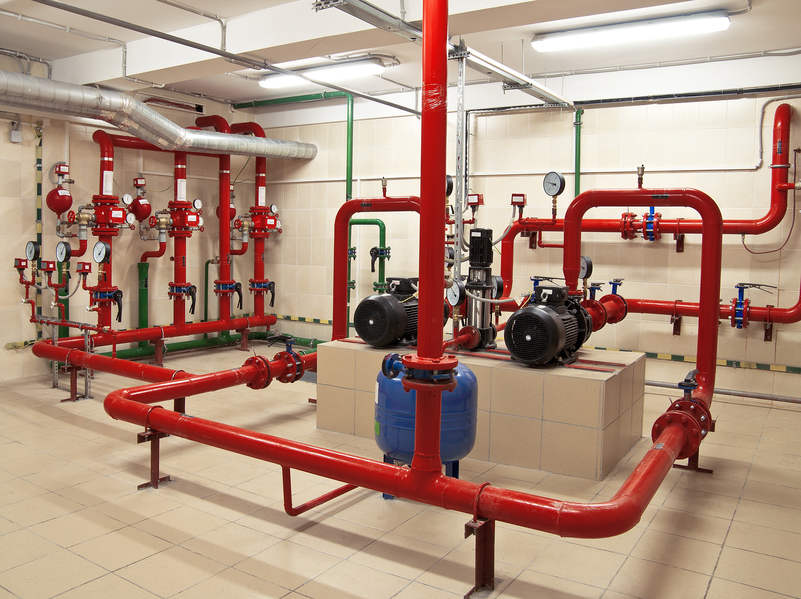
This online engineering PDH course offers an overview of the various valves and accessories utilized in plumbing and piping systems.
The course covers the different types, uses, and applications of key valves found in plumbing systems, including gate valves, butterfly valves, ball valves, and others. It also addresses water meters, the types of insulation used in piping systems, and additional accessories. Moreover, the course includes a brief discussion on maintenance and repair recommendations for valves.
This 2 PDH online course is suitable for mechanical and plumbing engineers, as well as other technical professionals looking to expand their knowledge of plumbing valves and their related accessories.
This PE continuing education course is intended to provide you with the following specific knowledge and skills:
- Learning about the various types of plumbing valves, including their specific uses and applications
- Familiarizing with the maintenance and repair requirements of plumbing valves
- Learning about the different water meter types, particularly the nutating disk volume meter, and their applications
- Understading the different types of insulation used in piping systems
Upon successful completion of the quiz, print your Certificate of Completion instantly. (Note: if you are paying by check or money order, you will be able to print it after we receive your payment.) For your convenience, we will also email it to you. Please note that you can log in to your account at any time to access and print your Certificate of Completion.

This online engineering PDH course provides a comprehensive overview of methods to find the true cost of steam.
In industrial manufacturing facilities, process heating accounts for an average of more than 60% of thermal energy use, predominantly in the form of steam. Process heating also accounts for a significant portion of controllable operating costs. It is one of the few areas of opportunity where management can reduce operating costs and improve profits. This course examines different methods to calculate the cost of steam and compares the results showing how the model method is a recommended approach.
This 1 PDH online course is applicable to industrial engineers, plant engineers and other technical professionals who are interested in learning more about how to calculate the true cost of steam.
This PE continuing education course is intended to provide you with the following specific knowledge and skills:
- Familiarizing with the basics of steam cost generation
- Understanding different ways to find the cost of steam generation
- Learning about simulation models to calculate the steam cost
- Understanding the methodology for marginal steam pricing
Upon successful completion of the quiz, print your Certificate of Completion instantly. (Note: if you are paying by check or money order, you will be able to print it after we receive your payment.) For your convenience, we will also email it to you. Please note that you can log in to your account at any time to access and print your Certificate of Completion.

In this online engineering PDH course, background on the philosophical models that guide ethical behavior is discussed and then applied to specific situations in engineering codes of ethics. This course is based on the American Society of Mechanical Engineers Professional Practice Curriculum, Volume 8, Section: Engineering Ethics.
Many engineering organizations have drafted codes of ethics to which their members are required to commit. Generally, these codes are quite similar and are based on a few fundamental principles which provide guidance to professional engineers in common situations. Nevertheless, there are many difficult or ambiguous situations in which the best ethical solution is difficult to determine.
This 2 PDH online course is intended primarily for engineers seeking to learn ethical principles and how to apply them to their professional practice.
This PE continuing education course is intended to provide you with the following specific knowledge and skills:
-
Determining ethical behavior using several philosophical models
-
Evaluating a practical situation in terms of a professional code of ethics
-
Identifying situations that represent conflicts of interest and formulate a proper response
-
Applying the standards of professional ethics in technical communication
-
Recognizing environmental impacts of engineering work
-
Considering principles of sustainable development in the performance of professional duties
In this professional engineering CEU course, you need to review "Ethics in Professional Practice" published by the American Society of Mechanical Engineers (ASME). (This course document is reproduced by permission of the ASME (www.asme.org). You may also download from or view this course document on the ASME's website by clicking on Ethics in Professional Practice).
Once you complete your course review, you need to take a multiple-choice quiz consisting of fifteen (15) questions to earn 2 PDH credit. The quiz will be based on this ASME publication.
Upon successful completion of the quiz, print your Certificate of Completion instantly. (Note: if you are paying by check or money order, you will be able to print it after we receive your payment.) For your convenience, we will also email it to you. Please note that you can log in to your account at any time to access and print your Certificate of Completion.