

Kansas Stormwater & Health/Safety/Welfare 30 PDH Discount Pkg 1
Plumbing Guidelines for ADA Accessibility (M02-056)
Safety and Health Programs in Construction (C03-062)
Ergonomic Guidelines for Manual Material Handling (Y03-003)
Fall Protection in Construction (C03-057)
Fundamentals of Fire Protection (M06-023)
General Principles of Engineering Ethics (LE2-016)
Ethics: An Alternative Account of the Ford Pinto Case (LE3-003)
Construction Site Storm Water - Runoff Control (C02-001)
Construction Site Storm Water - Sediment Control (C02-002)
Storm Water Pollution Prevention - Materials Management (C02-005)

This online engineering PDH course presents the main requirements for
This 2 PDH online course is applicable to civil engineers, construction managers, architects and inspectors who are involved with construction in the public right of way.
This PE continuing education course is intended to provide you with the following specific knowledge and skills:
- Familiarizing with the government agencies involved with PROWAG
- Understanding which projects require PROWAG compliance
- Knowing the differences between the current ADA requirements and PROWAG
- Learning about PROWAG sidewalk and slope requirements
- Learning about PROWAG curb ramp requirements
- Learning about PROWAG detectable warning requirements
- Understanding practical examples of reconstructing existing conditions to be PROWAG compliant
In this professional engineering CEU course you will review the main requirements of PROWAG along with practical design examples.
Upon successful completion of the quiz, print your Certificate of Completion instantly. (Note: if you are paying by check or money order, you will be able to print it after we receive your payment.) For your convenience, we will also email it to you. Please note that you can log in to your account at any time to access and print your Certificate of Completion.
This online engineering PDH course focuses on the plumbing elements and facilities of the 2010 ADA standards for accessible design.
The Department of Justice published revised regulations for Titles II and III of the Americans with Disabilities Act of 1990 "ADA" in the Federal Register on September 15, 2010. These regulations adopted revised, enforceable accessibility standards called the 2010 ADA Standards for Accessible Design "2010 Standards" or "Standards". The 2010 Standards set minimum requirements – both scoping and technical – for newly designed and constructed or altered State and local government facilities, public accommodations, and commercial facilities to be readily accessible to and usable by individuals with disabilities.
This 2 PDH online course is applicable to mechanical and civil engineers, architects, construction managers and others interested in learning more about plumbing guidelines for ADA accessibility.
This PE continuing education course is intended to provide you with the following specific knowledge and skills:
- Learning about the drinking fountain ADA requirements
- Learning about the coat hooks and shelves ADA requirements
- Learning about the water closet ADA requirements
- Learning about the urinal ADA requirements
- Learning about the shower stall ADA requirements
- Learning about the washing machine and dryers ADA requirements
- Learning about the saunas and steam rooms ADA requirements
In this professional engineering CEU course, you need to review “Plumbing Guidelines for ADA Accessibility”, which is based on Chapter 6 “Plumbing Elements and Facilities” of the 2010 ADA standards for accessible design.
Upon successful completion of the quiz, print your Certificate of Completion instantly. (Note: if you are paying by check or money order, you will be able to print it after we receive your payment.) For your convenience, we will also email it to you. Please note that you can log in to your account at any time to access and print your Certificate of Completion.

This online engineering PDH course provides responsible employers, workers, and worker representatives with a sound, flexible framework for addressing safety and health issues on diverse construction job sites.
This course follows a proactive approach to managing occupational safety and health rather than a traditional approach where actions are taken only after a worker is injured or becomes sick. Finding and fixing hazards before they cause injury or illness is a far more effective approach. Doing so avoids the direct and indirect costs of worker injuries and illnesses and promotes a positive work environment.
Employers will find that implementing the recommended practices highlighted in this course will bring other benefits as well such as improvements in production/quality, better employee morale, improved employee recruiting and retention, and a more favorable image and reputation among customers, suppliers, and the community.
This 3 PDH online course is applicable to health and safety engineers, construction and project managers, site engineers, and anyone who is interested in improving the standard and level of health and safety on construction sites.
This PE continuing education course is intended to provide you with the following specific knowledge and skills:
- Understanding the seven core elements of the recommended practices for safety and health programs in construction
- Learning about the importance of effective management leadership
- Understanding how to promote worker participation
- Familiarizing with hazard identification and assessment
- Learning about hazard prevention and control
- Familiarizing with the education and training mindset required on site
- Gaining insight on evaluation and improvement programs
- Understanding the importance of communication and coordination for employers on multiemployer worksites
Upon successful completion of the quiz, print your Certificate of Completion instantly. (Note: if you are paying by check or money order, you will be able to print it after we receive your payment.) For your convenience, we will also email it to you. Please note that you can log in to your account at any time to access and print your Certificate of Completion.
This online engineering PDH course provides information on effective ergonomic interventions that help lower the physical demands of manual material handling (MMH) work.
Manual material handling work contributes to a large percentage of over half a million cases of musculoskeletal disorders reported annually in the United States. Musculoskeletal disorders often involve strains and sprains to the lower back, shoulders, and upper limbs. They can result in protracted pain, disability, medical treatment, and financial stress for those afflicted with them.
Effective ergonomic interventions can lower the physical demands of MMH work tasks, thereby lowering the incidence and severity of the musculoskeletal injuries they can cause. Their potential for reducing injury-related costs alone make ergonomic interventions a useful tool for improving a company’s productivity, product quality, and overall business competitiveness.
This 3 PDH online course is applicable to engineers, managers and supervisors who are interested in learning more about ergonomic interventions that reduce the physical demands of manual material handling work.
This PE continuing education course is intended to provide you with the following specific knowledge and skills:
- Familiarizing with the basics of manual material handling
- Understanding the importance of improving the workplace
- Understanding the conditions associated with the development of injuries in manual material handling tasks
- Learning about the different types of ergonomic improvements
- Knowing easier ways to manually lift, lower, fill, or empty containers
- Exploring alternatives to the manual handling of individual containers
Upon successful completion of the quiz, print your Certificate of Completion instantly. (Note: if you are paying by check or money order, you will be able to print it after we receive your payment.) For your convenience, we will also email it to you. Please note that you can log in to your account at any time to access and print your Certificate of Completion.

This online engineering PDH course presents the OSHA guidelines for fall protection for protecting workers against potential fall hazards.
Historically, falls are the leading cause of fatalities in construction, accounting for about one-third of all fatalities in the industry. Workers involved in working at heights are exposed to potential fall hazards. Accidents involving falls are generally complex events frequently involving a variety of factors
OSHA recognizes that working at heights presents serious hazards to all workers involved. Consequently, the standard for fall protection deals with both the human and equipment-related issues in protecting workers from fall hazards.
This 3 PDH online course is intended for employers/business owners, engineers, managers and construction workers interested in better understanding the Fall Protection in Construction requirements and the reasons behind them.
This PE continuing education course is intended to provide you with the following specific knowledge and skills:
- Identifying potential fall hazards
- Selecting fall protection systems appropriate for existing conditions
- Implementing proper construction and installation of safety systems
- Training and supervising employees in the proper selection, use and maintenance of fall protection systems
In this professional engineering CEU course, you need to review the OSHA Standard, "Fall Protection in Construction", (OSHA 3146), published in 2015.
Once you complete your course review, you need to take a multiple-choice quiz consisting of twenty (20) questions to earn 3 PDH credits. The quiz will be based on this OSHA publication.
Upon successful completion of the quiz, print your Certificate of Completion instantly. (Note: if you are paying by check or money order, you will be able to print it after we receive your payment.) For your convenience, we will also email it to you. Please note that you can log in to your account at any time to access and print your Certificate of Completion.
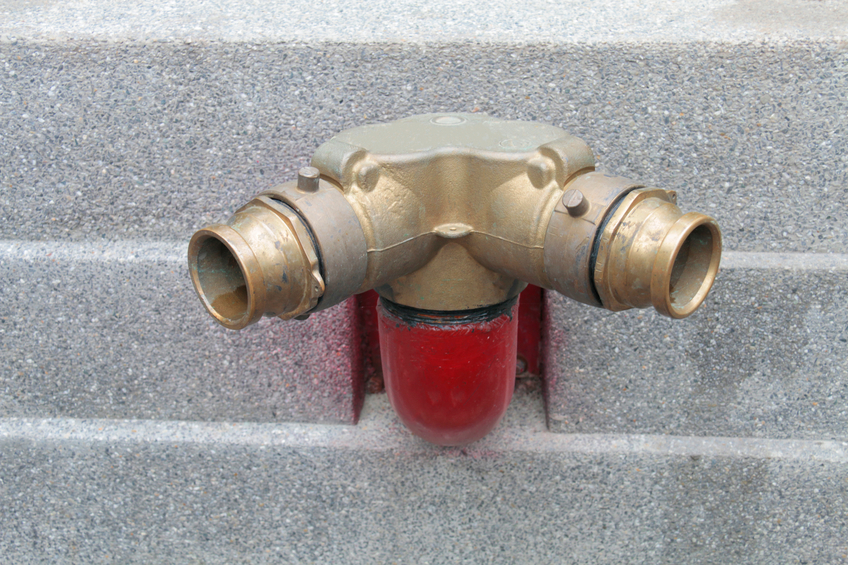
This online engineering PDH course introduces basic fire protection issues related to the safeguarding of life and property against fire loss. It describes the fundamental principles of fire science and of the dynamics of fire growth in buildings and demonstrates how a sound understanding of these is necessary before viable fire protection measures can be implemented. In addition this course develops an engineering appreciation of standard practices and regulations related to the prevention, detection and suppression of fires.
This 6 PDH online course is applicable to mechanical engineers, designers, architects, contractors, building professionals, and all other personnel involved with fire protection projects.
This PE continuing education course is intended to provide you with the following specific knowledge and skills:
- Familiarizing with the fundamentals of fire science
- Understanding the dynamics of fire
- Learning the principles of fire protection
- Knowing the basics of fire detection
- Learning the principles of fire suppression
In this professional engineering CEU course, you need to review the NIOSH Instructional Module, "Fire Protection".
Upon successful completion of the quiz, print your Certificate of Completion instantly. (Note: if you are paying by check or money order, you will be able to print it after we receive your payment.) For your convenience, we will also email it to you. Please note that you can log in to your account at any time to access and print your Certificate of Completion.

This online engineering PDH course presents the principles of engineering ethics that every engineer is expected to live by when practicing their profession.
Engineering ethics is (1) the study of moral issues and decisions confronting individuals and organizations involved in engineering and (2) the study of related questions about moral conduct, character, ideals and relationships of peoples and organizations involved in technological development (Martin and Schinzinger, Ethics in Engineering).
This course describes the fundamental legal concepts with which very engineer should be familiar. It also presents unique disciplinary case studies selected from across the nation, as well as hypothetical ethical challenges that demonstrate how difficult it can be to apply the code of ethics for engineers.
This 2 PDH online course is applicable to all professional engineers who are either required to fulfill 2 PDH in engineering ethics or are interested in broadening their understanding of what it means to practice and uphold the honor and integrity of their engineering profession while holding the utmost safety, health, and welfare of the public.
This PE continuing education course is intended to provide you with the following specific knowledge and skills:
- Understanding the common definition of ethics regarding engineering
- Learning about the important principles of the engineer’s professional responsibility
- Learning the do’s and don’ts through several ethical and disciplinary cases
- Understanding what it means to practise and uphold the honor and integrity of the engineering profession
Upon successful completion of the quiz, print your Certificate of Completion instantly. (Note: if you are paying by check or money order, you will be able to print it after we receive your payment.) For your convenience, we will also email it to you. Please note that you can log in to your account at any time to access and print your Certificate of Completion.

In this online engineering PDH course, the factual basis of the conventional account is examined and misconceptions held by the public are identified. Questions about the placement and design of the fuel tank are addressed. Data available in public records but rarely discussed by Pinto critics are presented showing that Pinto accident-fatality rates were slightly better than the average for automobiles of comparable size. The discussion is then rounded out by comments on various other criticisms that have been leveled at the Pinto, and an alternative account of the Pinto case is formulated which differs significantly from the conventional account.
The Ford Pinto case is today considered a classic example of corporate wrong-doing and is a mainstay of courses in engineering ethics, business ethics, philosophy, and the sociology of white-collar crime. The conventional account of the case holds that Ford engineers made a serious design error in locating the fuel tank behind the rear axle, leaving the Pinto vulnerable to disastrous fires in rear-end collisions. As crash-test and field data began to accumulate and reveal the danger, management made a deliberate decision not to modify the design, because doing so would harm corporate profits. Ford's decision was based on a cost-benefit analysis which balanced human lives against corporate profits.
This 3 PDH online course is intended for engineers concerned with ethical decision-making in making design trade-offs involving the safety of the public.
This PE continuing education course is intended to provide you with the following specific knowledge and skills:
- Understanding the role of the National Highway Traffic Safety Administration in automobile design
- Learning about the historical and legal development of crashworthiness as a requirement for engineering design
- Understanding the complexity of design considerations in locating the fuel tank
- Knowing the definition of "Risk" as the probability and severity of harm
- Knowing the definition of "Safety" as acceptable risk
- Understanding the necessity of trade-offs between cost and risk
- Learning about the comparative fatality rates for subcompacts of the Pinto era
- Understanding the need for and use of cost-benefit analysis
Upon successful completion of the quiz, print your Certificate of Completion instantly. (Note: if you are paying by check or money order, you will be able to print it after we receive your payment.) For your convenience, we will also email it to you. Please note that you can log in to your account at any time to access and print your Certificate of Completion.

This online engineering PDH course addresses EPA's BMP for the protection of wetlands and aquatic ecosystems, protection of public health, flood control and more.
Erosion and sedimentation related to construction site storm water runoff can significantly affect the aquatic population and hydraulic characteristics of the receiving waters. Alterations in hydraulic characteristics of streams receiving runoff include higher peak flow rates, increased frequency and duration of bankfull and subbankfull flows, increased occurrences of downstream flooding, and reduced baseflow levels.
EPA recognizes that such alterations can be prevented by implementing an effective storm water management program. Therefore the EPA published the Storm Water Phase II Rule on
This 2 PDH online course is applicable to municipality owners and/or operators, construction contractors/workers, site developers, engineers, managers, and all other personnel involved in the implementation of runoff controls for storm water runoff from construction sites.
This PE continuing education course is intended to provide you with the following specific knowledge and skills:
- Types and methods of runoff control systems
- Applicability
- Siting and design criteria
- Maintenance and cost considerations
- Effectiveness and limitations
In this professional engineering CEU course, you need to review EPA’s Best Management Practice relating to the “Runoff Control” section of the “Construction Site Storm Water Runoff Control”. This section of the BMP addresses the following runoff control methods:
- Land Grading
- Permanent Diversions
- Preserving Natural Vegetation
- Construction Entrances
- Check Dams
- Filter Berms
- Grass-Lined Channels
- Riprap
Once you complete your course review, you need to take a multiple-choice quiz consisting of fifteen (15) questions to earn 2 PDH credits. The quiz will be based on the “Runoff Control” section of this EPA publication.
Upon successful completion of the quiz, print your Certificate of Completion instantly. (Note: if you are paying by check or money order, you will be able to print it after we receive your payment.) For your convenience, we will also email it to you. Please note that you can log in to your account at any time to access and print your Certificate of Completion.
This online engineering PDH course addresses EPA's BMP for improved quality of receiving water bodies, conservation of water resources, flood control and more.
Erosion and sedimentation related to construction site storm water runoff can significantly affect the aquatic population and hydraulic characteristics of the receiving waters. Alterations in hydraulic characteristics of streams receiving runoff include higher peak flow rates, increased frequency and duration of bankfull and subbankfull flows, increased occurrences of downstream flooding, and reduced baseflow levels.
EPA recognizes that such alterations can be prevented by implementing an effective storm water management program. Therefore the EPA published the Storm Water Phase II Rule on
This 2 PDH online course is applicable to municipality owners and/or operators, construction contractors/workers, site developers, engineers, managers, and all other personnel involved in the implementation of sediment control for storm water runoff from construction sites.
This PE continuing education course is intended to provide you with the following specific knowledge and skills:
- Types and methods of sediment control systems
- Applicability
- Siting and design criteria
- Maintenance and cost considerations
- Effectiveness and limitations
In this professional engineering CEU course, you need to review EPA’s Best Management Practice relating to the “Sediment Control” section of the “Construction Site Storm Water Runoff Control”. This section of the BMP addresses the following “Sediment Control” methods:
- Temporary Diversion Dikes
- Wind Fences and Sand Fences
- Brush Barrier
- Silt Fence
- Sediment Filters and Sediment Chambers
- Sediment Trap
- Strom Drain Inlet Protection
Once you complete your course review, you need to take a multiple-choice quiz consisting of fifteen (15) questions to earn 2 PDH credits. The quiz will be based on the “Sediment Control” section of this EPA publication.
Upon successful completion of the quiz, print your Certificate of Completion instantly. (Note: if you are paying by check or money order, you will be able to print it after we receive your payment.) For your convenience, we will also email it to you. Please note that you can log in to your account at any time to access and print your Certificate of Completion.
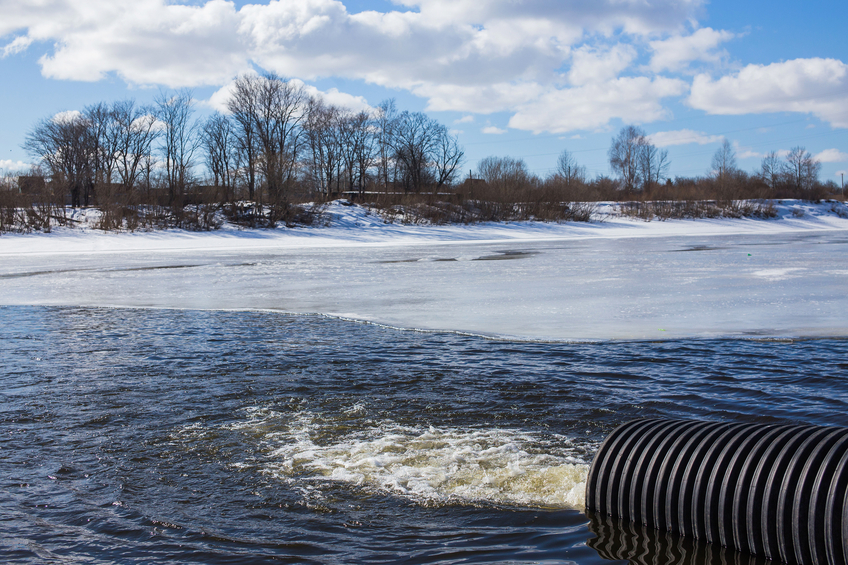
This online engineering PDH course presents EPA's stormwater best management practice for the protection of wetlands and aquatic ecosystems and conservation of water.
Municipal operations can adversely affect the water quality system due to pollutant runoff from various activities such as park and open space maintenance, fleet and building maintenance, new construction and land disturbances, and storm water system maintenance.
EPA recognizes that storm water pollution resulting from municipal activities can be prevented or reduced by implementing an effective storm water operations and maintenance program. Therefore the EPA published the Storm Water Phase II Rule on
This 2 PDH online course is applicable to municipality owners and/ or operators, construction contractors/workers, site developers, engineers, managers, and all other personnel involved in the implementation of good housekeeping practices (materials management) for municipal operations.
This PE continuing education course is intended to provide you with the following specific knowledge and skills:
- Types and methods of materials management and good housekeeping
- Applicability
- Siting and design criteria
- Maintenance and cost considerations
- Effectiveness and limitations
In this professional engineering CEU course, you need to review EPA’s Best Management Practice relating to the “Materials Management” section of the “Pollution Prevention/Good Housekeeping for Municipal Operations” provided below. This section of the BMP addresses the following:
- Alternative Products
- Hazardous Material Storage
- Road Salt Application and Storage
- Spill Response and Prevention
- Used Oil Recycling
- Materials Management
Once you complete your course review, you need to take a multiple-choice quiz consisting of ten (10) questions to earn 2 PDH credits. The quiz will be based on this EPA publication.
Upon successful completion of the quiz, print your Certificate of Completion instantly. (Note: if you are paying by check or money order, you will be able to print it after we receive your payment.) For your convenience, we will also email it to you. Please note that you can log in to your account at any time to access and print your Certificate of Completion.