

Indiana Energy Efficiency and Laws/Rules/Ethics 30 PDH Discount Package 1
Types of Renewable Energy (R04-015)
Guidelines for Selecting Cool Roofs (M02-065)
Green Roofs for Stormwater Runoff Control (C05-026)
Continuous Energy Improvement in Motor Driven Systems (E08-007)
Small Wind Electric Systems to Power Your Home (R03-017)
A Guide to Leak Detection and Repair (M02-062)
Wireless Occupancy Sensors for Lighting Controls (E01-012)
Engineering Laws, Rules and Ethics for Indiana Professional Engineers (IN2-005)

This online engineering PDH course provides Licensed Professionals (LPs) with step-by-step instructions on how to correctly verify the reported data of applications and assess indoor environmental quality of U.S. buildings.
Energy use in commercial buildings accounts for nearly 20% of U.S. greenhouse gas emissions at a cost of more than $100 billion per year. Through ENERGY STAR®, the United States Environmental Protection Agency (EPA) works with owners and managers of our nation’s commercial buildings to help them strategically manage their facilities’ energy performance, cut energy use, lower utility bills, and reduce greenhouse gas emissions.
More than a dozen types of commercial buildings can earn EPA’s mark of superior energy efficiency – the ENERGY STAR, which is recognized by 90% of American consumers. Commercial buildings that earn the ENERGY STAR must perform in the top 25% of buildings nationwide compared to similar buildings, and their performance must be verified by a licensed professional.
The role of the LP is to verify that all energy use is accounted for accurately, the building characteristics have been properly reported, and indoor environmental quality has not been compromised in pursuit of energy conservation. By verifying the completeness and correctness of the application submitted to the EPA, the LP helps to ensure the integrity of the ENERGY STAR certification.
This 3 PDH online course is applicable to professional engineers who are interested in learning about the verification process of commercial building applications for the ENERGY STAR® certification.
This PE continuing education course is intended to provide you with the following specific knowledge and skills:
- Gaining an overview of energy use in commercial buildings in the U.S. as well as EPA’s mark of superior energy efficiency
- Familiarizing with the eligibility criteria for individuals verifying the applications for ENERGY STAR
- Learning about the different stages of the ENERGY STAR application process
- Understanding the detailed process by which the LP should verify the accuracy of each element on the application
M03-053 - APPENDIX A - INDOOR ENVIRONMENTAL QUALITY MEASUREMENT FORM FOR ENERGY STAR (1.2 MB)
Upon successful completion of the quiz, print your Certificate of Completion instantly. (Note: if you are paying by check or money order, you will be able to print it after we receive your payment.) For your convenience, we will also email it to you. Please note that you can log in to your account at any time to access and print your Certificate of Completion.

This online engineering PDH course provides an overview of the different types of renewable energy systems and their benefits.
Renewable energy is energy produced from sources like the sun and wind that are naturally replenished and do not run out. It can be used for electricity generation, space and water heating and cooling, and transportation. Non-renewable energy, in contrast, comes from finite sources that could get used up, such as fossil fuels like coal and oil. The advantages of renewable energy are numerous and affect the economy, environment, national security, and human health. The United States is a resource-rich country with abundant renewable energy resources. Renewable energy generates about 20% of all U.S. electricity, and that percentage continues to grow.
This 4 PDH online course is applicable to energy engineers and other professionals who are interested in learning more about different renewable energy systems and their benefits.
This PE continuing education course is intended to provide you with the following specific knowledge and skills:
- Familiarizing with the benefits of renewable energy
- Understanding the different types of renewable energy
- Learning the current state of renewable energy in the U.S.
- Gaining an overview of how each type of renewable energy works
Upon successful completion of the quiz, print your Certificate of Completion instantly. (Note: if you are paying by check or money order, you will be able to print it after we receive your payment.) For your convenience, we will also email it to you. Please note that you can log in to your account at any time to access and print your Certificate of Completion.

This online engineering PDH course presents an overview of cool roofs, which can help many building owners save money while protecting the environment. It illustrates how cool roofs work, what kinds of cool roof options are available, and how to determine if cool roofing is an appropriate energy efficiency option for your building.
Just as wearing light-colored clothing can help keep a person cool on a sunny day, cool roofs use solar-reflective surfaces to maintain lower roof temperatures. Traditional dark roofs can reach temperatures of 150ºF (66ºC) or more in the summer sun. A cool roof under the same conditions could stay more than 50°F (28ºC) cooler.
This 2 PDH online course is applicable to engineers, architects, designers, contractors, building owners, and all personnel interested in gaining a better understating of cool roofs.
This PE continuing education course is intended to provide you with the following specific knowledge and skills:
- Understanding what is a cool roof
- Learning about the different types of cool roofs
- Knowing if you should use a cool roof
- Learning about cool roof selection and application
- Knowing the precautions and considerations behind cool roofs
In this professional engineering CEU course, you need to review the Department of Energy (DOE) Publication “Guidelines for Selecting Cool Roofs”, Building Technologies Program, published on July 2010.
Upon successful completion of the quiz, print your Certificate of Completion instantly. (Note: if you are paying by check or money order, you will be able to print it after we receive your payment.) For your convenience, we will also email it to you. Please note that you can log in to your account at any time to access and print your Certificate of Completion.

This online engineering PDH course will investigate green roofs as an approach to control stormwater discharge and pollutant content. This course provides the data and background municipalities and private entities need to move forward with decisions to implement green roofs as a stormwater control technology, or best management practice (BMP).
Urban development has led to large areas of impervious surfaces such as parking lots and building roofs. Runoff from these areas is causing problems for many urban and suburban communities. Not only is total volume of wet weather flow (WWF) increased, but peak flow rates are also increased. Implementation of traditional stormwater BMPs in urban areas may not be practical in all circumstances due to limited available surface area and other concerns. Green roofs have been suggested as a means to reduce the stormwater impacts of development because they have been shown to both detain and retain stormwater. The purpose of this study is to quantify runoff reductions resulting from the use of extensive green roof systems.
This 5 PDH online course is applicable to municipality owners and/or operators, construction contractors/workers, site developers, engineers, managers, and all other personnel involved in the stormwater runoff control field.
This PE continuing education course is intended to provide you with the following specific knowledge and skills:
- Learning about the green roof effects on runoff quantity
- Learning about the green roof effects on runoff quality
- Learning about the different types of plants commonly used in green roofs
- Understanding the green roof plant and media management considerations
- Familiarizing with the cost and implementation associated with green roofs for stormwater runoff control
Upon successful completion of the quiz, print your Certificate of Completion instantly. (Note: if you are paying by check or money order, you will be able to print it after we receive your payment.) For your convenience, we will also email it to you. Please note that you can log in to your account at any time to access and print your Certificate of Completion.
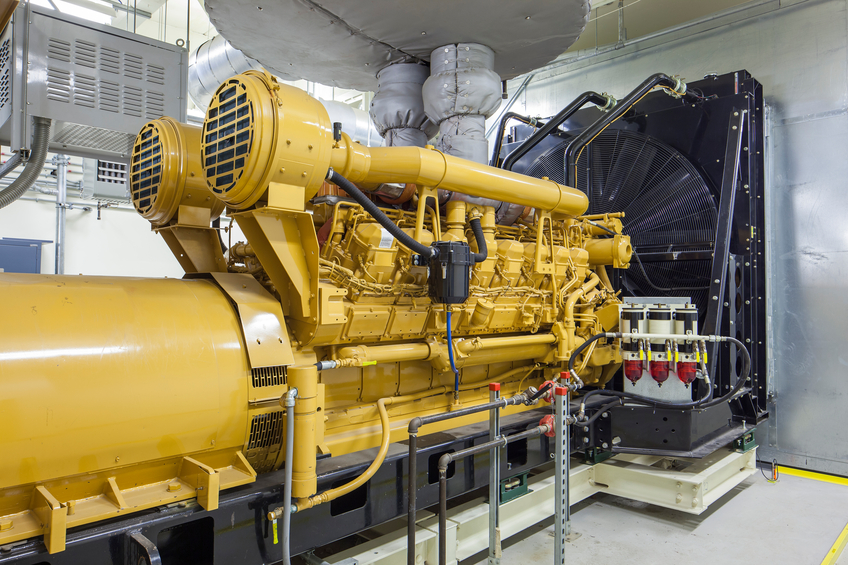
This online engineering PDH course presents the fundamental information and necessary guidance required to assist the Manufacturing and Process industries in optimizing their electric motor driven systems which leads to substantial energy / cost savings.
Electric motors are among the least well-managed industrial equipment, even though motor-driven equipment accounts for approximately 70% of the electrical energy consumed by process industries and approximately 90% for electrical intensive industries. Motors that are not properly managed can result in billions of dollars in wasted energy and operating costs to an industry.
A detailed analysis of the U.S. motor systems inventory indicates that this energy use could be reduced by 11% to 18% if plant managers implement all cost-effective applications of mature and proven energy efficiency technologies and practices. It is worth noting that the suggested improvements are not necessarily limited to the U.S., but can be implemented in any industry around the world that utilizes motor driven systems.
This 8 PDH online course is applicable to electrical, mechanical, and industrial engineers as well as other technical personnel interested in learning more about improving the operation of motor driven systems.
This PE continuing education course is intended to provide you with the following specific knowledge and skills:
- Familiarizing with motor energy management and best practices
- Understanding the different types of utility charges
- Learning about the steps involved in conducting a motor survey
- Familiarizing with motor specification and selection considerations
- Estimating motor load and efficiency
- Analyzing motor efficiency opportunities
- Conducting plans for improving motor efficiency
- Familiarizing with the opportunities to improve system efficiencies
- Understanding the importance and practicality of power factor correction
Upon successful completion of the quiz, print your Certificate of Completion instantly. (Note: if you are paying by check or money order, you will be able to print it after we receive your payment.) For your convenience, we will also email it to you. Please note that you can log in to your account at any time to access and print your Certificate of Completion.

This online engineering PDH course provides basic information about small wind electric systems to help you decide if wind energy will work for you.
Wind is created by the unequal heating of the Earth's surface by the sun. Wind turbines convert the kinetic energy in wind into mechanical power that runs a generator to produce clean electricity.
Can I use wind energy to power my home? More people across the country are asking this question as they look for a hedge against increasing electricity rates and a way to harvest their local wind resources. Although wind turbines large enough to provide a significant portion of the electricity needed by the average U.S. home generally require 1 acre of property or more, approximately 19.3% of the U.S. population lives in rural areas and may own land parcels large enough to accommodate a wind energy system.
This 3 PDH online course is applicable to electrical and mechanical engineers and energy professionals who are interested in learning more about small wind electric systems.
This PE continuing education course is intended to provide you with the following specific knowledge and skills:
- Familiarizing with wind energy, terminology, and basic principles of wind turbines
- Understanding the different ways to make a home more energy efficient
- Understanding how and when small wind energy systems provide a practical and economical source of electricity
- Learning about the size of wind turbines required for specific applications
- Learning about the basic parts of a small wind electric system
- Knowing where to find certified small wind turbines, as well as installation and maintenance support
- Calculating how much energy a wind electric system will generate
- Gaining a general overview of hybrid wind energy systems
Upon successful completion of the quiz, print your Certificate of Completion instantly. (Note: if you are paying by check or money order, you will be able to print it after we receive your payment.) For your convenience, we will also email it to you. Please note that you can log in to your account at any time to access and print your Certificate of Completion.

This online engineering PDH course provides basic information on detecting and regulating equipment leaks and providing repair solutions.
EPA has determined that leaking equipment, such as valves, pumps, and connectors, are the largest source of emissions of volatile organic compounds (VOCs) and volatile hazardous air pollutants (VHAPs) from petroleum refineries and chemical manufacturing facilities. The Agency has estimated that approximately 70,367 tons per year of VOCs and 9,357 tons per year of HAPs have been emitted from equipment leaks. Emissions from equipment leaks exceed emissions from storage vessels, wastewater, transfer operations, or process vent.
This course identifies some of the problems identified with LDAR (Leak Detection And Repair) programs focusing on Method 21 requirements and will describe the practices that can be used to increase the effectiveness of an LDAR program. Some of the elements of a model LDAR program are required by current Federal regulations and other model LDAR program elements help ensure continuous compliance although they may not be mandated from a regulatory standpoint. Prior to developing a written LDAR program plan, all applicable regulations should be reviewed to determine and ensure compliance with the most stringent requirements.
This 2 PDH online course is applicable to environmental engineers, as well as other technical professionals who are interested in learning about leak detection and repair.
This PE continuing education course is intended to provide you with the following specific knowledge and skills:
- Familiarizing with the importance of regulating equipment leaks
- Familiarizing with the major elements of an LDAR program and its importance
- Understanding typical mistakes made when monitoring to detect leaks
- Learning about problems that occur from improper management of an LDAR program
- Exploring a set of best practices that can be used to implement effective an LDAR program
Upon successful completion of the quiz, print your Certificate of Completion instantly. (Note: if you are paying by check or money order, you will be able to print it after we receive your payment.) For your convenience, we will also email it to you. Please note that you can log in to your account at any time to access and print your Certificate of Completion.

This online engineering PDH course provides basic information on wireless occupancy for lighting controls.
Lighting use constitutes about 20% of the total energy consumption in commercial buildings. Adding lighting controls is a simple retrofit option than can save on energy costs while helping to meet agency and federal energy savings mandates. Some energy codes and federal standards require the use of lighting controls.
Studies have shown that adding lighting controls can reduce lighting energy use 10% to 90% or more depending on the use of the space in which the sensors are installed. One study conducted on a university campus found that installing wired occupancy sensors to control lighting in more than 200 rooms in 10 buildings provided an annual cost savings of about $14,000 with a simple payback of 4.2 years.
This 1 PDH online course is applicable to electrical engineers and others interested in gaining knowledge about wireless occupancy for lighting controls for a better sustainable design.
This PE continuing education course is intended to provide you with the following specific knowledge and skills:
- Familiarizing with the different types of occupancy sensors and their characteristics including microphonic, ultrasonic, bluetooth, video image and dual technology
- Gaining a general overview of the codes and standards of lighting controls
- Learning about the types of light source to use for occupancy sensors
- Understanding how wireless sensors are powered and the best practices in using wireless sensors
- Learning about the cost considerations for wire and wireless sensors
Upon successful completion of the quiz, print your Certificate of Completion instantly. (Note: if you are paying by check or money order, you will be able to print it after we receive your payment.) For your convenience, we will also email it to you. Please note that you can log in to your account at any time to access and print your Certificate of Completion.

This online engineering PDH course presents the laws and rules of ethics and professional responsibility governing the practice of engineering in the State of Indiana. Excerpts from the Indiana Code (Title 25, Article 31) and the Indiana Administrative Code (Title 864) including licensing renewal, proper use of the engineer’s seal, continuing education requirements and other pertinent regulatory provisions are presented in this course.
Since engineers are faced with frequent moral and ethical dilemmas while practicing their engineering profession, this course will provide you with moral and ethical guidance in your decision making process. Most importantly, it will provide you with insight on how to conduct, respect and protect your engineering practice with the utmost professionalism.
This 2 PDH online course is applicable to Professional Engineers licensed in the State of Indiana and who are required to demonstrate continuing professional competency in engineering laws, rules and ethics as a condition of their license renewal. For each renewal period, every licensee must complete thirty (30) professional development hours, at least one (1) of which must be relative to the Indiana Laws and Rules, and at least one (1) of which must be relative to the rules of professional responsibility, conduct and ethics.
This PE continuing education engineering course is intended to provide you with the following specific knowledge and skills:
- Familiarizing with the laws and rules regulating the practice of engineering in the State of Indiana
- Understanding the license renewal process, continuing education requirements, proper use of seal and other pertinent provisions
- Understanding the role of the Indiana Board and its disciplinary authority
- Learning about engineering ethics and the rules of professional conduct and responsibility
Upon successful completion of the quiz, print your Certificate of Completion instantly. (Note: if you are paying by check or money order, you will be able to print it after we receive your payment.) For your convenience, we will also email it to you. Please note that you can log in to your account at any time to access and print your Certificate of Completion.