

District of Columbia Structural and Ethics 20 PDH Discount Package 2
Coastal Construction - Designing the Building (S05-014)
Coastal Construction - Designing the Foundation (S04-017)
Coastal Construction - Designing the Building Envelope (S04-018)
Coastal Construction - Constructing the Building (S04-016)
Ethics, Professionalism and Disciplinary Actions: Case Studies (LE1-003)
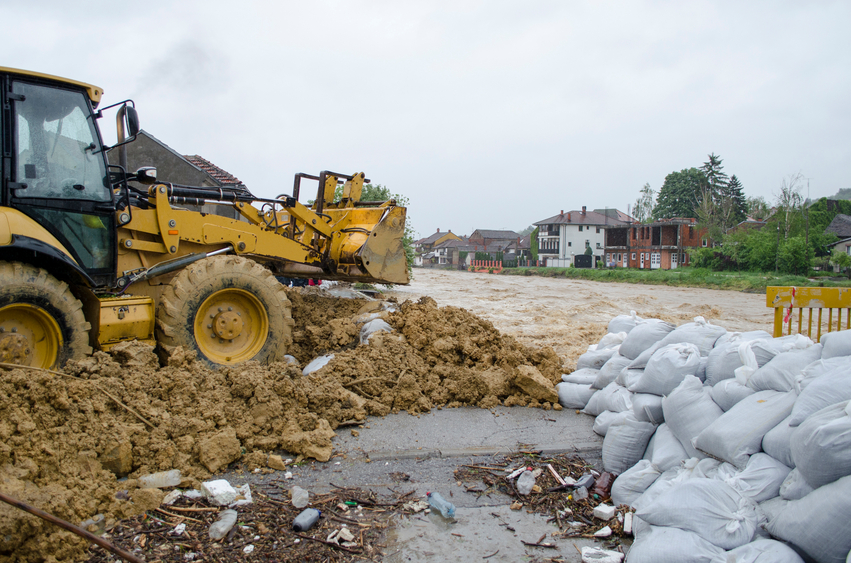
This online engineering PDH course provides an overview of the issues that should be considered before the building is designed. Specifically, it provides an understanding of the natural hazards a coastal building may be exposed to and guidance on concepts for designing a more hazard-resistant residential building.
Coastal development has increased in recent years, and some of the sites that are chosen for development have higher risks of impact from natural hazards than in the past. Examples of sites with higher risks are those that are close to the ocean, on high bluffs that are subject to erosion, and on artificial fill deposits. In addition, many of the residential buildings constructed today are larger and more costly than before, leading to the potential for larger economic losses if disaster strikes. However, studies conducted by the Federal Emergency Management Agency (FEMA) and others after major coastal disasters have consistently shown that coastal residential buildings that are properly sited, designed, and constructed have generally performed well during natural hazard events.
This 2 PDH online course is intended for structural engineers, design and construction personnel and other technical professionals who are involved in coastal construction projects.
This PE continuing education course is intended to provide you with the following specific knowledge and skills:
- Understanding the design process and design requirements for different types of natural hazards for buildings located in coastal areas
- Learning about hazard insurance
- Familiarizing with wind insurance
- Familiarizing with the sustainable design considerations for buildings in coastal environments
Upon successful completion of the quiz, print your Certificate of Completion instantly. (Note: if you are paying by check or money order, you will be able to print it after we receive your payment.) For your convenience, we will also email it to you. Please note that you can log in to your account at any time to access and print your Certificate of Completion.
This online engineering PDH course provides the design professional with sufficient background and examples for effectively designing a residential building proposed to be constructed in a coastal hazard area. The designer will find that engineering judgment will need to be applied to a range of issues which will arise during the design of a coastal residential building. This course describes the design process which involves the following:
- Determining design loads
- Determining the building’s foundation, structural frame, and envelope
- Determining the connections between individual elements
- Determining the elevation, placement, and support for utilities
- Selecting the appropriate materials
In this course, the recommended design method is Allowable Stress Design (ASD), so there are factors of safety (FS) built into the development of the material stresses and the forces at the connections. This design method has been chosen for this manual because ASD continues to be the predominant design method in light-frame, residential, wood construction.
This 5 PDH online course is intended for structural engineers, design and construction personnel and other technical professionals who are involved in coastal construction projects.
This PE continuing education course is intended to provide you with the following specific knowledge and skills:
- Understanding the design process
- Determining site-specific loads
- Applying loads to the building
- Determining forces at connections and stresses in materials
- Developing connections at each link
- Selecting building materials
- Designing for the building envelope
- Designing for electrical and mechanical equipment
- Designing for appurtenant structures
Upon successful completion of the quiz, print your Certificate of Completion instantly. (Note: if you are paying by check or money order, you will be able to print it after we receive your payment.) For your convenience, we will also email it to you. Please note that you can log in to your account at any time to access and print your Certificate of Completion.
This online engineering PDH course provides guidance on designing foundations, including selecting the appropriate materials, in coastal areas.
Design considerations for foundations in coastal environments are in many ways similar to those in inland areas. Like all foundations, coastal foundations must support gravity loads, resist uplift and lateral loads, and maintain lateral and vertical load path continuity from the elevated building to the soils below. Foundations in coastal areas are different in that they must generally resist higher winds, function in a corrosive environment, and withstand the environmental aspects that are unique to coastal areas, such as storm surges, rapidly moving floodwaters, wave action, and scour and erosion. These aspects can make coastal flooding more damaging than inland flooding.
This 4 PDH online course is intended for structural engineers, design and construction personnel and other technical professionals who are involved in coastal construction projects.
This PE continuing education course is intended to provide you with the following specific knowledge and skills:
- Familiarizing with the different foundation styles
- Learning the foundation design requirements and recommendations
- Understanding pile foundations
- Understanding the difference between open/deep, open/shallow and closed/shallow foundations
- Learning about pier foundations
Once you complete your course review, you need to take a multiple-choice quiz consisting of twenty (20) questions to earn 4 PDH credits. The quiz will be based on Chapter 10 of this FEMA publication.
Upon successful completion of the quiz, print your Certificate of Completion instantly. (Note: if you are paying by check or money order, you will be able to print it after we receive your payment.) For your convenience, we will also email it to you. Please note that you can log in to your account at any time to access and print your Certificate of Completion.
This online engineering PDH course provides guidance on the design of the building envelope in the coastal environment. The building envelope comprises exterior doors, windows, skylights, exterior wall coverings, soffits, roof systems and attic vents. In buildings elevated on open foundations, the floor is also considered a partof the envelope.
High wind is the predominant natural hazards in the coastal environment that can cause damage to the building envelope.Other natural hazards also exist in some localities. These may include wind-driven rain, salt-laden air, seismic events, hail and wildfire. The vulnerabilities of the building envelope to these hazards are discussed in this course, and recommendations on mitigating them are provided.
This 4 PDH online course is intended for structural engineers, design and construction personnel and other technical professionals who are involved in coastal construction projects.
This PE continuing education course is intended to provide you with the following specific knowledge and skills:
- Familiarizing with the different design strategies of exterior doors to withstand and resist natural hazards
- Familiarizing with the different design strategies of windows and skylights to withstand and resist natural hazards
- Understanding the different design options for roof systems to resist high winds, hail and seismic activates
- Learning the design considerations for attic vents to withstand high winds, sun and wind driven rain
Upon successful completion of the quiz, print your Certificate of Completion instantly. (Note: if you are paying by check or money order, you will be able to print it after we receive your payment.) For your convenience, we will also email it to you. Please note that you can log in to your account at any time to access and print your Certificate of Completion.
This online engineering PDH course discusses constructing buildings, including foundation, framing, building envelop, and electrical and mechanical equipment, in coastal areas. Individual sections cover construction items that will probably require the most care or attention on the part of the builder in order for the design intent to be achieved. Builders may find that the permitting and inspection procedures in coastal areas are more involved than those in inland areas. Not only must all Federal, state, and local Coastal Zone Management and other regulatory requirements be met, the design plans and specifications may need to be sealed by a design professional.
Construction of residential buildings in coastal zones presents challenges to the builder not usually found in more inland locations. For all coastal residential buildings, these challenges may include the following:
- Connection details require additional inspections
- The need for careful surveying to place the building within property line setbacks and above The Design Flood Elevation (DFE)
- The additional care required to ensure that all elements of the building will withstand the large forces associated with high wind speeds and coastal flooding
- The additional care that must be taken in constructing a building envelope that will withstand the intrusion of air and moisture under the effects of high wind speeds
- The difficulty of providing durable exterior construction in a moist, sometimes salt-laden, environment
- The requirement to protect and, usually, place utilities above the DFE
In constructing coastal residential buildings on elevated pile foundations, builders face additional challenges:
- The difficulty of constructing a driven pile foundation to accepted construction plan tolerances
- The difficulty of building on an elevated post-and-beam foundation, compared to building on continuous wall foundations
This 4 PDH online course is applicable to structural engineers, design and construction personnel, and other technical professionals who are involved in coastal construction projects.
This PE continuing education course is intended to provide you with the following specific knowledge and skills:
- Constructing the foundation
- Framing the main structure
- Constructing the building envelope
- Constructing the appurtenant structures
- Installing electrical and mechanical equipment
Upon successful completion of the quiz, print your Certificate of Completion instantly. (Note: if you are paying by check or money order, you will be able to print it after we receive your payment.) For your convenience, we will also email it to you. Please note that you can log in to your account at any time to access and print your Certificate of Completion.

In this online engineering PDH course, ten case studies of actual enforcement actions taken by a state licensing board are presented. The cases have been selected to be representative of situations likely to exist in many states. Board procedures and the types of enforcement actions available are shown by a variety of cases ranging from a geotechnical engineer who produced (within one hour and without visiting the site) a soils report, to an engineer who was unable to document his PDH's during a board audit. The importance of being very careful about when to put "P.E." after one's name on a document also will become apparent.
Codes of ethics for engineers typically describe standards for professional behavior. The enforcement of those ethical standards that are inscribed into law lies with the licensing boards of state governments.
This 1 PDH online course is intended primarily for all engineers seeking to deepen their understanding of what constitutes ethical and professional engineering behavior and how such behavior is enforced by the licensing board.
This PE continuing education course is intended to provide you with the following specific knowledge and skills:
-
Familiarizing with the format of enforcement decrees issued by a state licensing board
-
Knowing the ten different types of licensing violations
-
Understanding the investigative process of the board, as it attempts to determine the validity of complaints brought before it
-
Learning about the types of enforcement actions available to the board
In this professional engineering CEU course, you need to review the course document titled, "Ethics, Professionalism and Disciplinary Actions: Case Studies".
Upon successful completion of the quiz, print your Certificate of Completion instantly. (Note: if you are paying by check or money order, you will be able to print it after we receive your payment.) For your convenience, we will also email it to you. Please note that you can log in to your account at any time to access and print your Certificate of Completion.