

Texas Stormwater and Ethics 15 PDH Discount Package 4
Construction Site Storm Water - Sediment Control (C02-002)
Storm Water Pollution Prevention - Materials Management (C02-005)
Stormwater Calculator: Guide and Application (C04-073)
General Principles of Engineering Ethics (LE2-016)
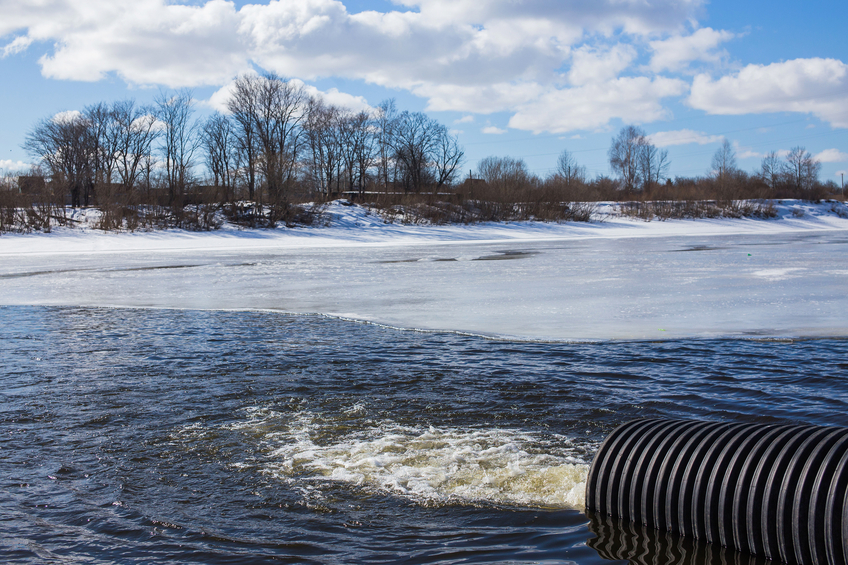
This online engineering PDH course provides EPA's BMP for the protection of wetlands and aquatic ecosystems, conservation of water resources, and flood control.
Municipal operations can adversely affect the water quality system due to pollutant runoff from various activities such as park and open space maintenance, fleet and building maintenance, new construction and land disturbances, and storm water system maintenance.
EPA recognizes that storm water pollution resulting from municipal activities can be prevented or reduced by implementing an effective storm water operations and maintenance program. Therefore the EPA published the Storm Water Phase II Rule on
This 5 PDH online course is applicable to municipality owners and/or operators, construction contractors/workers, site developers, engineers, managers, and all other personnel involved in the implementation of good housekeeping practices (source controls) for municipal operations.
This PE continuing education course is intended to provide you with the following specific knowledge and skills:
- Types and methods of pollution source controls
- Applicability
- Siting and design criteria
- Maintenance and cost considerations
- Effectiveness and limitations
In this professional engineering CEU course, you need to review EPA’s Best Management Practice relating to the “Source Controls” section of the “Pollution Prevention/Good Housekeeping for Municipal Operations”. This section of the BMP addresses the following:
- Pet Waste Collection
- Automobile Maintenance
- Vehicle Washing
- Illegal Dumping Control
- Landscaping and Lawn Care
- Pest Control
- Parking Lot and Street Cleaning
- Roadway and Bridge Maintenance
- Septic System Controls
- Storm Drain System Cleaning
- Alternative Discharge Options for Chlorinated Water
Once you complete your course review, you need to take a multiple-choice quiz consisting of twenty five (25) questions to earn 5 PDH credits. The quiz will be based on this EPA publication.
Upon successful completion of the quiz, print your Certificate of Completion instantly. (Note: if you are paying by check or money order, you will be able to print it after we receive your payment.) For your convenience, we will also email it to you. Please note that you can log in to your account at any time to access and print your Certificate of Completion.

This online engineering PDH course addresses EPA's BMP for improved quality of receiving water bodies, conservation of water resources, flood control and more.
Erosion and sedimentation related to construction site storm water runoff can significantly affect the aquatic population and hydraulic characteristics of the receiving waters. Alterations in hydraulic characteristics of streams receiving runoff include higher peak flow rates, increased frequency and duration of bankfull and subbankfull flows, increased occurrences of downstream flooding, and reduced baseflow levels.
EPA recognizes that such alterations can be prevented by implementing an effective storm water management program. Therefore the EPA published the Storm Water Phase II Rule on
This 2 PDH online course is applicable to municipality owners and/or operators, construction contractors/workers, site developers, engineers, managers, and all other personnel involved in the implementation of sediment control for storm water runoff from construction sites.
This PE continuing education course is intended to provide you with the following specific knowledge and skills:
- Types and methods of sediment control systems
- Applicability
- Siting and design criteria
- Maintenance and cost considerations
- Effectiveness and limitations
In this professional engineering CEU course, you need to review EPA’s Best Management Practice relating to the “Sediment Control” section of the “Construction Site Storm Water Runoff Control”. This section of the BMP addresses the following “Sediment Control” methods:
- Temporary Diversion Dikes
- Wind Fences and Sand Fences
- Brush Barrier
- Silt Fence
- Sediment Filters and Sediment Chambers
- Sediment Trap
- Strom Drain Inlet Protection
Once you complete your course review, you need to take a multiple-choice quiz consisting of fifteen (15) questions to earn 2 PDH credits. The quiz will be based on the “Sediment Control” section of this EPA publication.
Upon successful completion of the quiz, print your Certificate of Completion instantly. (Note: if you are paying by check or money order, you will be able to print it after we receive your payment.) For your convenience, we will also email it to you. Please note that you can log in to your account at any time to access and print your Certificate of Completion.
This online engineering PDH course presents EPA's stormwater best management practice for the protection of wetlands and aquatic ecosystems and conservation of water.
Municipal operations can adversely affect the water quality system due to pollutant runoff from various activities such as park and open space maintenance, fleet and building maintenance, new construction and land disturbances, and storm water system maintenance.
EPA recognizes that storm water pollution resulting from municipal activities can be prevented or reduced by implementing an effective storm water operations and maintenance program. Therefore the EPA published the Storm Water Phase II Rule on
This 2 PDH online course is applicable to municipality owners and/ or operators, construction contractors/workers, site developers, engineers, managers, and all other personnel involved in the implementation of good housekeeping practices (materials management) for municipal operations.
This PE continuing education course is intended to provide you with the following specific knowledge and skills:
- Types and methods of materials management and good housekeeping
- Applicability
- Siting and design criteria
- Maintenance and cost considerations
- Effectiveness and limitations
In this professional engineering CEU course, you need to review EPA’s Best Management Practice relating to the “Materials Management” section of the “Pollution Prevention/Good Housekeeping for Municipal Operations” provided below. This section of the BMP addresses the following:
- Alternative Products
- Hazardous Material Storage
- Road Salt Application and Storage
- Spill Response and Prevention
- Used Oil Recycling
- Materials Management
Once you complete your course review, you need to take a multiple-choice quiz consisting of ten (10) questions to earn 2 PDH credits. The quiz will be based on this EPA publication.
Upon successful completion of the quiz, print your Certificate of Completion instantly. (Note: if you are paying by check or money order, you will be able to print it after we receive your payment.) For your convenience, we will also email it to you. Please note that you can log in to your account at any time to access and print your Certificate of Completion.
This online engineering PDH course offers a comprehensive introduction to managing stormwater, which is crucial for sustainable site development and flood prevention.
This course explores the National Stormwater Calculator (SWC), a powerful web-based tool created by the U.S. Environmental Protection Agency (EPA). It offers a step-by-step guide on how to effectively use the SWC to estimate runoff, retention, and low-impact development (LID) performance for any location across the United States.
In addition, this course focuses on assessing hydrological conditions, incorporating climate projections, and applying LID controls to improve site resilience. It equips professionals such as engineers, planners, and property developers with the tools and strategies needed to make informed, data-driven decisions and enhance the sustainability of their stormwater management projects.
This 4 PDH online course is applicable to civil engineers, environmental consultants, as well as other technical professionals who are engaged in stormwater management, site development, and green infrastructure planning.
This PE continuing education course is intended to provide you with the following specific knowledge and skills:
- Understanding the essential features and uses of the National Stormwater Calculator
- Learning how to enter site-specific data for accurate runoff estimations
- Knowing the effects of land cover, soil type, and drainage on stormwater dynamics
- Familiarizing yourself with the implementation of Low Impact Development (LID) techniques using the calculator’s modeling capabilities
- Understanding how to integrate climate change projections to evaluate long-term stormwater challenges
- Learning to analyze estimation outcomes for effective capital and maintenance planning
- Knowing how to compare scenarios including pre-development, post-development, and LID-optimized conditions
- Familiarizing yourself with leveraging insights from the SWC to enhance stormwater management strategies
- Understanding the practical experience gained from using the tool in both urban and rural settings
In this professional engineering CEU course, you need to review the course document titled, “Stormwater Calculator: Guide and Application”, which is based on the U.S. Environmental Protection Agency, Publication No. EPA 600/C-22/150, “NATIONAL STORMWATER CALCULATOR WEB APP USER’S GUIDE – VERSION 3.4.0”.
Once you complete your course review, you need to take a multiple-choice quiz consisting of twenty (20) questions to earn 4 PDH credits. The quiz will be based on the entire document.
Upon successful completion of the quiz, print your Certificate of Completion instantly. (Note: if you are paying by check or money order, you will be able to print it after we receive your payment.) For your convenience, we will also email it to you. Please note that you can log in to your account at any time to access and print your Certificate of Completion.

This online engineering PDH course presents the principles of engineering ethics that every engineer is expected to live by when practicing their profession.
Engineering ethics is (1) the study of moral issues and decisions confronting individuals and organizations involved in engineering and (2) the study of related questions about moral conduct, character, ideals and relationships of peoples and organizations involved in technological development (Martin and Schinzinger, Ethics in Engineering).
This course describes the fundamental legal concepts with which very engineer should be familiar. It also presents unique disciplinary case studies selected from across the nation, as well as hypothetical ethical challenges that demonstrate how difficult it can be to apply the code of ethics for engineers.
This 2 PDH online course is applicable to all professional engineers who are either required to fulfill 2 PDH in engineering ethics or are interested in broadening their understanding of what it means to practice and uphold the honor and integrity of their engineering profession while holding the utmost safety, health, and welfare of the public.
This PE continuing education course is intended to provide you with the following specific knowledge and skills:
- Understanding the common definition of ethics regarding engineering
- Learning about the important principles of the engineer’s professional responsibility
- Learning the do’s and don’ts through several ethical and disciplinary cases
- Understanding what it means to practise and uphold the honor and integrity of the engineering profession
Upon successful completion of the quiz, print your Certificate of Completion instantly. (Note: if you are paying by check or money order, you will be able to print it after we receive your payment.) For your convenience, we will also email it to you. Please note that you can log in to your account at any time to access and print your Certificate of Completion.