

Texas Materials and Ethics 15 PDH Discount Package 4
Positive Material Identification (T01-002)
Lubricants and Hydraulic Fluids: Applications (T07-003)
General Principles of Engineering Ethics (LE2-016)
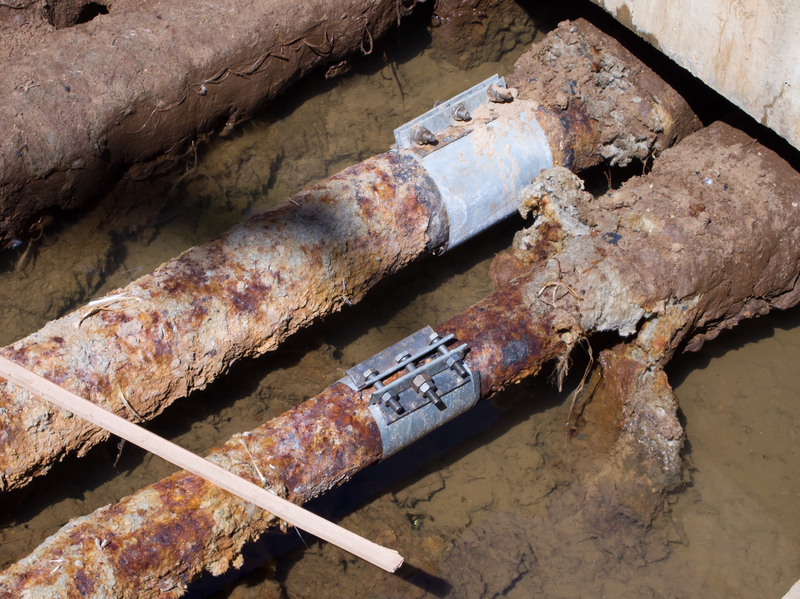
This online engineering PDH course will provide you with an introduction to the principles of cathodic protection for underground and underwater structures. You will be introduced to the physics and chemistry of the corrosion process and how to mitigate the corrosion using cathodic protection techniques.
Understanding the principles of cathodic protection systems is based upon understanding the nature of the corrosion process. The corrosion of metals is an electrochemical process. That is, it is an electrical circuit where the exchange of electrons (electricity) is conducted by chemical reactions in part of the circuit. These chemical reactions occur at the surface of the metal exposed to the electrolyte.
Cathodic protection is the prevention of corrosion by making a metal, which would ordinarily behave like an anode and corrode, behave like a cathode and be free from corrosive attack. Essentially, cathodic protection is predetermining the anode in the corrosion cell, or making a large corrosion cell to overcome the other smaller corrosion cells.
This 5 PDH online course is intended for civil engineers, structural engineers, mechanical engineers and other design and construction professionals seeking an introduction to the principles of cathodic protection.
This PE continuing education course is intended to provide you with the following specific knowledge and skills:
-
Understanding the chemistry and physics behind the corrosion process
-
Learning about the different types of corrosion activity
-
Knowing the corrosion rates for different metals
-
Understanding the importance of the galvanic series of metals
-
Understanding the fundamentals of the sacrificial anode approach to corrosion protection
-
Learning about the basics of the impressed current process
In this professional engineering CEU course, you need to review the course document titled, "An Introduction to Cathodic Protection Principles".
Upon successful completion of the quiz, print your Certificate of Completion instantly. (Note: if you are paying by check or money order, you will be able to print it after we receive your payment.) For your convenience, we will also email it to you. Please note that you can log in to your account at any time to access and print your Certificate of Completion.

This online engineering PDH course provides basic information on Positive Material Identification testing method.
Positive Material Identification (PMI) is a method that engineers or technicians use to verify that supplied materials used in manufactured parts are conform to proper standards and specifications. Positive Material Identification is used in mining, jewelry analysis, manufacturing, and in the refining industry to prevent material mismatches. An accident at the BP Texas City refinery on July 28, 2005 demonstrated how material mismatches can be catastrophic. Therefore, The U.S. Chemical Safety and Hazard Investigation Board recommended PMI to prevent improper substitutions of alloys in hazardous process systems.
This 1 PDH online course is applicable to all engineers, design and construction personnel, technical staff and facility operators who are interested in gaining a better understanding of what Positive Material Identification is and what it is not.
This PE continuing education course is intended to provide you with the following specific knowledge and skills:
- Familiarizing with API Recommended Practice 578 that can be used when developing a PMI program
- Learning about X-ray Florescence (XRF) PMI test method
- Understanding the optical emission spectrometry (OES) PMI test method
- Gaining a general overview on the chemical laboratory analysis test method
- Exploring the qualitative method discussed in API Recommended Practice 578 which involves resistivity testing
Upon successful completion of the quiz, print your Certificate of Completion instantly. (Note: if you are paying by check or money order, you will be able to print it after we receive your payment.) For your convenience, we will also email it to you. Please note that you can log in to your account at any time to access and print your Certificate of Completion.

This engineering online PDH course covers the lubricant specifications and selection, requirements of lubricants for different types of equipment as well as the operation and maintenance considerations.
This course is intended to be a practical guide to lubrication with enough technical detail to allow personnel to recognize and easily discern differences in performance properties specified in manufacturers' product literature so that the proper lubricant for a particular application is selected. In addition, this course discusses the considerations required to adequately maintain the integrity of the lubricants and ensure their effective performance.
This 7 PDH online course is applicable to engineers, design and construction personnel, and other technical professionals who are interested in gaining a better understanding of lubricants and hydraulic fluids.
This PE continuing education course is intended to provide you with the following specific knowledge and skills:
- Learning about the basic types of gears and the lubricants they require
- Understanding the basic characteristics of bearing lubrication and their application
- Familiarizing with the lubrication of miscellaneous applications including but not limited to stormwater pumps and motors, couplings, hoists and cranes, wire ropes, and chains
- Familiarizing with the operation, maintenance, and selection considerations of lubricants
Upon successful completion of the quiz, print your Certificate of Completion instantly. (Note: if you are paying by check or money order, you will be able to print it after we receive your payment.) For your convenience, we will also email it to you. Please note that you can log in to your account at any time to access and print your Certificate of Completion.

This online engineering PDH course presents the principles of engineering ethics that every engineer is expected to live by when practicing their profession.
Engineering ethics is (1) the study of moral issues and decisions confronting individuals and organizations involved in engineering and (2) the study of related questions about moral conduct, character, ideals and relationships of peoples and organizations involved in technological development (Martin and Schinzinger, Ethics in Engineering).
This course describes the fundamental legal concepts with which very engineer should be familiar. It also presents unique disciplinary case studies selected from across the nation, as well as hypothetical ethical challenges that demonstrate how difficult it can be to apply the code of ethics for engineers.
This 2 PDH online course is applicable to all professional engineers who are either required to fulfill 2 PDH in engineering ethics or are interested in broadening their understanding of what it means to practice and uphold the honor and integrity of their engineering profession while holding the utmost safety, health, and welfare of the public.
This PE continuing education course is intended to provide you with the following specific knowledge and skills:
- Understanding the common definition of ethics regarding engineering
- Learning about the important principles of the engineer’s professional responsibility
- Learning the do’s and don’ts through several ethical and disciplinary cases
- Understanding what it means to practise and uphold the honor and integrity of the engineering profession
Upon successful completion of the quiz, print your Certificate of Completion instantly. (Note: if you are paying by check or money order, you will be able to print it after we receive your payment.) For your convenience, we will also email it to you. Please note that you can log in to your account at any time to access and print your Certificate of Completion.