

North Dakota Energy Efficiency and Ethics 30 PDH Discount Package 2
Types of Renewable Energy (R04-015)
Guidelines for Selecting Cool Roofs (M02-065)
Improving Process Heating Systems Performance (M05-026)
Estimating the Environmental Effects of Green Roofs (C02-075)
How a Wind Turbine Works (R01-011)
Premium Efficiency Motor Selection and Application Guide (E07-002)
Decarbonizing HVAC and Water Heating in Commercial Buildings (M01-025)
Boiler Fuels, Emissions and Efficiency (M02-028)
Water Efficiency Management Guide for Mechanical Systems (M02-055)
Ethical Issue: Deciding if Something is a Gift or a Bribe (LE1-007)

This online engineering PDH course provides Licensed Professionals (LPs) with step-by-step instructions on how to correctly verify the reported data of applications and assess indoor environmental quality of U.S. buildings.
Energy use in commercial buildings accounts for nearly 20% of U.S. greenhouse gas emissions at a cost of more than $100 billion per year. Through ENERGY STAR®, the United States Environmental Protection Agency (EPA) works with owners and managers of our nation’s commercial buildings to help them strategically manage their facilities’ energy performance, cut energy use, lower utility bills, and reduce greenhouse gas emissions.
More than a dozen types of commercial buildings can earn EPA’s mark of superior energy efficiency – the ENERGY STAR, which is recognized by 90% of American consumers. Commercial buildings that earn the ENERGY STAR must perform in the top 25% of buildings nationwide compared to similar buildings, and their performance must be verified by a licensed professional.
The role of the LP is to verify that all energy use is accounted for accurately, the building characteristics have been properly reported, and indoor environmental quality has not been compromised in pursuit of energy conservation. By verifying the completeness and correctness of the application submitted to the EPA, the LP helps to ensure the integrity of the ENERGY STAR certification.
This 3 PDH online course is applicable to professional engineers who are interested in learning about the verification process of commercial building applications for the ENERGY STAR® certification.
This PE continuing education course is intended to provide you with the following specific knowledge and skills:
- Gaining an overview of energy use in commercial buildings in the U.S. as well as EPA’s mark of superior energy efficiency
- Familiarizing with the eligibility criteria for individuals verifying the applications for ENERGY STAR
- Learning about the different stages of the ENERGY STAR application process
- Understanding the detailed process by which the LP should verify the accuracy of each element on the application
M03-053 - APPENDIX A - INDOOR ENVIRONMENTAL QUALITY MEASUREMENT FORM FOR ENERGY STAR (1.2 MB)
Upon successful completion of the quiz, print your Certificate of Completion instantly. (Note: if you are paying by check or money order, you will be able to print it after we receive your payment.) For your convenience, we will also email it to you. Please note that you can log in to your account at any time to access and print your Certificate of Completion.

This online engineering PDH course provides an overview of the different types of renewable energy systems and their benefits.
Renewable energy is energy produced from sources like the sun and wind that are naturally replenished and do not run out. It can be used for electricity generation, space and water heating and cooling, and transportation. Non-renewable energy, in contrast, comes from finite sources that could get used up, such as fossil fuels like coal and oil. The advantages of renewable energy are numerous and affect the economy, environment, national security, and human health. The United States is a resource-rich country with abundant renewable energy resources. Renewable energy generates about 20% of all U.S. electricity, and that percentage continues to grow.
This 4 PDH online course is applicable to energy engineers and other professionals who are interested in learning more about different renewable energy systems and their benefits.
This PE continuing education course is intended to provide you with the following specific knowledge and skills:
- Familiarizing with the benefits of renewable energy
- Understanding the different types of renewable energy
- Learning the current state of renewable energy in the U.S.
- Gaining an overview of how each type of renewable energy works
Upon successful completion of the quiz, print your Certificate of Completion instantly. (Note: if you are paying by check or money order, you will be able to print it after we receive your payment.) For your convenience, we will also email it to you. Please note that you can log in to your account at any time to access and print your Certificate of Completion.

This online engineering PDH course presents an overview of cool roofs, which can help many building owners save money while protecting the environment. It illustrates how cool roofs work, what kinds of cool roof options are available, and how to determine if cool roofing is an appropriate energy efficiency option for your building.
Just as wearing light-colored clothing can help keep a person cool on a sunny day, cool roofs use solar-reflective surfaces to maintain lower roof temperatures. Traditional dark roofs can reach temperatures of 150ºF (66ºC) or more in the summer sun. A cool roof under the same conditions could stay more than 50°F (28ºC) cooler.
This 2 PDH online course is applicable to engineers, architects, designers, contractors, building owners, and all personnel interested in gaining a better understating of cool roofs.
This PE continuing education course is intended to provide you with the following specific knowledge and skills:
- Understanding what is a cool roof
- Learning about the different types of cool roofs
- Knowing if you should use a cool roof
- Learning about cool roof selection and application
- Knowing the precautions and considerations behind cool roofs
In this professional engineering CEU course, you need to review the Department of Energy (DOE) Publication “Guidelines for Selecting Cool Roofs”, Building Technologies Program, published on July 2010.
Upon successful completion of the quiz, print your Certificate of Completion instantly. (Note: if you are paying by check or money order, you will be able to print it after we receive your payment.) For your convenience, we will also email it to you. Please note that you can log in to your account at any time to access and print your Certificate of Completion.
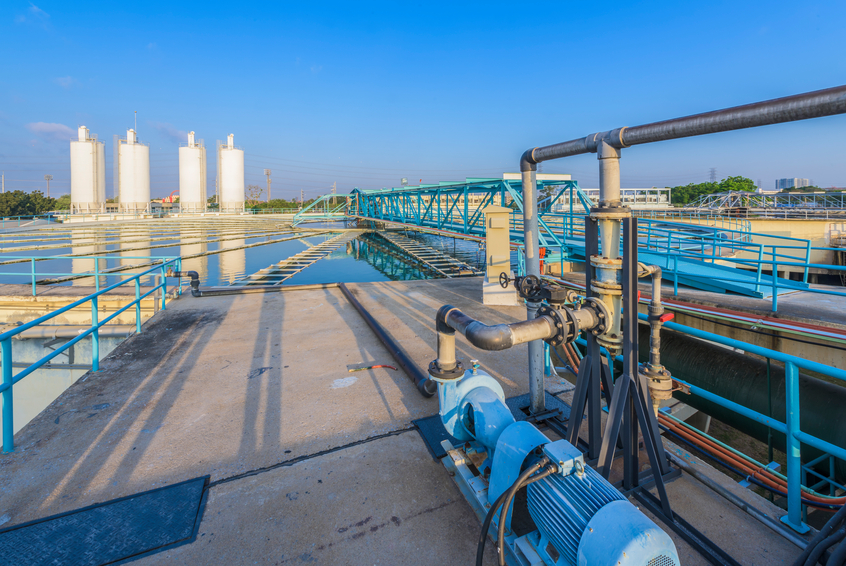
This online engineering PDH course describes basic process heating applications and equipment, and outlines opportunities for energy and performance improvements. It also discusses the merits of using a systems approach in identifying and implementing these improvement opportunities for Fuel-Based and Electric-Based heating systems. Furthermore, it provides recommendations to financially justify process heating improvement projects (System Economics).
Process heating is essential in the manufacture of most consumer and industrial products, including those made out of metal, plastic, rubber, carbon fiber, concrete, glass, and ceramics. Process heating systems are broken into three basic categories: Fuel-Based Process Heating, Electric-Based Process Heating, and Steam-Based Process Heating all of which are discussed in details.
This 5 PDH online course is applicable to mechanical, industrial and process engineers, designers, manufacturers and all personnel involved in the planning, design and installation of process heating systems.
This PE continuing education course is intended to provide you with the following specific knowledge and skills:
- Understanding the basics behind process heating operations
- Familiarizing with the common types of process heating systems and equipment
- Recognizing efficiency opportunities for fuel-based and electric-based heating systems
- Learning how to financially justify process heating improvement projects
Upon successful completion of the quiz, print your Certificate of Completion instantly. (Note: if you are paying by check or money order, you will be able to print it after we receive your payment.) For your convenience, we will also email it to you. Please note that you can log in to your account at any time to access and print your Certificate of Completion.
This online engineering PDH course provides insight on how to estimate the positive environmental effects of green roof installations in cities. This is accomplished by providing a brief introduction to the basic concepts and definitions relating to urban environmental pollution, followed by a case study of the Kansas City metropolitan area.
A green roof—also called a vegetated roof or eco-roof—is a roof with soil and plants placed on top of a conventional roof. Green roofs are growing in popularity, as they have proven to be a cost-effective strategy for creating more livable and sustainable cities. Integrating nature-based solutions like green roofs into the urban landscape has several benefits to the environment, public health, and society.
This 2 PDH online course is applicable to architects, sustainability, environmental, and building engineers, as well as other technical personnel interested in learning more about the numerous benefits of green roof installations in urban areas.
This PE continuing education course is intended to provide you with the following specific knowledge and skills:
- Learning how green roofs benefit the environment and public health
- Familiarizing with green roofs using as a case study (Kansas City, Missouri)
- Understanding the analytical process, methodology, and tools used in estimating the benefits of green roof installations
- Understanding the limitations of the model and results of the presented case study
Upon successful completion of the quiz, print your Certificate of Completion instantly. (Note: if you are paying by check or money order, you will be able to print it after we receive your payment.) For your convenience, we will also email it to you. Please note that you can log in to your account at any time to access and print your Certificate of Completion.

This online engineering PDH course provides an overview of wind turbines and presents the basic features, components, types and operating principles of the most commonly used wind turbines in the industry.
Wind is a form of solar energy caused by a combination of three concurrent events: the sun unevenly heating the atmosphere, irregularities of the earth's surface, and the rotation of the earth. The terms "wind energy" and "wind power" both describe the process by which the wind is used to generate mechanical power or electricity. This mechanical power can be used for specific tasks (such as grinding grain or pumping water) or a generator can convert this mechanical power into electricity.
Wind turbines work on a simple principle: instead of using electricity to make wind—like a fan—wind turbines use wind to make electricity. Wind turns the propeller-like blades of a turbine around a rotor, which spins a generator, which creates electricity.
This 1 PDH online course is applicable to mechanical and electrical engineers and energy specialists who are interested in learning more about wind turbines and their basic operating principles.
This PE continuing education course is intended to provide you with the following specific knowledge and skills:
- Familiarizing with the process by which wind is used to generate mechanical power or electricity
- Learning about the different components of a wind turbine
- Understanding the operating principles of a wind turbine
- Learning about the different types and applications of wind turbines
- Gaining a general overview of hybrid wind and solar electric systems
Upon successful completion of the quiz, print your Certificate of Completion instantly. (Note: if you are paying by check or money order, you will be able to print it after we receive your payment.) For your convenience, we will also email it to you. Please note that you can log in to your account at any time to access and print your Certificate of Completion.
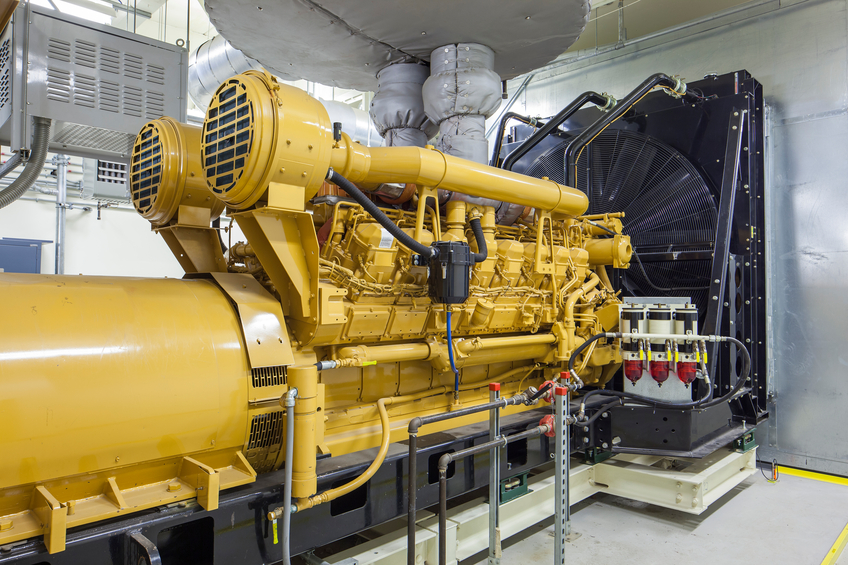
This online engineering PDH course provides guidance in new motor purchase decisions, and helps in identifying the energy and cost savings for motors that should be replaced with premium efficiency units.
The National Electrical Manufacturers Association (NEMA) adopted a NEMA Premium® efficiency motor standard in August of 2001. A motor can be marketed as a NEMA Premium motor if it meets or exceeds a set of minimum full-load efficiency levels.
These premium efficiency motor standards cover the 1 horsepower (hp) to 500 hp three-phase low-voltage NEMA Design A and B general, special, and definite purpose induction motors that are in widespread use in U.S. industrial facilities. The energy savings from replacing in-service standard and energy efficient motors with premium efficiency motor models can be substantial.
This 7 PDH online course is applicable to electrical and mechanical engineers and professionals who are interested in learning more about the performance, properties, selection and applications of premium efficiency motors.
This PE continuing education course is intended to provide you with the following specific knowledge and skills:
- Familiarizing with the in-service motor population and motor uses in the industrial sector
- Understanding the evolution of voluntary and mandatory motor efficiency standards
- Learning how to evaluate motor efficiency opportunities, address application considerations, and determine cost-effectiveness
- Gaining an overview of currently available and emerging advanced “Super Premium” efficiency motor technologies
- Understanding the preventive and predictive maintenance activities necessary to keep premium efficiency motors operating at peak efficiency
Upon successful completion of the quiz, print your Certificate of Completion instantly. (Note: if you are paying by check or money order, you will be able to print it after we receive your payment.) For your convenience, we will also email it to you. Please note that you can log in to your account at any time to access and print your Certificate of Completion.

This online engineering PDH course presents the technical, economic, and feasibility assessment for converting to all-electric heating solutions.
Electrification of building loads presents a significant opportunity to reduce site-level greenhouse gas (GHG) emissions, especially when combined with renewable and zero-carbon electricity resources. Electrification involves the conversion of a building system that would traditionally use fossil fuels (such as, natural gas, fuel oil, or propane) to the use of electrical power, which could be a key strategy in decarbonization. The course focuses on electrification and decarbonization of space heating and water heating loads using electric heat pump systems.
This 1 PDH online course is applicable to mechanical, energy, and facility engineers as well as other technical professionals interested in learning about electrification and decarbonization of space and water heating loads using electric heat pump systems.
This PE continuing education course is intended to provide you with the following specific knowledge and skills:
- Familiarizing with electrification options for HVAC and water heating
- Understanding the evaluation checklist for electrification assessment
- Learning some case studies that focus on heating electrification and decarbonization of commercial buildings
- Knowing the industry transition to low-GWP refrigerants
Upon successful completion of the quiz, print your Certificate of Completion instantly. (Note: if you are paying by check or money order, you will be able to print it after we receive your payment.) For your convenience, we will also email it to you. Please note that you can log in to your account at any time to access and print your Certificate of Completion.
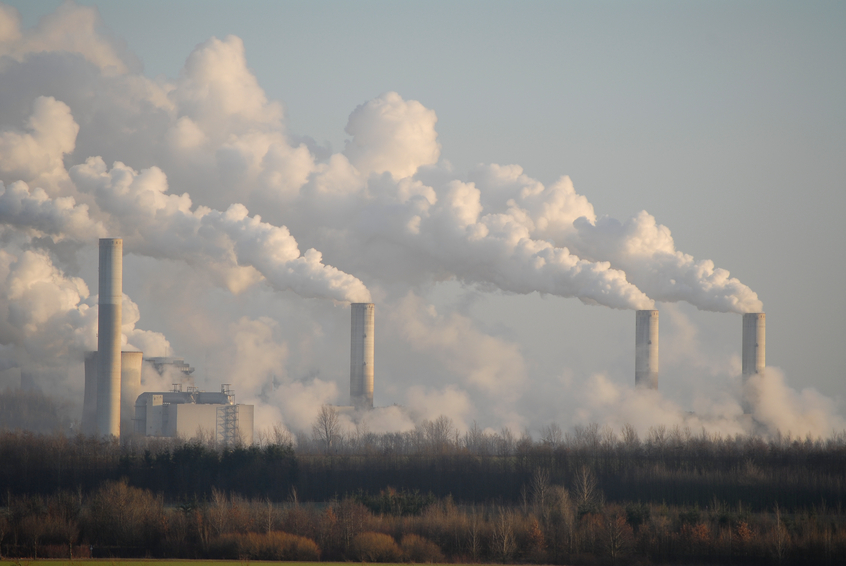
This online engineering PDH course introduces the different types of solid, liquid, and gaseous fuels commonly fired in industrial, commercial and institutional boilers. It describes the characteristics of fossil and non-fossil fuels with emphasis on coal, oil, natural gas, biomass, and refuse-derived fuels (RDFs). This course also presents the principle emissions from combustion boilers that are regulated under the Clean Air Act (
This 2 PDH online course is applicable to mechanical engineers, designers, contractors, building professionals, and manufacturers who are interested in gaining a better understanding of the various boiler fuels and their emissions.
This PE continuing education course is intended to provide you with the following specific knowledge and skills:
- Understanding the different types of solid, liquid and gaseous fuels commonly fired in boilers
- Knowing the four principle emissions from combustion boilers; nitrogen oxides (NOx), sulfur dioxide (SO2), particulate matter (PM) and carbon monoxide (CO)
- Learning how to maximize efficiency by understanding combustion losses and boiler losses
In this professional engineering CEU course, you need to review Chapter 3, "Fuels, Emissions, and Efficiency" of the Department of Energy (DOE) Publication "Guide to Low-Emission Boiler and Combustion Equipment Selection".
Upon successful completion of the quiz, print your Certificate of Completion instantly. (Note: if you are paying by check or money order, you will be able to print it after we receive your payment.) For your convenience, we will also email it to you. Please note that you can log in to your account at any time to access and print your Certificate of Completion.

This online engineering PDH course presents guidelines on how to reduce mechanical system water use in residential buildings. Mechanical systems are frequently utilized to provide heating and cooling for residential properties. They typically fall into two categories: centralized and decentralized systems.
Centralized mechanical systems provide heating and cooling from a central location, such as a mechanical room or utility penthouse. These systems are more common in mid- and high-rise multifamily properties and can include cooling towers, boilers, and steam systems, each of which uses water as the heat transfer medium. As a result, the use of water for building heating and cooling can be significant and using sound management practices is a good opportunity for water savings.
Decentralized mechanical systems treat each unit of a multifamily property as its own space, as if each unit were a stand-alone single-family residence. These systems do not typically use process water, so they are not the focus of this water efficiency management guide.
This 2 PDH online course is intended for mechanical, environmental and civil engineers, as well as other technical personnel who are interested in learning more about reducing water use in mechanical systems.
This PE continuing education course is intended to provide you with the following specific knowledge and skills:
- Understanding the basics principles behind single-pass cooling, cooling towers and boiler/steam systems
- Understanding mechanical system water use
- Familiarizing with the maintenance and best management practices
- Knowing the mechanical systems retrofit and replacement options
- Familiarizing with the water savings calculations and assumptions
Upon successful completion of the quiz, print your Certificate of Completion instantly. (Note: if you are paying by check or money order, you will be able to print it after we receive your payment.) For your convenience, we will also email it to you. Please note that you can log in to your account at any time to access and print your Certificate of Completion.

This online engineering PDH course will establish, through the presentation of many examples, the principles of distinguishing between a gift and a bribe.
The federal government has formulated detailed rules covering gifts given to executive-branch employees in many situations. The rules are published in the Code of Federal Regulations (CFR) and are illustrated through many examples. Even though the examples are intended for government employees (many of whom are engineers), they also apply to private-sector engineers in similar situations. This course presents selected CFR examples that furnish guidance on the ethics of gift giving in situations that are especially relevant to engineers.
This 1 PDH online course is intended for engineers seeking guidance on distinguishing between ethical gift-giving and bribery.
This PE continuing education course is intended to provide you with the following specific knowledge and skills:
- Familiarizing with definitions of a bribe and a gift
- Knowing the bribe status of a gift based on a personal relationship
- Understanding the conditions under which gifts to spouses are acceptable
- Knowing the need to avoid even the appearance of a gift being a bribe
- Recognizing when gifts involving free attendance at meetings and conferences are acceptable
- Understanding the importance of the cumulative effect of receiving even small gifts on a periodic basis
- Learning the importance of gifts received when on assignment rather than outside of work
Upon successful completion of the quiz, print your Certificate of Completion instantly. (Note: if you are paying by check or money order, you will be able to print it after we receive your payment.) For your convenience, we will also email it to you. Please note that you can log in to your account at any time to access and print your Certificate of Completion.