

Minnesota Energy Efficiency and Ethics 24 PDH Discount Package 2
Hydrogen and Fuel Cells (R08-003)
LED Troffer Retrofit Lighting and Controls: Best Practices (E01-011)
Improving Process Heating Systems Performance (M05-026)
Ethics in Professional Practice (LE2-007)
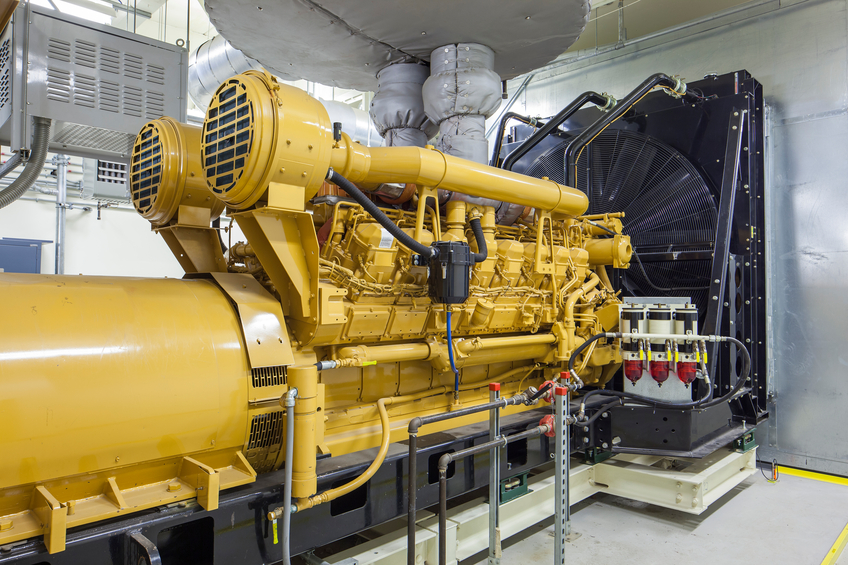
This online engineering PDH course presents the fundamental information and necessary guidance required to assist the Manufacturing and Process industries in optimizing their electric motor driven systems which leads to substantial energy / cost savings.
Electric motors are among the least well-managed industrial equipment, even though motor-driven equipment accounts for approximately 70% of the electrical energy consumed by process industries and approximately 90% for electrical intensive industries. Motors that are not properly managed can result in billions of dollars in wasted energy and operating costs to an industry.
A detailed analysis of the U.S. motor systems inventory indicates that this energy use could be reduced by 11% to 18% if plant managers implement all cost-effective applications of mature and proven energy efficiency technologies and practices. It is worth noting that the suggested improvements are not necessarily limited to the U.S., but can be implemented in any industry around the world that utilizes motor driven systems.
This 8 PDH online course is applicable to electrical, mechanical, and industrial engineers as well as other technical personnel interested in learning more about improving the operation of motor driven systems.
This PE continuing education course is intended to provide you with the following specific knowledge and skills:
- Familiarizing with motor energy management and best practices
- Understanding the different types of utility charges
- Learning about the steps involved in conducting a motor survey
- Familiarizing with motor specification and selection considerations
- Estimating motor load and efficiency
- Analyzing motor efficiency opportunities
- Conducting plans for improving motor efficiency
- Familiarizing with the opportunities to improve system efficiencies
- Understanding the importance and practicality of power factor correction
Upon successful completion of the quiz, print your Certificate of Completion instantly. (Note: if you are paying by check or money order, you will be able to print it after we receive your payment.) For your convenience, we will also email it to you. Please note that you can log in to your account at any time to access and print your Certificate of Completion.
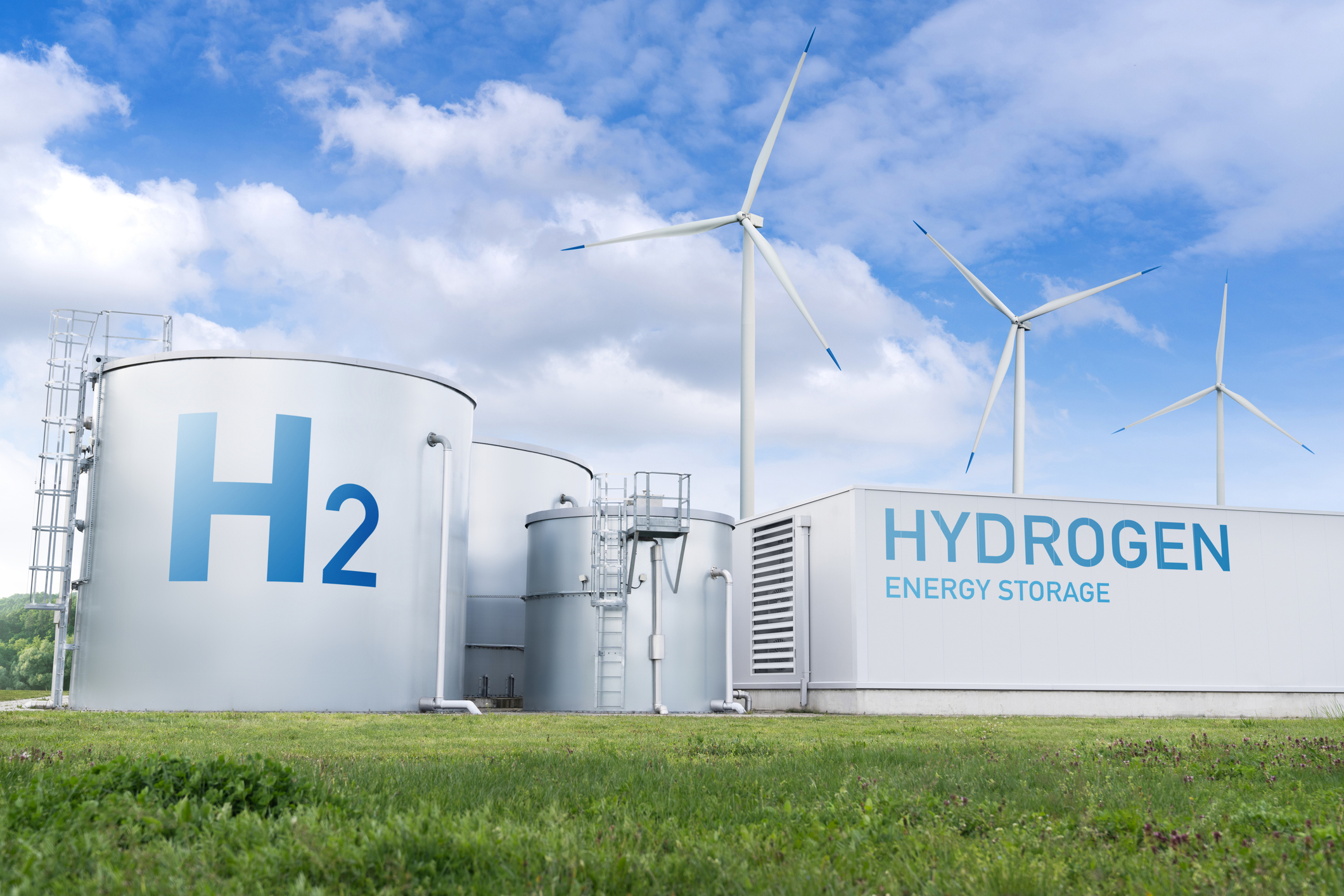
This online engineering PDH course offers a thorough introduction to hydrogen as a critical energy carrier for achieving a clean, sustainable energy future.
This course provides an overview of the science, technologies, and applications that enable hydrogen production, delivery, storage, and utilization in fuel cells. It introduces key concepts and examines both conventional and renewable production methods, including steam methane reforming, water electrolysis, and biological processes. Additionally, it explores advanced storage solutions such as compressed gas and metal hydrides, along with logistical considerations for hydrogen delivery using pipelines, tube trailers, and cryogenic transport.
Furthermore, this course delves into the operation and applications of fuel cells, focusing on Polymer Electrolyte Membrane (PEM) fuel cells commonly used in vehicles. It highlights the role of the Hydrogen and Fuel Cell Technologies Office (HFTO) and initiatives like H2@Scale, which aim to address various technological, economic, and institutional challenges.
This 8 PDH online course is applicable to energy engineers and other technical professionals interested in understanding the role of hydrogen in the transition to net-zero emissions.
This PE continuing education course is intended to provide you with the following specific knowledge and skills:
- Explaining the role of hydrogen and fuel cell technologies in achieving global net-zero emissions targets
- Describing key hydrogen production methods, including steam methane reforming, electrolysis with renewable energy, and biological processes
- Analyzing challenges and solutions in hydrogen delivery, covering pipelines, tube trailers, cryogenic transport, and compression systems
- Familiarizing with hydrogen storage technologies such as compressed gas, liquid hydrogen, and advanced materials like metal hydrides
- Understanding the principles and operation of fuel cells, with emphasis on Polymer Electrolyte Membrane (PEM) fuel cells
- Discussing technical, economic, and institutional barriers to hydrogen deployment and identify strategies to overcome them
- Assessing current innovations and emerging technologies in the hydrogen energy sector
Upon successful completion of the quiz, print your Certificate of Completion instantly. (Note: if you are paying by check or money order, you will be able to print it after we receive your payment.) For your convenience, we will also email it to you. Please note that you can log in to your account at any time to access and print your Certificate of Completion.

This online engineering PDH course provides basic information on LED troffer retrofit lighting and controls best practices.
Lighting use constitutes about 20% of the total source electricity consumption in commercial buildings. Most of the lighting in U.S. commercial buildings is provided by fluorescent troffer ceiling fixtures. There are currently over 350 million installed troffers using more than 65 million kWh (the annual energy usage of 6 million U.S. homes).
Retrofitting these fluorescent troffers to light-emitting diode (LED) sources offers the potential for enormous energy savings. As of 2015, only 5% of the troffers in use had LED light sources. At a project level, retrofitting or replacing fluorescent troffers with LEDs can result in energy savings of 20% to 60% and help agencies meet energy-efficiency goals.
This 1 PDH online course is applicable to environmental engineers who are interested in gaining knowledge about LED retrofit kits, TLEDs, and lighting controls best practices.
This PE continuing education course is intended to provide you with the following specific knowledge and skills:
- Familiarizing with the different options of retrofitting existing fluorescent troffer fixtures with LEDs
- Familiarizing with the different types of tubular LEDs and their characteristics
- Gaining a general overview of the features of retrofit kits including installation time requirements, efficacy, and controls
- Learning about the factors to consider when installing new luminaires including existing condition of luminaires, equipment purchase costs, energy savings, installation labor costs, ceiling plenum access, light levels
- Understanding the importance of color characteristics of the light from the troffer and the measurements used to describe lighting
- Learning about the different types of lighting controls and their characteristics
Upon successful completion of the quiz, print your Certificate of Completion instantly. (Note: if you are paying by check or money order, you will be able to print it after we receive your payment.) For your convenience, we will also email it to you. Please note that you can log in to your account at any time to access and print your Certificate of Completion.
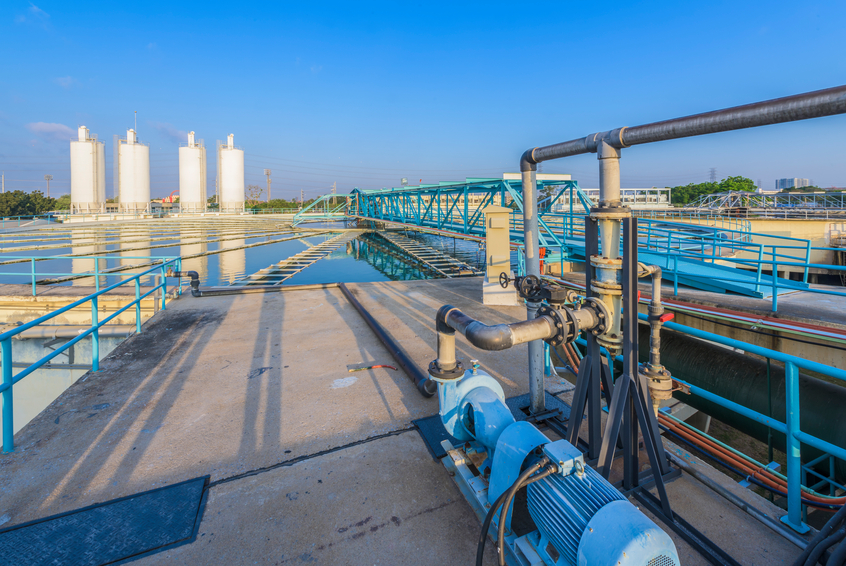
This online engineering PDH course describes basic process heating applications and equipment, and outlines opportunities for energy and performance improvements. It also discusses the merits of using a systems approach in identifying and implementing these improvement opportunities for Fuel-Based and Electric-Based heating systems. Furthermore, it provides recommendations to financially justify process heating improvement projects (System Economics).
Process heating is essential in the manufacture of most consumer and industrial products, including those made out of metal, plastic, rubber, carbon fiber, concrete, glass, and ceramics. Process heating systems are broken into three basic categories: Fuel-Based Process Heating, Electric-Based Process Heating, and Steam-Based Process Heating all of which are discussed in details.
This 5 PDH online course is applicable to mechanical, industrial and process engineers, designers, manufacturers and all personnel involved in the planning, design and installation of process heating systems.
This PE continuing education course is intended to provide you with the following specific knowledge and skills:
- Understanding the basics behind process heating operations
- Familiarizing with the common types of process heating systems and equipment
- Recognizing efficiency opportunities for fuel-based and electric-based heating systems
- Learning how to financially justify process heating improvement projects
Upon successful completion of the quiz, print your Certificate of Completion instantly. (Note: if you are paying by check or money order, you will be able to print it after we receive your payment.) For your convenience, we will also email it to you. Please note that you can log in to your account at any time to access and print your Certificate of Completion.

In this online engineering PDH course, background on the philosophical models that guide ethical behavior is discussed and then applied to specific situations in engineering codes of ethics. This course is based on the American Society of Mechanical Engineers Professional Practice Curriculum, Volume 8, Section: Engineering Ethics.
Many engineering organizations have drafted codes of ethics to which their members are required to commit. Generally, these codes are quite similar and are based on a few fundamental principles which provide guidance to professional engineers in common situations. Nevertheless, there are many difficult or ambiguous situations in which the best ethical solution is difficult to determine.
This 2 PDH online course is intended primarily for engineers seeking to learn ethical principles and how to apply them to their professional practice.
This PE continuing education course is intended to provide you with the following specific knowledge and skills:
-
Determining ethical behavior using several philosophical models
-
Evaluating a practical situation in terms of a professional code of ethics
-
Identifying situations that represent conflicts of interest and formulate a proper response
-
Applying the standards of professional ethics in technical communication
-
Recognizing environmental impacts of engineering work
-
Considering principles of sustainable development in the performance of professional duties
In this professional engineering CEU course, you need to review "Ethics in Professional Practice" published by the American Society of Mechanical Engineers (ASME). (This course document is reproduced by permission of the ASME (www.asme.org). You may also download from or view this course document on the ASME's website by clicking on Ethics in Professional Practice).
Once you complete your course review, you need to take a multiple-choice quiz consisting of fifteen (15) questions to earn 2 PDH credit. The quiz will be based on this ASME publication.
Upon successful completion of the quiz, print your Certificate of Completion instantly. (Note: if you are paying by check or money order, you will be able to print it after we receive your payment.) For your convenience, we will also email it to you. Please note that you can log in to your account at any time to access and print your Certificate of Completion.