

Indiana Electrical and Laws/Rules/Ethics 30 PDH Discount Package 2
Introduction to Transformers (E05-013)
Improving Motor and Drive System Performance (E06-006)
Electricity Grid - Resilience to Hurricanes (E02-034)
Adequate Transformer Reserves (E02-032)
Protecting the Electric Grid from Geomagnetic Disturbances (E04-054)
Radar Fundamentals (E05-014)
Engineering Laws, Rules and Ethics for Indiana Professional Engineers (IN2-005)

This online engineering PDH course provides an overview of electrical theory and presents the basic electrical concepts used in the industry.
A basic understanding of electrical theory is important in any professional environment. Scientists, such as Faraday, Ohm, Lenz, and Kirchhoff have found that electricity seems to behave in a constant and predictable manner in a given condition. These scientists observed and described the predictable characteristics of electricity and electric current in the form of certain rules. These rules are often referred to as "laws".
Although we cannot see the electrons in motion, through experiments and observation we know how they behave. By learning the laws applying to the behavior of electricity and by understanding the methods of producing, controlling, and using it, electricity may be "learned" without ever actually seeing it.
This 4 PDH online course is applicable to electrical and mechanical engineers as well as other professionals who are interested in learning more about the theory and basics of electricity.
This PE continuing education course is intended to provide you with the following specific knowledge and skills:
- Familiarizing with the basic electrical terms and symbols
- Learning about the different types of electricity
- Learning about the atomic structure and electrical charge
- Knowing Ohm’s Law and the relationship between current, voltage and resistance
- Understanding the principles, characteristics and applications of DC and AC
- Familiarizing with basic electrical circuit requirements and characteristics
- Learning how to perform series and parallel circuit computations
- Gaining an overview of the construction of an electrical circuit
Upon successful completion of the quiz, print your Certificate of Completion instantly. (Note: if you are paying by check or money order, you will be able to print it after we receive your payment.) For your convenience, we will also email it to you. Please note that you can log in to your account at any time to access and print your Certificate of Completion.

This online engineering PDH course describes the basic concept, function, types, and the different components of electrical transformers.
A transformer is an electrical equipment that transfers energy from one circuit to another by electromagnetic induction. They are often used to convert between high and low voltages (step-up or step down). Transformers and their components vary depending on the application and are available in several different configurations.
This 5 PDH online course is applicable to electrical and mechanical engineers, maintenance personnel and other technical staff who are interested in gaining a better understanding of transformers.
This PE continuing education course is intended to provide you with the following specific knowledge and skills:
- Understanding the function of transformers and their physical characteristics
- Familiarizing with the different components of transformers
- Learning how to identify a transformer as step-up or step-down and state the current ratio of a transformer when given the turns ratio
- Learning the mathematical relationship between the power in the primary and the power in the secondary of a transformer
- Understanding the basics of the different types of transformers
Upon successful completion of the quiz, print your Certificate of Completion instantly. (Note: if you are paying by check or money order, you will be able to print it after we receive your payment.) For your convenience, we will also email it to you. Please note that you can log in to your account at any time to access and print your Certificate of Completion.
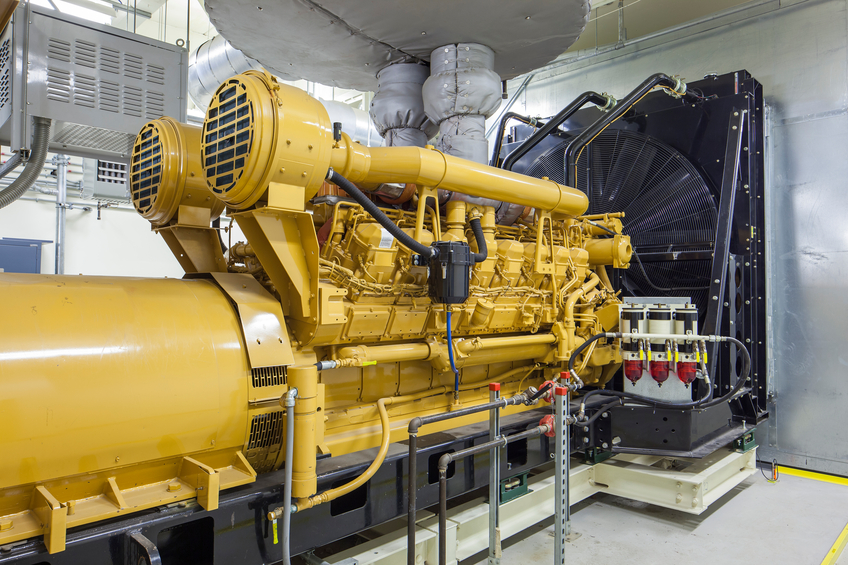
This online PDH course presents the basics of motor and drive systems and briefly describes important terms, relationships, and system design considerations. It also provides a roadmap for finding opportunities to improve motor performance, as well as exploring the economics of motor systems.
Electric motors, taken together, make up the single largest end use of electricity in the United States. In the U.S. manufacturing sector, electric motors used for machine drives such as pumps, conveyors, compressors, fans, mixers, grinders, and other materials handling or processing equipment account for about 54% of electricity consumption.
To achieve cost-effective operation and maintenance of a motor and drive system, operators must pay attention to the entire system as well as to its individual components. Often, when investigating efficiency opportunities, operators are so focused on the immediate demands of this equipment that they overlook the bigger picture, which includes the ways in which system parameters affect all the equipment.
This 6 PDH online course is intended for electrical and mechanical engineers, contractors, manufacturers, building professionals and others interested in learning more about improving motor and drive system performance.
This PE continuing education course is intended to provide you with the following specific knowledge and skills:
- Detecting the indications of a poor system design
- Learning about the different types of electric motors
- Understanding motor operating characteristics
- Selecting motors and drives for their corresponding applications
- Understanding load duty cycles
- Familiarizing with common motor selection problems
- Understanding the framework for addressing seven efficiency opportunities
- Familiarizing with the steps that could be considered to improve motor performance
- Gaining a basic understanding of the economic considerations of motor systems
Upon successful completion of the quiz, print your Certificate of Completion instantly. (Note: if you are paying by check or money order, you will be able to print it after we receive your payment.) For your convenience, we will also email it to you. Please note that you can log in to your account at any time to access and print your Certificate of Completion.

This online engineering PDH course provides an overview on the effects of hurricanes on the electric grid system in the United States and the efforts being made to enhance the grid resilience.
Hurricanes pose significant threats to the electricity grid in some U.S. coastal areas and territories and are a leading cause of major power outages. In recent years, hurricanes have impacted millions of customers in these areas. Adoption of technologies and other measures could improve the resilience of the grid so that it is better able to withstand and rapidly recover from severe weather; this could help mitigate the effects of hurricanes.
This 2 PDH online course is applicable to electrical engineers and other professionals who are interested in learning more about how to protect the electric grid from hurricanes.
This PE continuing education course is intended to provide you with the following specific knowledge and skills:
- Familiarizing with the electric grid system in the U.S.
- Understanding the effect of hurricanes on the grid
- Learning the efforts being made to improve grid resilience
- Knowing the recommendations proposed by GAO to improve the grid resilience
Upon successful completion of the quiz, print your Certificate of Completion instantly. (Note: if you are paying by check or money order, you will be able to print it after we receive your payment.) For your convenience, we will also email it to you. Please note that you can log in to your account at any time to access and print your Certificate of Completion.
This online engineering PDH course discusses large power transformers, presents their different challenges, and provides various plans and recommendations on how to resolve them.
Large power transformers (LPT) serve as a key function to electricity grid infrastructure by managing voltage for efficient, long-distance power transmission and use by grid customers. Electric utilities and the U.S. Department of Energy face several challenges in ensuring that LPTs, both in use and in reserve, are available in adequate numbers to maintain a resilient electricity grid.
This 2 PDH online course is applicable to electrical engineers and other technical staff who are interested in gaining a better understanding of the challenges facing large power transformers.
This PE continuing education course is intended to provide you with the following specific knowledge and skills:
- Familiarizing with LPTs and their function in the electric grid system
- Exploring the challenges of LPT manufacturing
- Understanding the challenges to ensure adequate transformer reserves
- Learning the various plans and recommendations presented to maintain LPTs
Upon successful completion of the quiz, print your Certificate of Completion instantly. (Note: if you are paying by check or money order, you will be able to print it after we receive your payment.) For your convenience, we will also email it to you. Please note that you can log in to your account at any time to access and print your Certificate of Completion.
This online engineering PDH course provides an overview of geomagnetic disturbances and their effects on the U.S. electric grid.
Geomagnetic disturbances (GMD), a result of space weather, pose a risk to the U.S. electric grid, although it is not clear how severe a risk. When GMDs occur, they can cause geomagnetically induced current (GIC) in the electric transmission grid, which can cause service disruption or damage under some circumstance.
This 4 PDH online course is applicable to electrical engineers and other professionals who are interested in learning more about how to protect the electric grid from geomagnetic disturbances.
This PE continuing education course is intended to provide you with the following specific knowledge and skills:
- Familiarizing with the basic of Geomagnetic disturbances (GMD)
- Gaining an overview of the history of the electric grid in the U.S.
- Understanding the challenges faced by the grid due to space weather
- Learning how GMDs affect the electric grid
- knowing how to limit the effects of geomagnetic disturbances on the electric grid
Upon successful completion of the quiz, print your Certificate of Completion instantly. (Note: if you are paying by check or money order, you will be able to print it after we receive your payment.) For your convenience, we will also email it to you. Please note that you can log in to your account at any time to access and print your Certificate of Completion.
This online engineering PDH course provides a basic understanding of the fundamental principles, concepts and definitions of radar systems.
The term Radar is an acronym made up of the words radio detection and ranging. The term is used to refer to electronic equipment that detect the presence, direction, height, and distance of objects by using reflected electromagnetic energy.
Modern radar systems are used for early detection of surface or air objects and provide extremely accurate information on distance, direction, height, and speed of the objects. Radar is also used to guide missiles to targets and direct the firing of gun systems. Other types of radar provide long-distance surveillance and navigation information.
This 5 PDH online course is applicable to electrical, instrumentation and communication engineers, as well as other technical personnel interested in gaining a better understanding about radar principles.
This PE continuing education course is intended to provide you with the following specific knowledge and skills:
- Learning about range, bearing, and altitude in relation to radar systems
- Understanding how pulse width, peak power, and beam width affect radar performance
- Learning about the factors that affect radar accuracy
- Understanding the function, principles of operation, and interrelationships of the basic units of a radar system
- Familiarizing with the classifications of radar systems
- Understanding the operation of CW, pulse, and Doppler radar systems
Upon successful completion of the quiz, print your Certificate of Completion instantly. (Note: if you are paying by check or money order, you will be able to print it after we receive your payment.) For your convenience, we will also email it to you. Please note that you can log in to your account at any time to access and print your Certificate of Completion.

This online engineering PDH course presents the laws and rules of ethics and professional responsibility governing the practice of engineering in the State of Indiana. Excerpts from the Indiana Code (Title 25, Article 31) and the Indiana Administrative Code (Title 864) including licensing renewal, proper use of the engineer’s seal, continuing education requirements and other pertinent regulatory provisions are presented in this course.
Since engineers are faced with frequent moral and ethical dilemmas while practicing their engineering profession, this course will provide you with moral and ethical guidance in your decision making process. Most importantly, it will provide you with insight on how to conduct, respect and protect your engineering practice with the utmost professionalism.
This 2 PDH online course is applicable to Professional Engineers licensed in the State of Indiana and who are required to demonstrate continuing professional competency in engineering laws, rules and ethics as a condition of their license renewal. For each renewal period, every licensee must complete thirty (30) professional development hours, at least one (1) of which must be relative to the Indiana Laws and Rules, and at least one (1) of which must be relative to the rules of professional responsibility, conduct and ethics.
This PE continuing education engineering course is intended to provide you with the following specific knowledge and skills:
- Familiarizing with the laws and rules regulating the practice of engineering in the State of Indiana
- Understanding the license renewal process, continuing education requirements, proper use of seal and other pertinent provisions
- Understanding the role of the Indiana Board and its disciplinary authority
- Learning about engineering ethics and the rules of professional conduct and responsibility
Upon successful completion of the quiz, print your Certificate of Completion instantly. (Note: if you are paying by check or money order, you will be able to print it after we receive your payment.) For your convenience, we will also email it to you. Please note that you can log in to your account at any time to access and print your Certificate of Completion.