

Georgia Civil 15 PDH Discount Package 3
Building Terrorism Mitigation - Site Layout and Design (F05-002)
Concrete Airfield Pavements (C01-031)
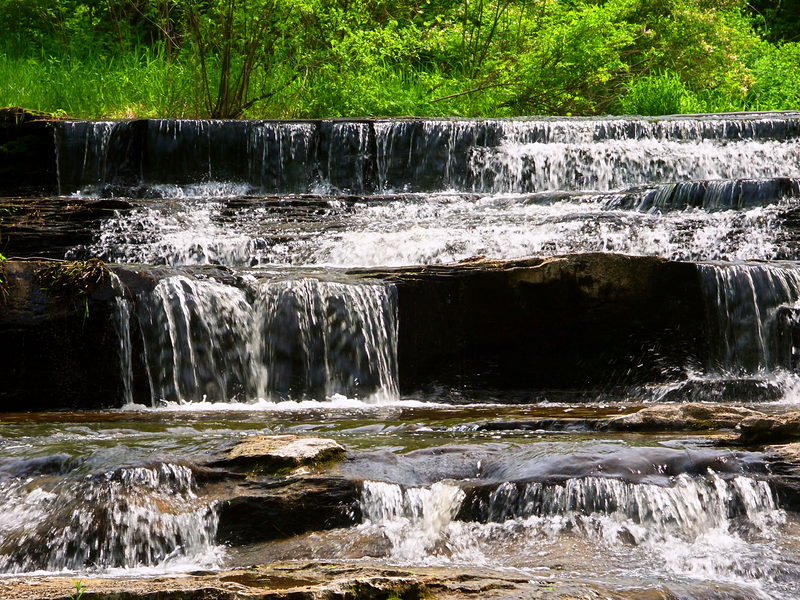
This online engineering PDH course presents an overview of the occurrence and movement of groundwater. Procedures for planning and managing a site characterization and modeling study are then presented. This is followed by chapters addressing the technical aspects of field investigative methods and computer modeling. A final chapter discussing the interaction of groundwater and surface water is then presented.
Since it is not possible to provide specific instructions and/or specific procedures that are universally applicable to every situation that may be encountered, this course emphasizes the use of sound judgment and the development of a good understanding of basic groundwater concepts rather than providing specific guidelines.
This 9 PDH online course is applicable to civil and environmental engineers, as well as design and construction personnel involved with the study and analysis of groundwater flow.
This PE continuing education course is intended to provide you with the following specific knowledge and skills:
- Occurrence and movement of groundwater
- Planning a groundwater investigation and modeling study
- Field investigative methods
- Computer modeling of groundwater flow
- Interaction between surface water and groundwater
In this professional engineering CEU course, you need to review the US Corps of Engineers Publication EM 1110-2-1421, "Groundwater Hydrology".
Upon successful completion of the quiz, print your Certificate of Completion instantly. (Note: if you are paying by check or money order, you will be able to print it after we receive your payment.) For your convenience, we will also email it to you. Please note that you can log in to your account at any time to access and print your Certificate of Completion.

This online engineering PDH course discusses site-level considerations for development. The intent of this guidance is to provide concepts for integrating land use planning, landscape architecture (vegetation, landforms, and water), site planning, and other strategies to mitigate the design basis threats as identified via the risk assessment.
Integrating security requirements into a larger, more comprehensive approach necessitates achieving a balance among many objectives such as reducing risk; facilitating proper building function; aesthetics and matching architecture; hardening of physical structures beyond required building codes and standards; and maximizing use of non-structural systems.
This 5 PDH online course is applicable to engineers, planners, architects, landscape designers, construction and operations personnel, security and law enforcement agents, as well as consultants and contractors to gain a better understanding in identifying and implementing crucial asset protection measures when planning and designing the site against potential terrorist attacks.
This PE continuing education course is intended to provide you with the following specific knowledge and skills:
- Planning the use of land
- Selection the site
- Orienting the buildings on the site
- Integrating vehicle access, control points, physical barriers, landscaping and parking,
- Protecting utilities for threat mitigation
In this professional engineering CEU course, you need to review Chapter 2 "Site Layout and Design Guidance" of the FEMA Publication, "Mitigating Potential Terrorist Attacks Against Buildings" (FEMA 426).
Upon successful completion of the quiz, print your Certificate of Completion instantly. (Note: if you are paying by check or money order, you will be able to print it after we receive your payment.) For your convenience, we will also email it to you. Please note that you can log in to your account at any time to access and print your Certificate of Completion.

This online engineering PDH course provides an overview of the common problems and typical repairs and includes a visual system for evaluating and rating PCC pavements.
To manage aviation airfield pavements effectively, all pavements’ conditions should be periodically checked and then organized in an inventory in order to use these evaluations to set priorities for the project or find alternative treatments.
A comprehensive pavement management system involves collecting data and assessing several pavement characteristics: roughness, surface distress (condition), surface skid characteristics, drainage, and structure (pavement strength and deflection). Based on this data and combined with the economic analysis of the project, planners can develop treatment measures for the pavements.
This 1 PDH online course is applicable to civil engineers, airport owners and managers and professionals who are interested in learning more about concrete airfield pavements.
This PE continuing education course is intended to provide you with the following specific knowledge and skills:
- Familiarizing with the rigid performance of the airfield pavement
- Identifying the different surface pavement defects such as polishing, map cracking, pop-outs, etc.
- Learning about the longitudinal and transverse joints
- Knowing the different pavement cracks such as slab cracks, D-cracking, corner cracks, etc.
- Recognizing the type of pavement distortions and their causes
- Understanding the rating system used for evaluating the pavement surface condition
- Knowing the treatment measures for the pavement defects
- Providing practical advice on rating airfield pavement conditions
Upon successful completion of the quiz, print your Certificate of Completion instantly. (Note: if you are paying by check or money order, you will be able to print it after we receive your payment.) For your convenience, we will also email it to you. Please note that you can log in to your account at any time to access and print your Certificate of Completion.